
The "Jesuit binding" story is often presented as settled fact. The evidence behind it is much thinner than it sounds.
If you've spent any time reading about the Voynich Manuscript's history, you've almost certainly heard this story. The book reached Rome in the 1660s. It sat in the Jesuit library at the Collegio Romano. At some point in the eighteenth or nineteenth centuries, the Jesuits stripped off its old, worm-eaten wooden boards and put it in the plain parchment cover it still wears today. The usual supporting points are that former Collegio Romano manuscripts now in the Vatican have covers that are identical to each other, that the Voynich's cover matches them, and that this settles the question.
It's a tidy story, and parts of it may even be true. But when you go looking for the evidence underneath, it turns out to be a lot less solid than its confident tone suggests. In some places the evidence actually points the other way.
My point in this article is simple. What is presented as established knowledge about the Voynich Manuscript's binding history really isn't. The published Voynich literature has taken a few real facts and a lot of reasonable guesswork, and blended them into something that reads like established history. The defensible core is much smaller than that. I think it's worth separating the two.
Note on the manuscript images: Because of Vatican Library copyright constraints, it was necessary for some figures in this article to make use of AI-generated representations to illustrate relevant features of the actual manuscripts and give you some immediate visual references for this discussion. This was just a practical necessity given the number of images discussed and the high licensing fees expected by the Vatican Library to display them directly in this article. (We're talking well over $10,000 U.S.) However, the true digital images of all Vatican Library items are readily available on the DigiVatLib website, and the direct links to all the relevant manuscript images are provided in Table 2, so you can easily examine the features discussed and verify the observations for yourself. And I encourage you to do so.
Start with the object itself
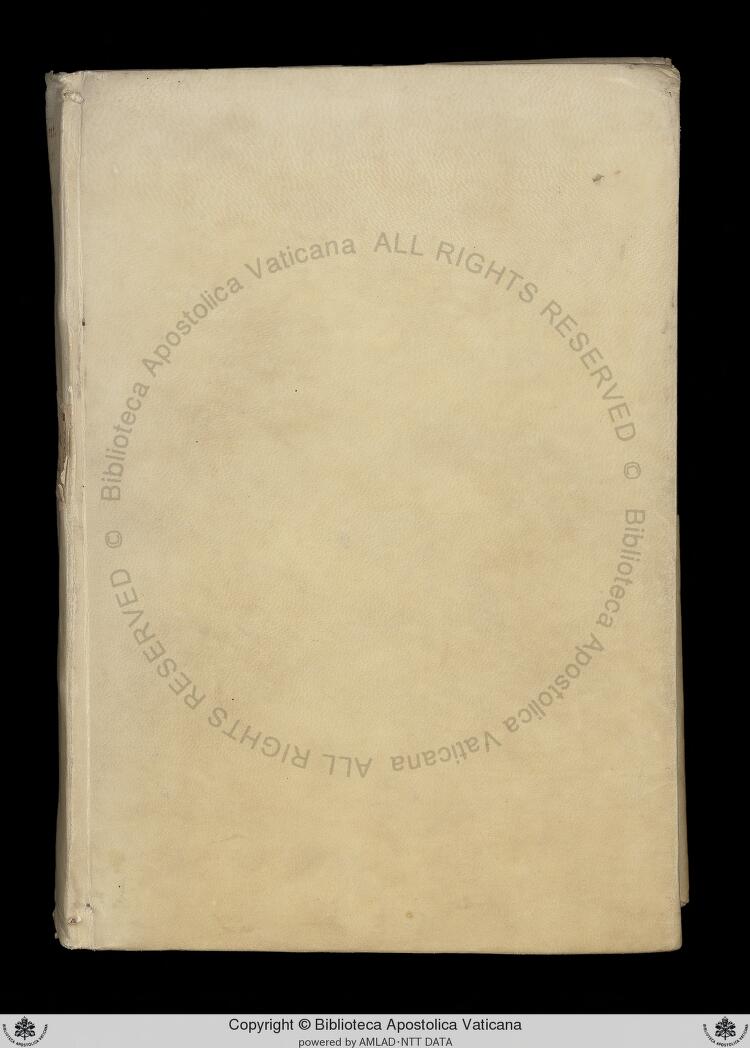
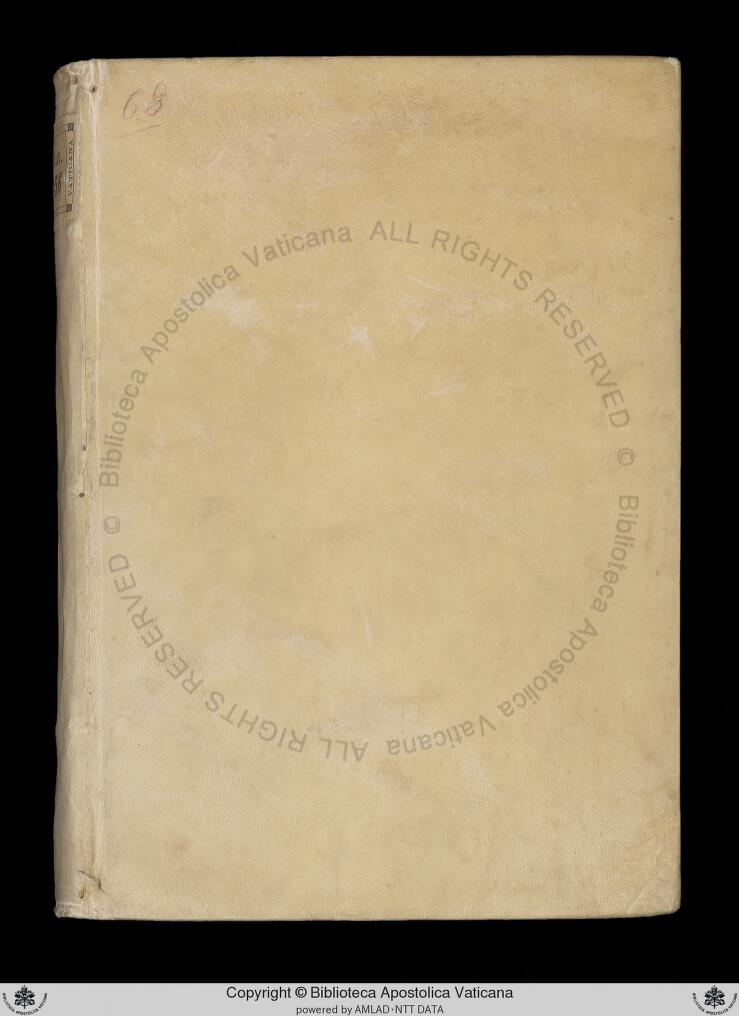
Let's begin with what anybody can see. The Voynich Manuscript (Yale's Beinecke Library, MS 408) is bound in a plain parchment cover. There's no tooling, no title, no stamp, no crest, no IHS monogram or other Jesuit-associated emblem, no library label, and no binder's mark. Inside, the parchment edges are folded over ("turned in") around the head, tail and fore-edge. There are remains of old paper pastedowns, some modern pencil notes, and a flat brown leather strip coming through a slit near the spine.
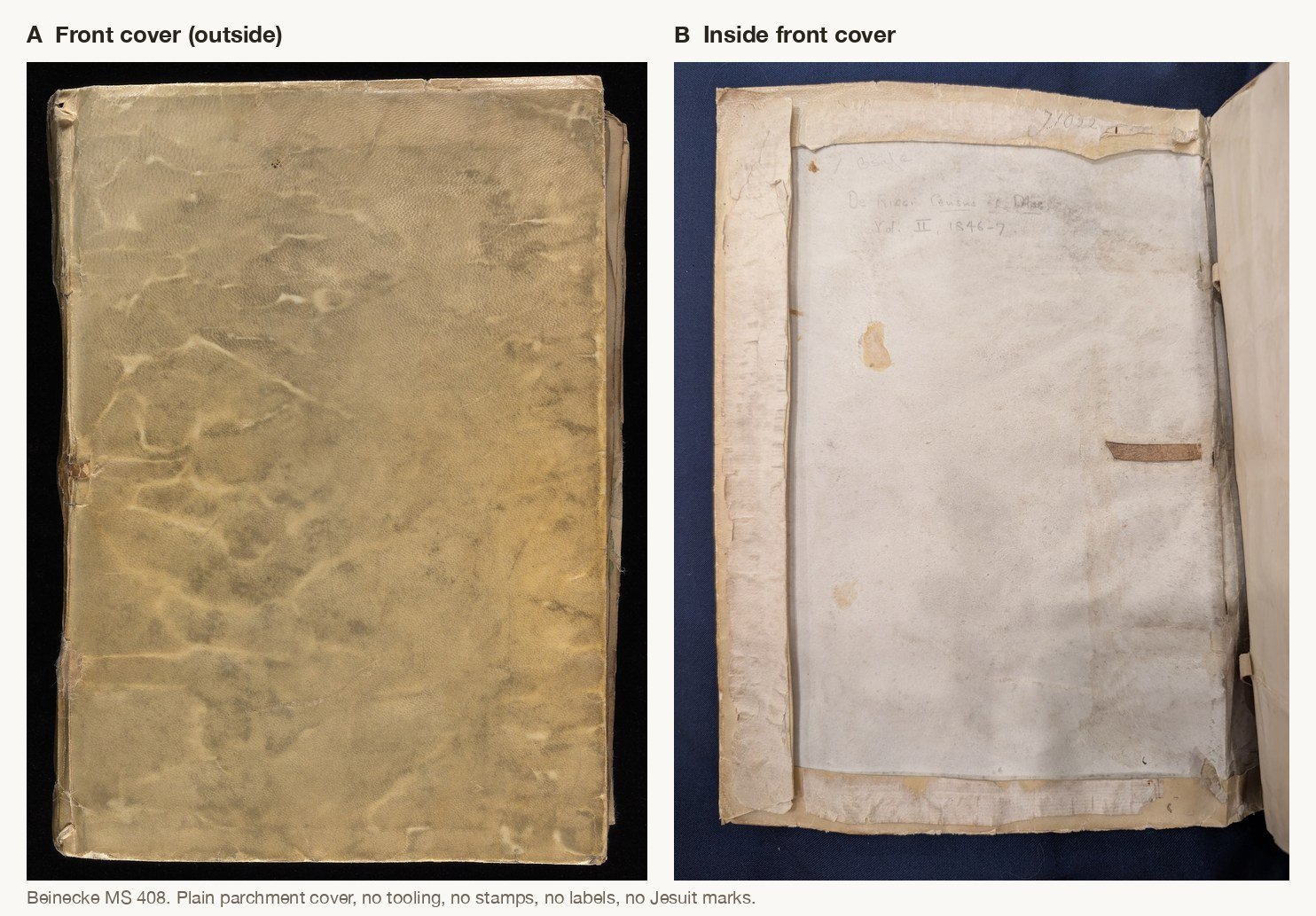
So what does the cover itself tell us about who made it? Honestly, nothing at all. Nothing on it names a person, a place or an institution.
That brown leather strip is worth a quick note, because people sometimes treat it as part of the "original" structure. A published transcription of a note from the Kraus period (before the book went to Yale in 1969) records that the "vellum cover [was] attached with leather thongs" and that some quires were resewn with Irish linen thread. In other words, at least some of what you see holding this book together is twentieth-century repair work, and not evidence of anything that happened in the previous centuries.
What we can actually defend
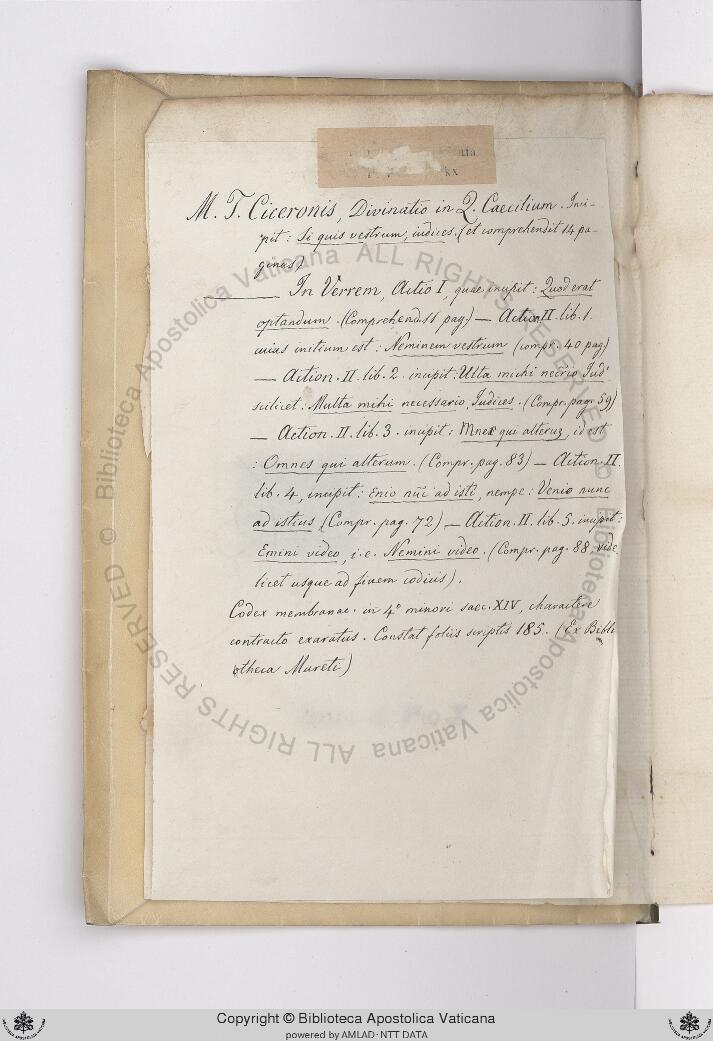
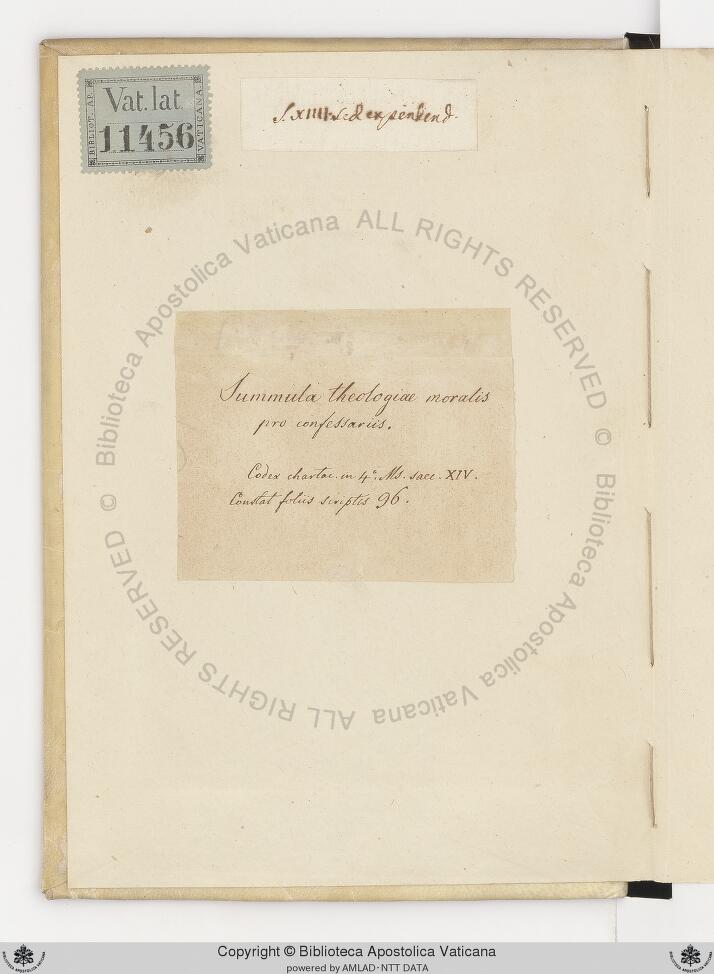
A handwritten catalog of manuscripts and printed books from the former Collegio Romano collection survives in the Gregorian University archives under the shelfmark APUG 3289. It contains 259 manuscript entries and 32 printed-book entries. It is assumed to record volumes associated with the Collegio Romano sale that was completed around 1912. That interpretation is strongly supported by the many entries matching items acquired by the Vatican Library or subsequently owned by Wilfrid Voynich. I’ll refer to it here simply as the Collegio catalog.
Before getting into the claims, here's the short list of things I think the evidence genuinely supports:
- The present cover is not the original one. The worm damage on the front and back folios is consistent with prolonged contact with wooden surfaces, and comparable damage is found in other manuscripts with board bindings. That makes it a reasonable inference that the Voynich Manuscript was once bound differently, probably with wooden boards.
- The present cover is later than the manuscript, but no dates for when it was added have been established. Yale's catalog dates it broadly to the eighteenth–nineteenth centuries, stating simply “Binding: s. xviii-xix. Vellum case. Remains of early paper pastedowns.” I asked Beinecke curators what they could tell me about the manuscript's rebinding history but they could only refer to the statement in their catalog entry. After pursuing the issue further, it appears that there is no record of how the dating assessment was made and nothing to support it. So it is possible that an eighteenth or nineteenth-century date is correct, but it is currently unsubstantiated; the date range can only be treated as an undocumented cataloging judgement without any evidentiary basis.
- The manuscript ended up in Rome before Wilfrid Voynich acquired it. Johannes Marcus Marci's letter of August 19, 1665, says he is sending the book to Athanasius Kircher, a Jesuit, in Rome. We assume that Marci's letter was indeed referring to the Voynich Manuscript in which it was found 250 years later, but even if the assumption is wrong, the manuscript, by all accounts, eventually reached Rome or its vicinity and remained there until Voynich brought it to London and, later, America.
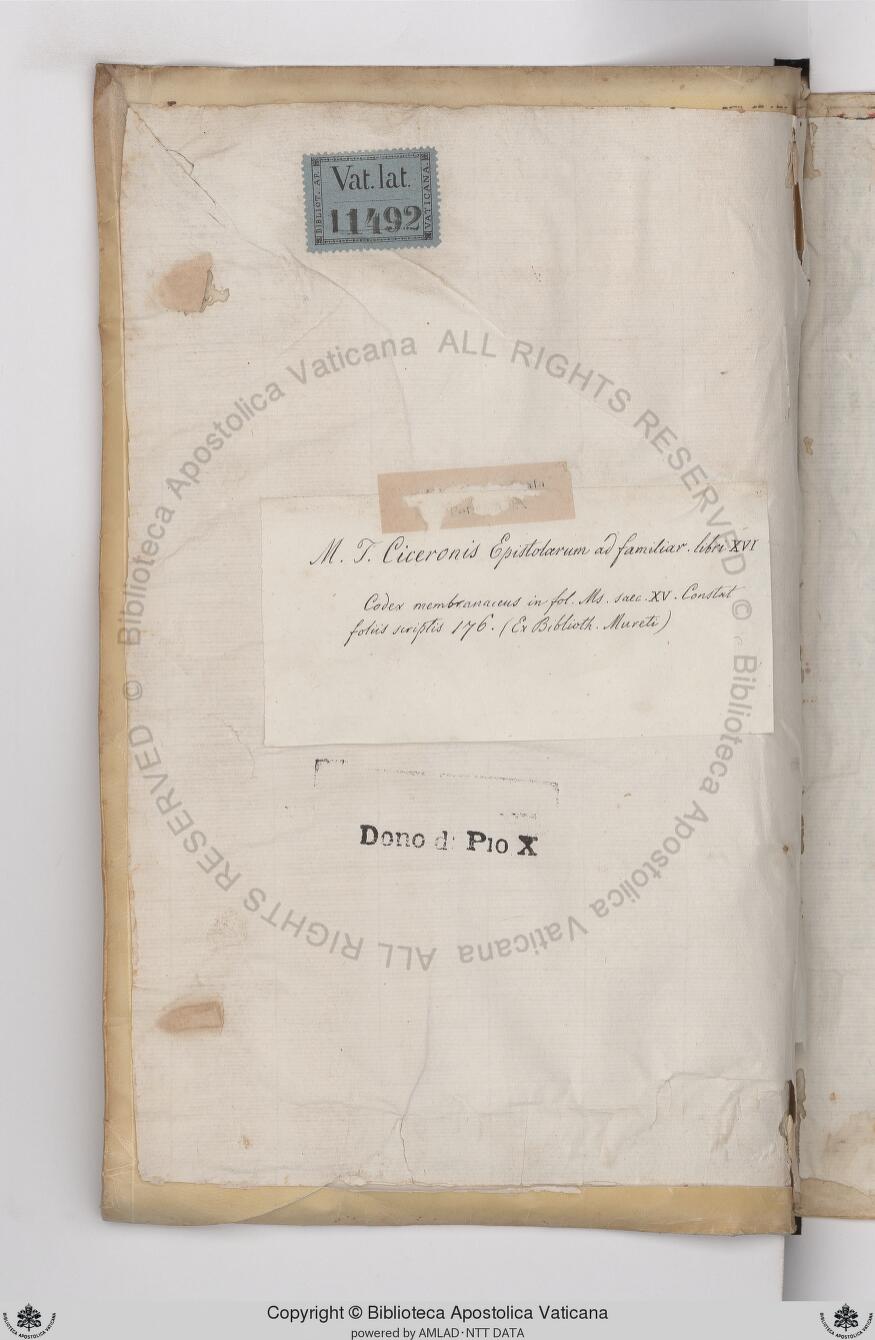
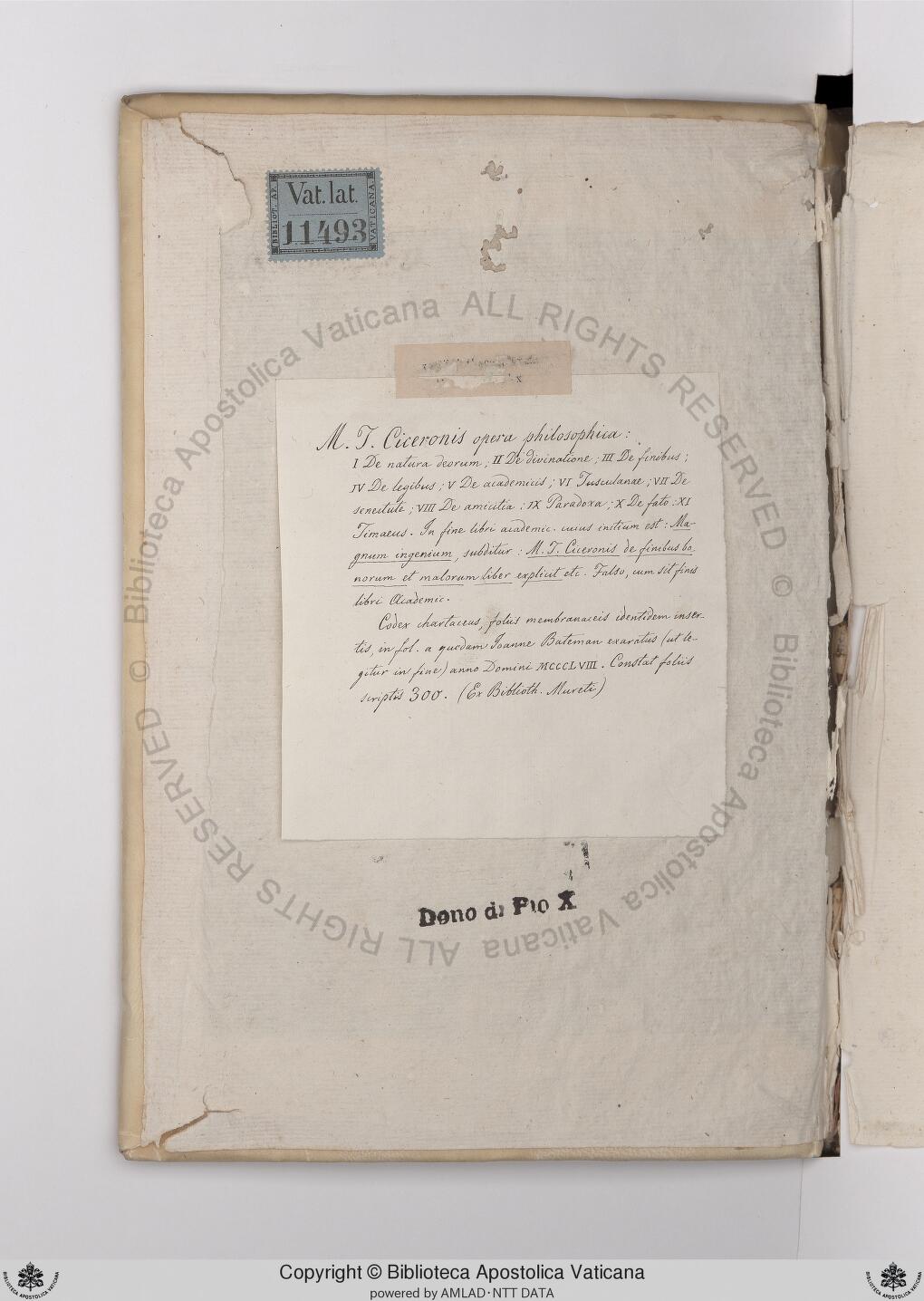
- It was associated with the former Collegio Romano collection. That association is plausible, but it rests on a qualified identification. A handwritten catalog of books from the former Collegio Romano collection, now preserved in the Gregorian University’s historical archives under the shelfmark APUG 3289, summarizes bibliographical slips that were attached to various volumes from the collection. Published comparisons identify over 90% of the catalog’s manuscript entries with books acquired by the Vatican or Voynich, although the supporting evidence varies between individual identifications. The catalog appears to have been compiled by more than one hand, but its compilers and date of compilation remain uncertain. Within the catalog, the entry presumed to describe the Voynich Manuscript reads only “Miscellanea, c.m.s. XV.”—a description too generic to identify it independently. The identification is based on a later annotation in the margin referring to the page number of De Ricci’s 1937 census of North American manuscripts containing the entry for the Voynich Manuscript. So the Collegio catalog provides evidence for the proposed Collegio Romano provenance, although it does depend largely on a later scholarly inference; the original entry alone doesn't establish it.
- The cover has been repaired and altered in modern times. The Kraus-era reattachment and resewing are documented, and pastedowns from the inside of the covers appear to have been removed at some point. Conservation examinations and subsequent studies of the sewing and quire structure reveal a layered history of repair and rearrangement, although the individual interventions cannot all be securely dated or attributed.
Notice what's not on the list: anything establishing who made the cover, where it was made, or even a reasonably supported window for when it was made.
How "quite similar" became "we know"
What is interesting here is that you can trace, step by step, how the Jesuit attribution transforms from cautious observations into statements of fact. The progression is visible in the published sources themselves, summarized in Table 1.
Table 1. The chain of claims behind the Jesuit binding story.
What changes as you move down the table is not so much the underlying evidence as the certainty attached to it. A reasonable association with the Collegio Romano, a private report that the Voynich cover is “quite similar” to many Vatican examples, and evidence of a separate Jesuit binding campaign are subsequently combined into the explicit conclusion that “we know” the Roman Jesuits added the present cover. Later retelling then adds more weight, assigning the rebinding to 1824–1870 and describing the Voynich's inclusion in the supposed campaign as “almost certain”. Through declarative repetition, those claims have hardened into a putative history, widely accepted as fact.
What do the sources actually establish?
Look more closely at the sources behind Table 1, and the categorical claim of a Jesuit rebinding begins to come apart at the seams. Let's start with the catalog entry used to link the Voynich Manuscript to the Collegio Romano collection.
What did the cataloger know? And when did he know it?
Did you catch the century in that catalog entry? “Miscellanea, c.m.s. XV” means “Miscellany; parchment manuscript, fifteenth-century.” If we're supposed to recognize the Voynich Manuscript in that description, I think we should stop and ask: why the fifteenth-century?
Suppose the cataloger was a Jesuit who had read Marci’s letter and believed the Rudolf II connection. With that information alone, he might have been inclined to describe the book as sixteenth-century. Or maybe he recognized that it could still be even older than that. But the Marci Letter gives him no particular reason to choose the fifteenth-century. If he instead accepted the Roger Bacon attribution reported in the letter, the obvious choice would have been the thirteenth-century. Neither route gets us to “XV.”
Yet “XV” just happens to agree with the radiocarbon dating results obtained in 2009 for the manuscript’s parchment pages. Of course, those results weren’t available to whoever wrote this entry. The Collegio catalog certainly existed by 1959, when Ruysschaert referred to its photographic copy, which is preserved in the Vatican archives as Arch.Bibl.109. That places the catalog at least half a century before the radiocarbon results. Several things suggest it was substantially older though.
The catalog’s heading describes its contents as manuscripts and printed books acquired by the Vatican Library in “1903,” although that purchase was actually completed in July 1912. Francesca Potenza suggests that the heading may have been added in 1919, when the catalog reached the Gregorian University. She also considers the possibility that “1903” was a deliberate backdating intended to avoid difficulties under Italian laws restricting the sale and export of historically valuable material. The Jesuits’ insistence on secrecy surrounding both the Vatican and Voynich purchases gives that explanation some context.
If concealment was the purpose, a heading added relatively close to the transaction makes more sense than one added decades afterward. Both the practical concerns and the force of personal promises of secrecy would likely have weakened over time, particularly through the political upheavals that followed. The Lateran settlement of 1929 is especially relevant: it formally resolved the longstanding dispute between Italy and the Holy See and established Vatican sovereignty. That changed the circumstances behind the original secrecy and makes a much later effort to disguise the purchase date less plausible. These considerations favor an early date for the catalog, at least nearer the 1912 sale or possibly well before it.
Why is that worth noting? Well for one thing, I have found no documented discussion before the mid-1930s that offers a particular reason to consider the Voynich Manuscript fifteenth-century. The possibility appears briefly in Anne Nill’s correspondence (in the mid 1930s) and in later discussions involving other sources and manuscript experts. If the catalog entry belongs to its apparent early history, those discussions came at least a couple of decades too late to explain it.
So who was the cataloger who looked at the Voynich Manuscript and jotted down “Miscellanea, c.m.s. XV”? A nineteenth-century Jesuit who foresaw the radiocarbon results to come more than a century later? Or was he really a prodigious scholar whose judgment was simply better than most of the manuscript experts that came along over the next century?
I'm being facetious, of course. A good cataloger could have estimated a fifteenth-century date without clairvoyance. Perhaps he looked at the strange Voynich Manuscript and simply made what turned out to be a lucky guess. Or perhaps, he had information about the manuscript that has not survived to today. Perhaps he was not describing that particular manuscript at all, but another fifteenth-century book altogether. We really don't know. It's even possible he just made a simple clerical error. But when we find ourselves explaining an inconsistency in the data by saying, in effect, "the data is wrong", that's a good clue that we're now on shaky ground.
In any case, what's important to recognize is that identifying the Voynich Manuscript as the book described by that generic catalog entry is entirely retrospective, coming from a later marginal reference to De Ricci’s 1937 census, whose description further drew on information obtained from the Voynich estate. If that identification is then offered as independent confirmation of the estate's account of the manuscript's acquisition and then of its origins, the reasoning risks becoming circular.
That's the point worth keeping in view here. We have a generic catalog entry, that includes an unexplained date, and a later identification for it that may not be independent of the story it is used to support. We shouldn't quietly turn those into an unmistakable contemporary record of the Voynich Manuscript being in Jesuit custody let alone of it therefore being rebound by them to produce its present cover.
A binding campaign—but which books, and when?
The Jesuits certainly commissioned binding and repair work in a number of manuscripts. Zandbergen cites a Gregorian University archive blog post, “Corpi di libri antichi da mandare al legatore,” as evidence of that activity. But which books did the documented campaign include—and did it produce the kind of cover the Voynich now has?
The blog post reports an eighteenth-century binding campaign at the Collegio Romano, citing the library’s historical accounts. It identifies 356 surviving bindings associated with that campaign and describes them specifically as half-parchment with cardboard boards.
Half-parchment and full-parchment are distinct binding descriptions. A full-parchment binding has parchment across the spine and both sides; a half-parchment binding combines parchment on the spine and parts of the sides—conventionally including the outer corners—with another covering material elsewhere. “Plain” describes the absence of decoration, rather than the extent of the parchment covering. A plain full-parchment cover therefore differs from a half-parchment binding in its material arrangement, however simple both may look. Although the blog post doesn't explicitly rule out other binding types, it also cannot support a claim that the campaign produced full-parchment covers like the Voynich’s.
The blog post also does not identify either the Voynich Manuscript or the Vatican's particular acquisitions as participants. Even if we accept that “Miscellanea, c.m.s. XV” refers to the Voynich, that gets us only to its presence in the Jesuits' collection that they later sold. It doesn't put the book in this earlier binding campaign. The catalog identification and the record of binding work are separate pieces of evidence; we still need something connecting them.
There is also another problem in how the blog post has been used. It dates the binding campaign to the eighteenth-century and only the later spine lettering to 1824–1870. Zandbergen’s 2015 account retained that distinction, but his voynich.nu history page later assigns the nineteenth-century range to the rebinding itself, turning a documentary source of later lettering into an unsupported date for the rebinding.
A Collegio book isn't necessarily a Jesuit binding
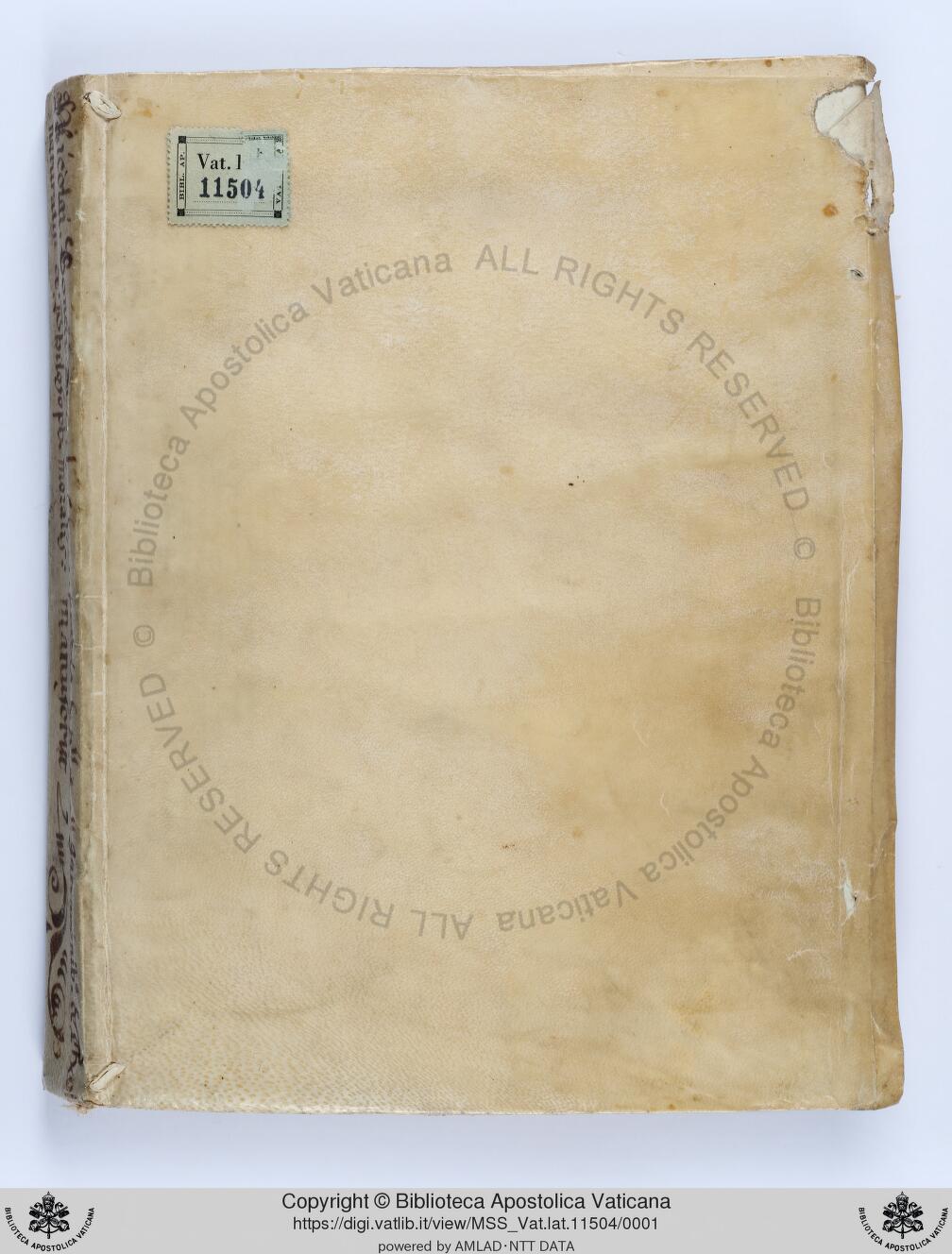
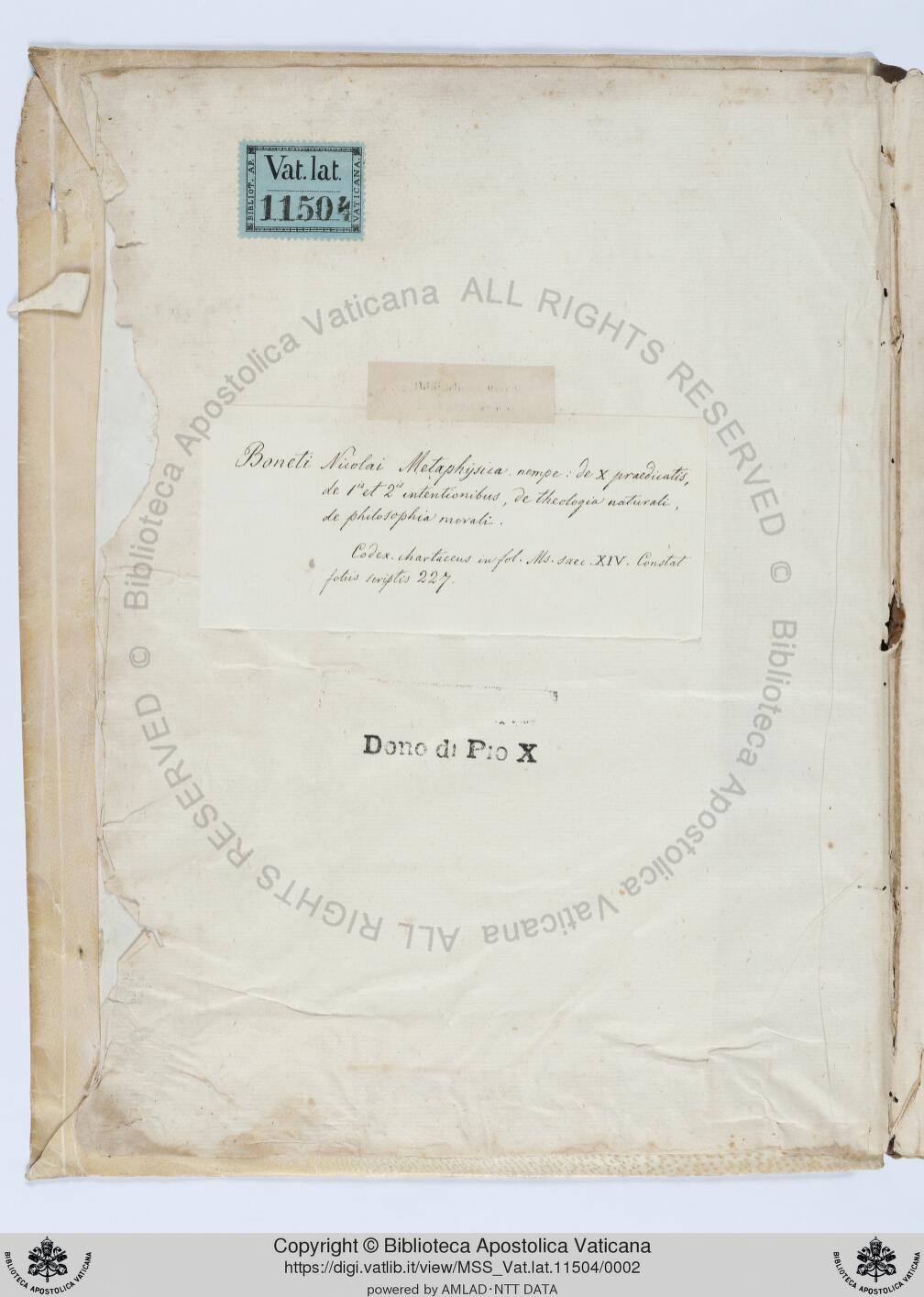
One book that has been used as an example of the Collegio binding “type” is Vat. lat. 11504. But Ruysschaert, the very cataloger whose work is also cited as a foundation for the claim, identified it as one of Pier Leoni's books. He judged that the characteristic parchment bindings of that group were more probably made at Spoleto, before the books reached the Collegio Romano.
So this comparison book may have arrived at the Collegio already wearing its characteristic parchment binding. Calling it a “Jesuit binding” because the Jesuits later owned it confuses ownership with manufacture. And using its resemblance to the Voynich to identify a Jesuit binder simply carries that assumption over to another book.
The documentary trail still doesn't establish who made the Voynich's present cover. That leaves the other main argument: its resemblance to the comparison books. Let's look at how closely they actually match.
Covers and corners and claims. Oh my!
Identical" covers? Have a look for yourself
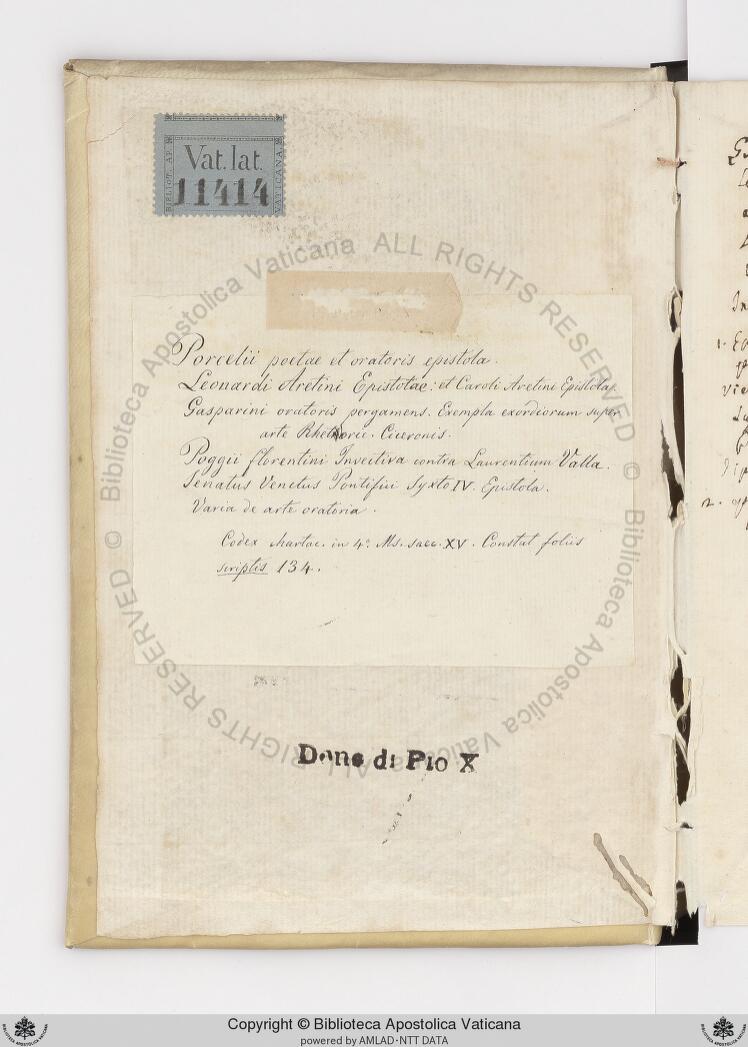
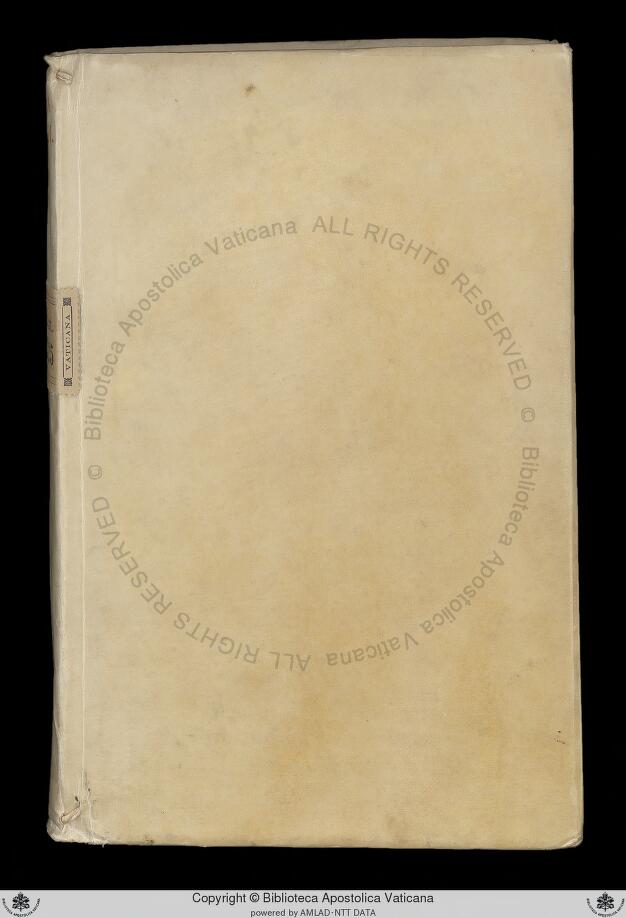
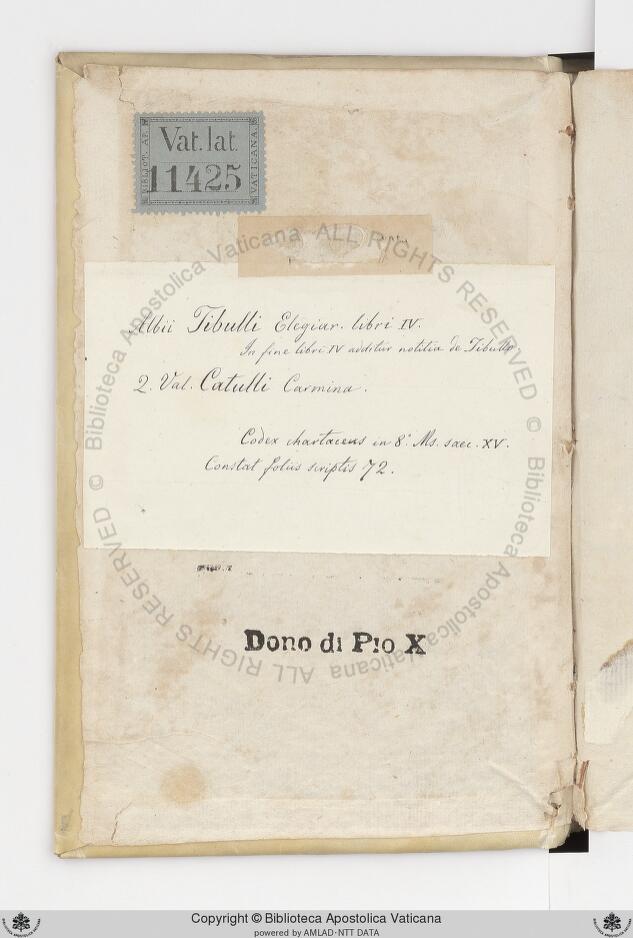
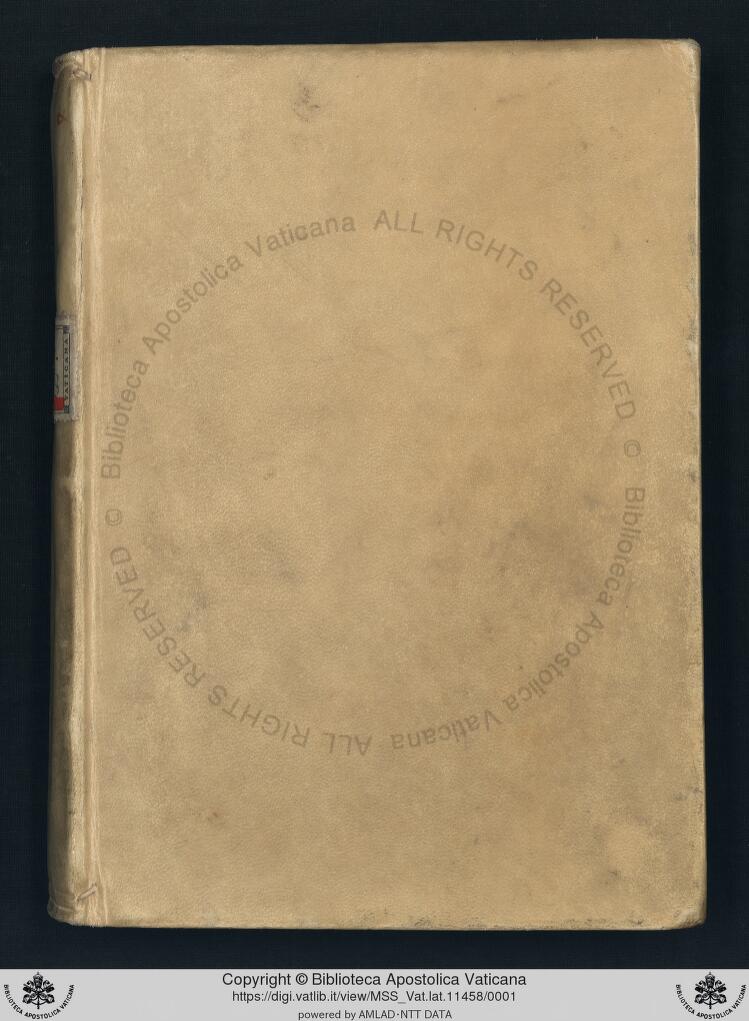
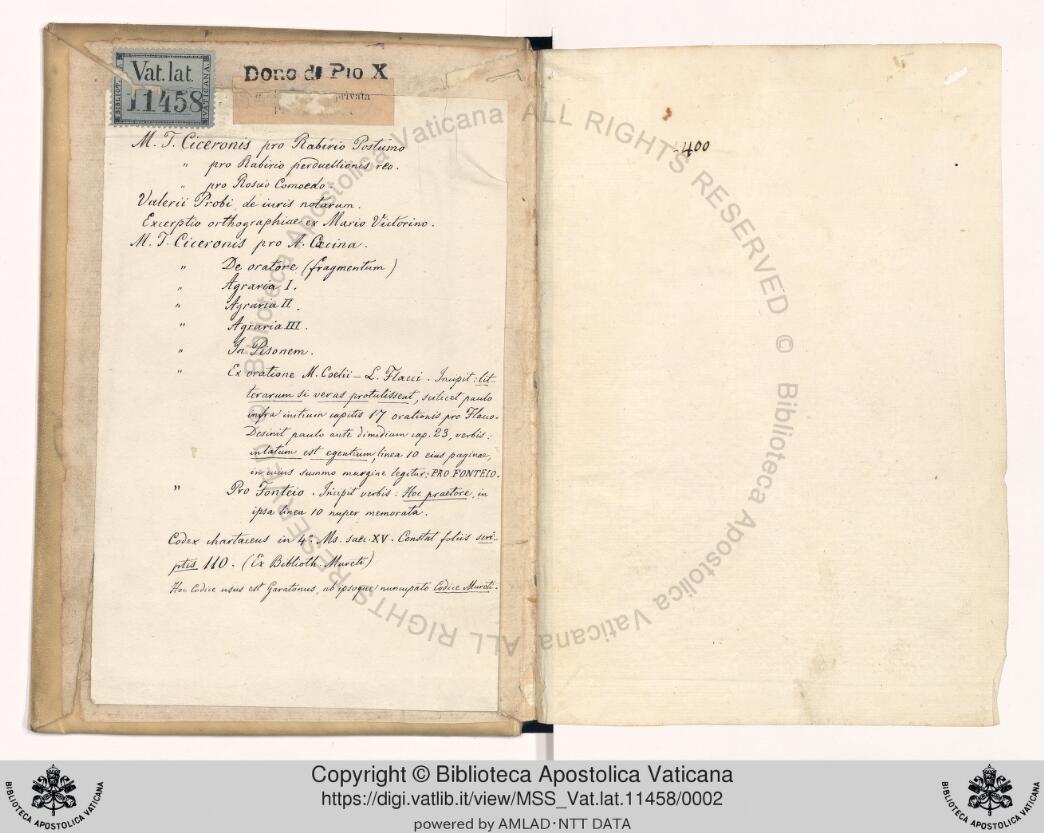
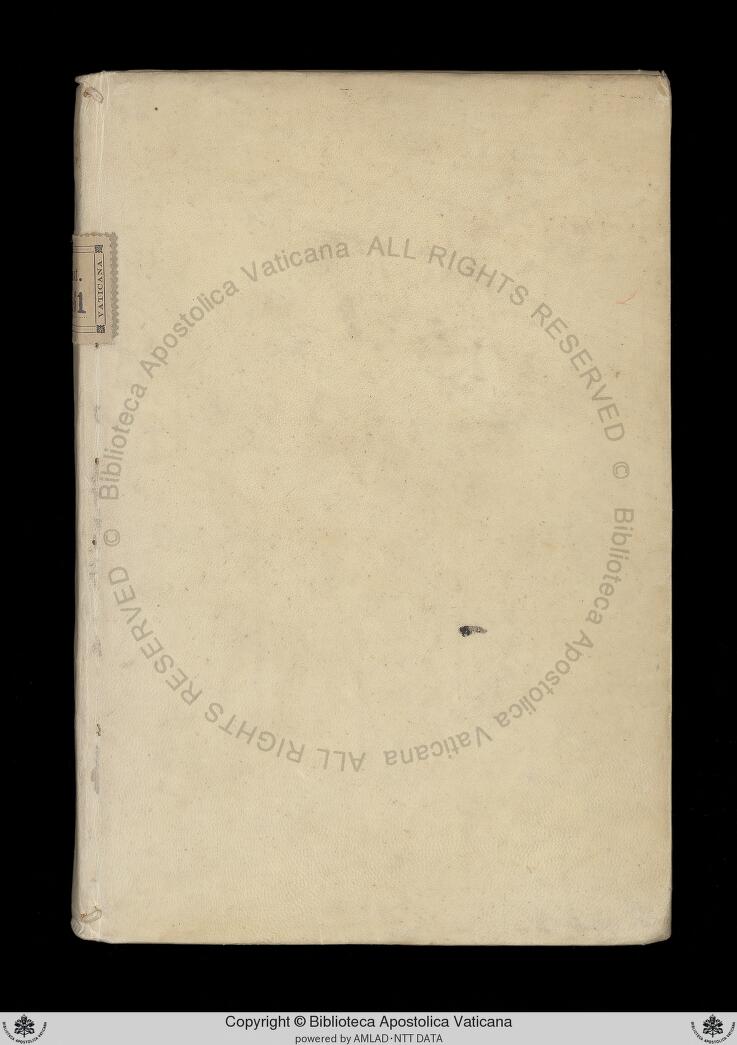
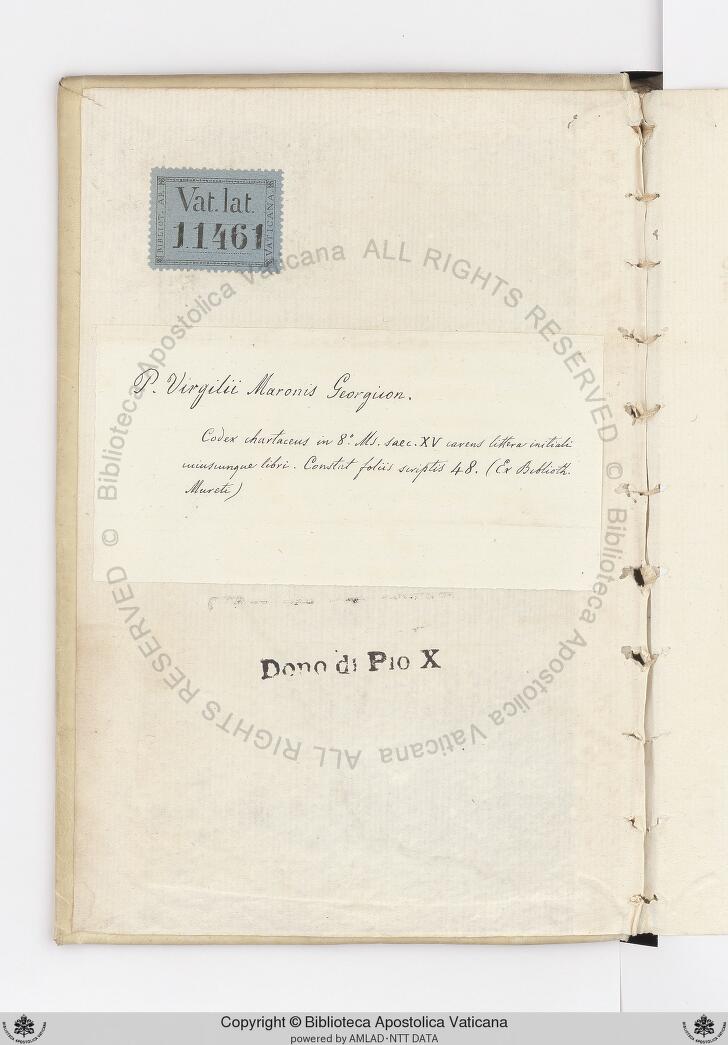
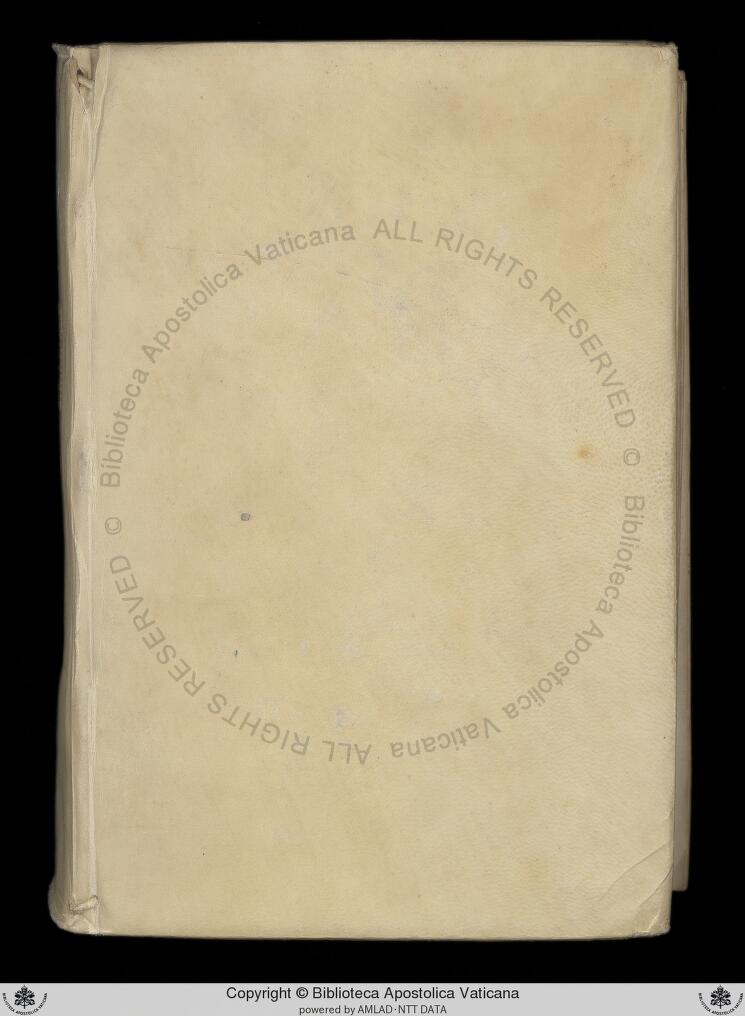
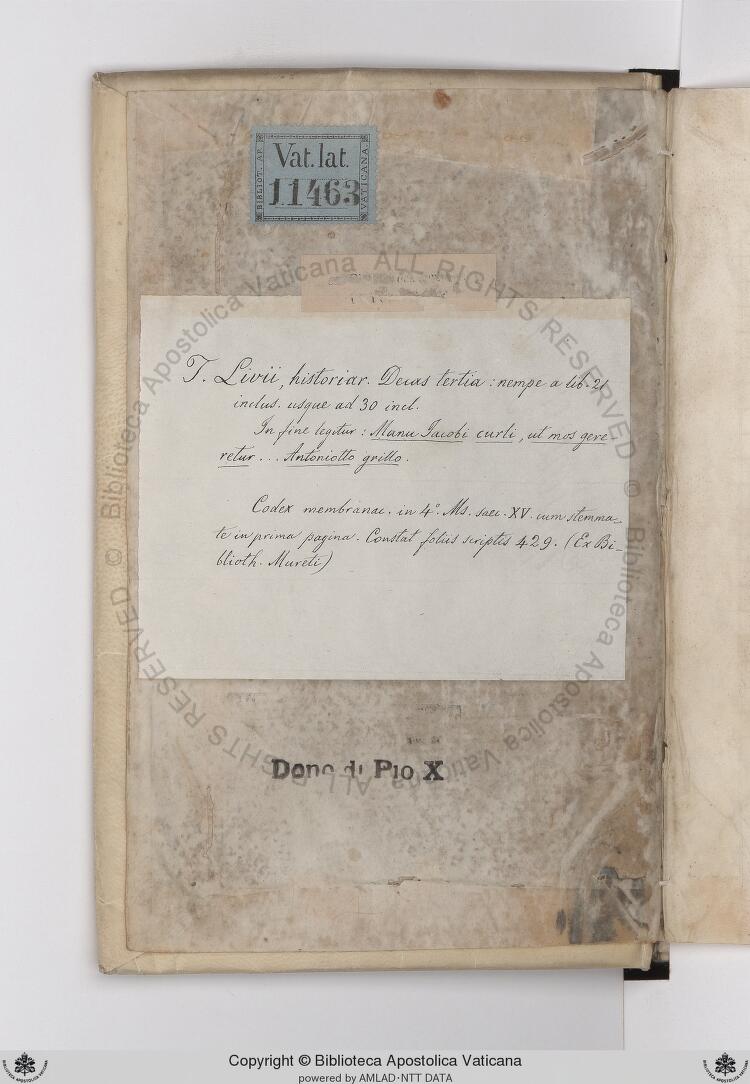
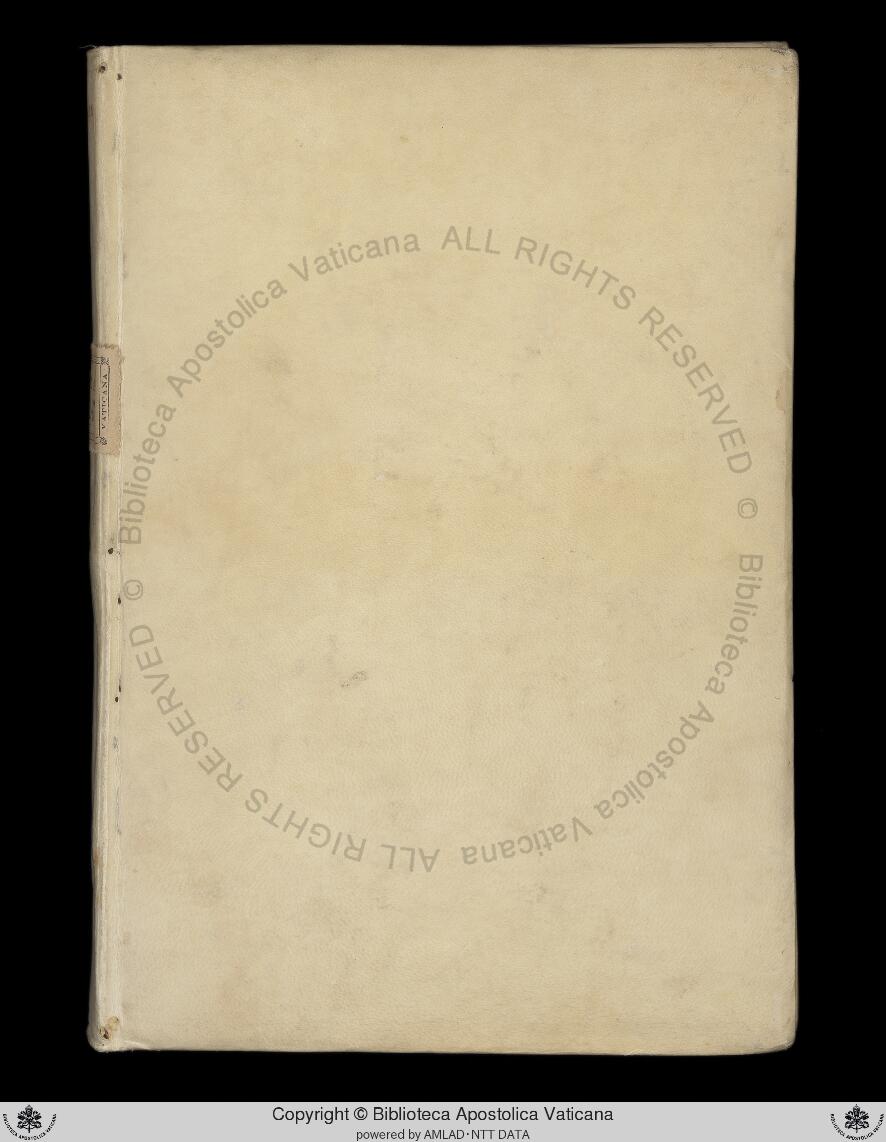
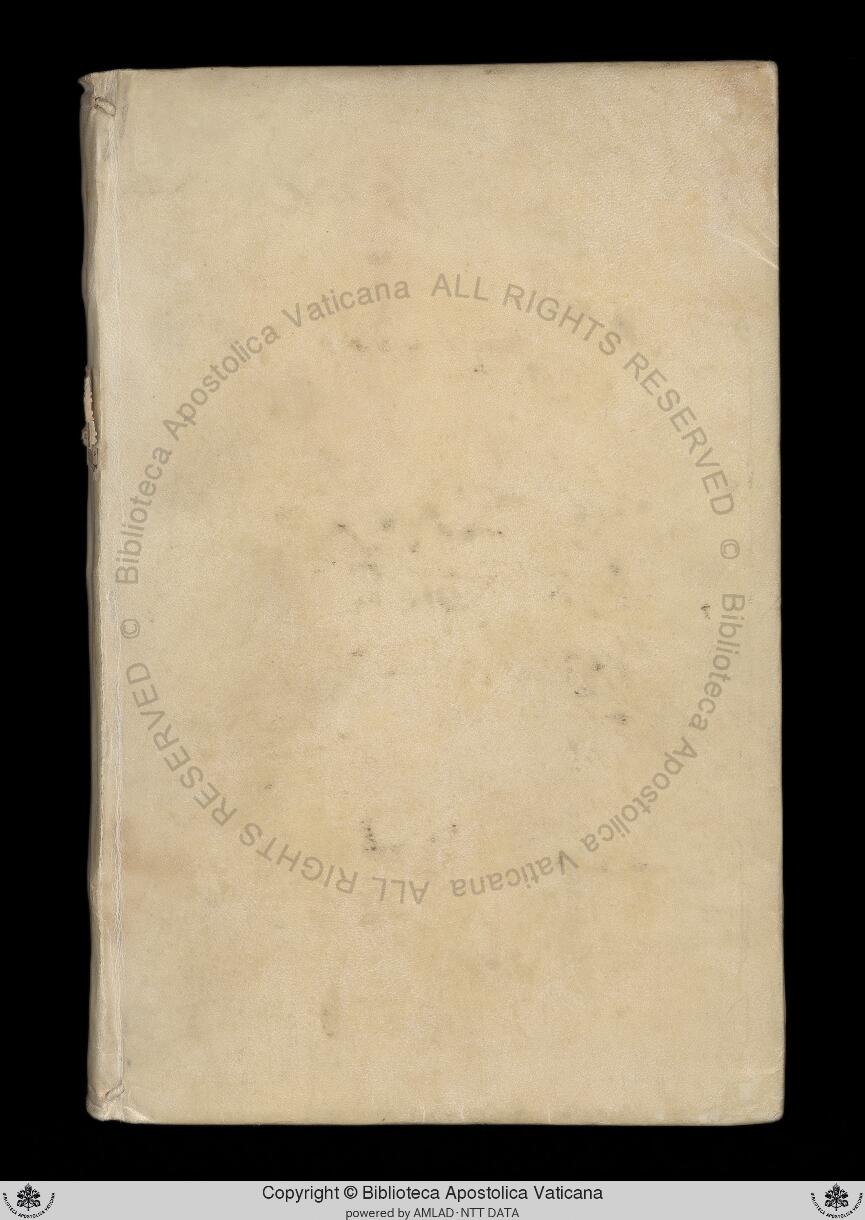
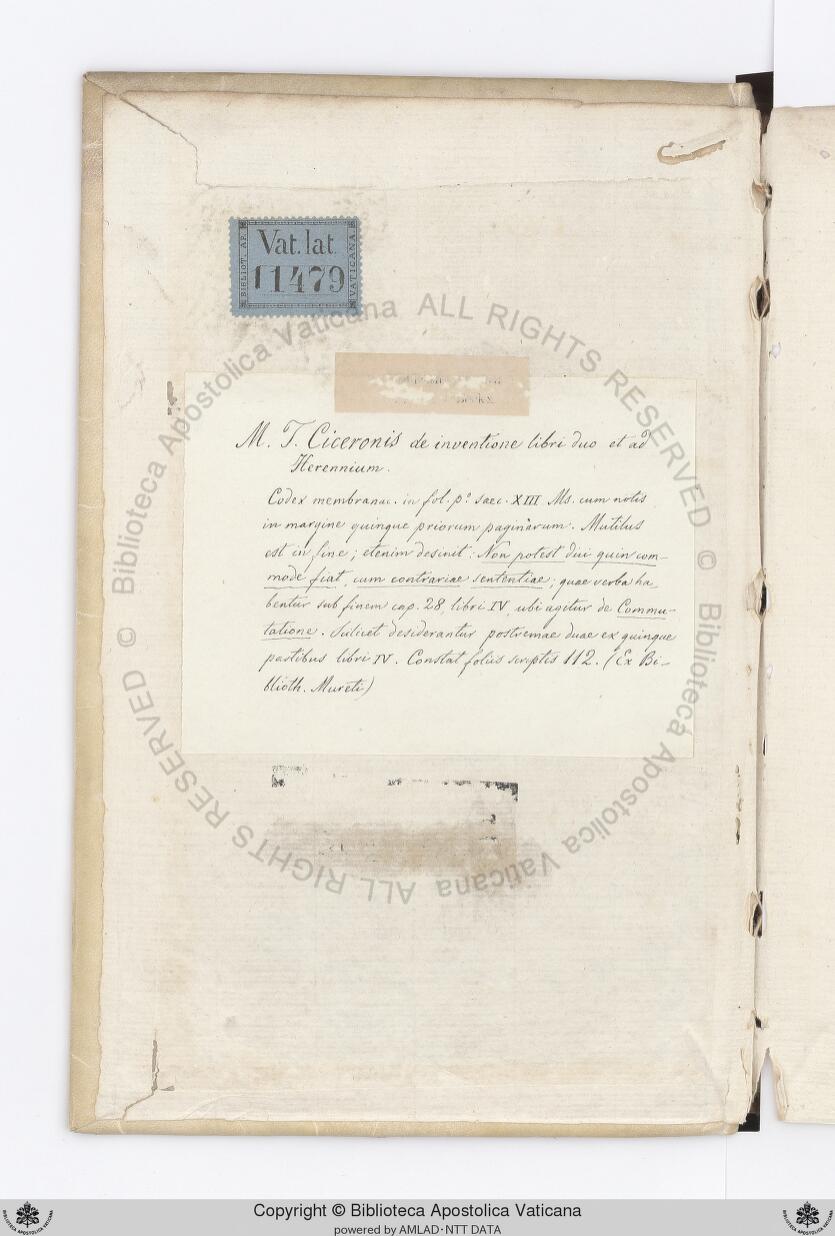
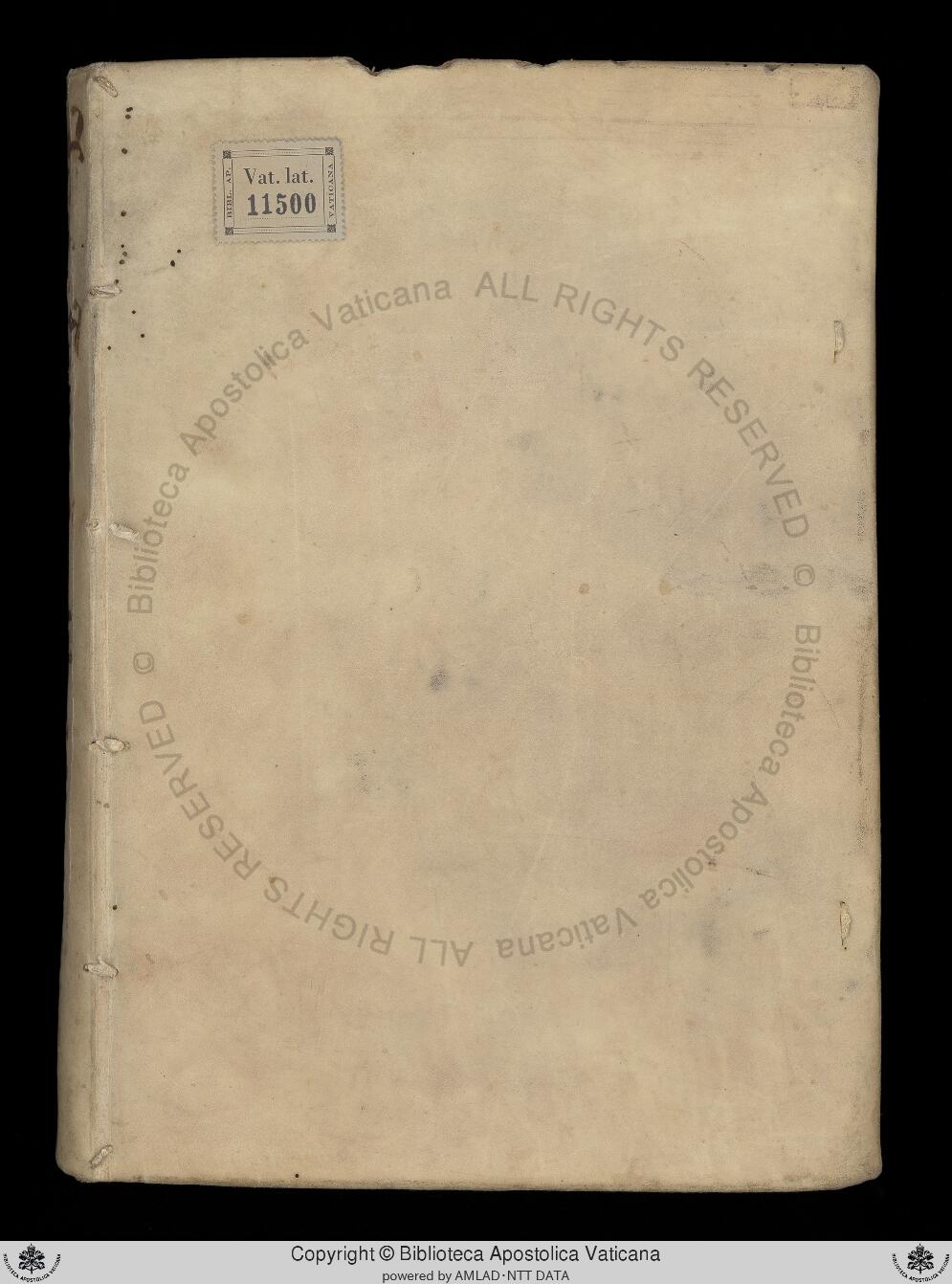
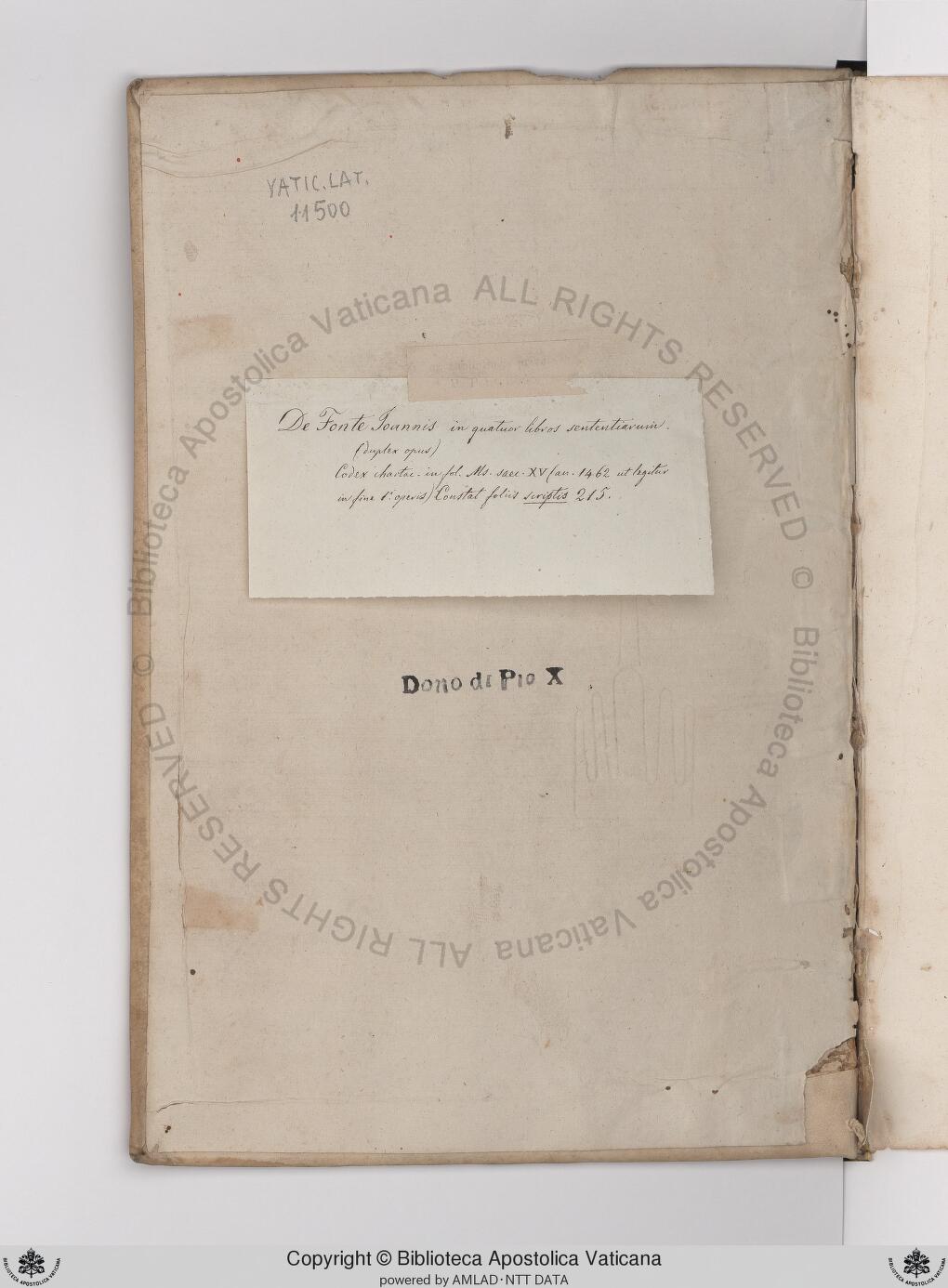
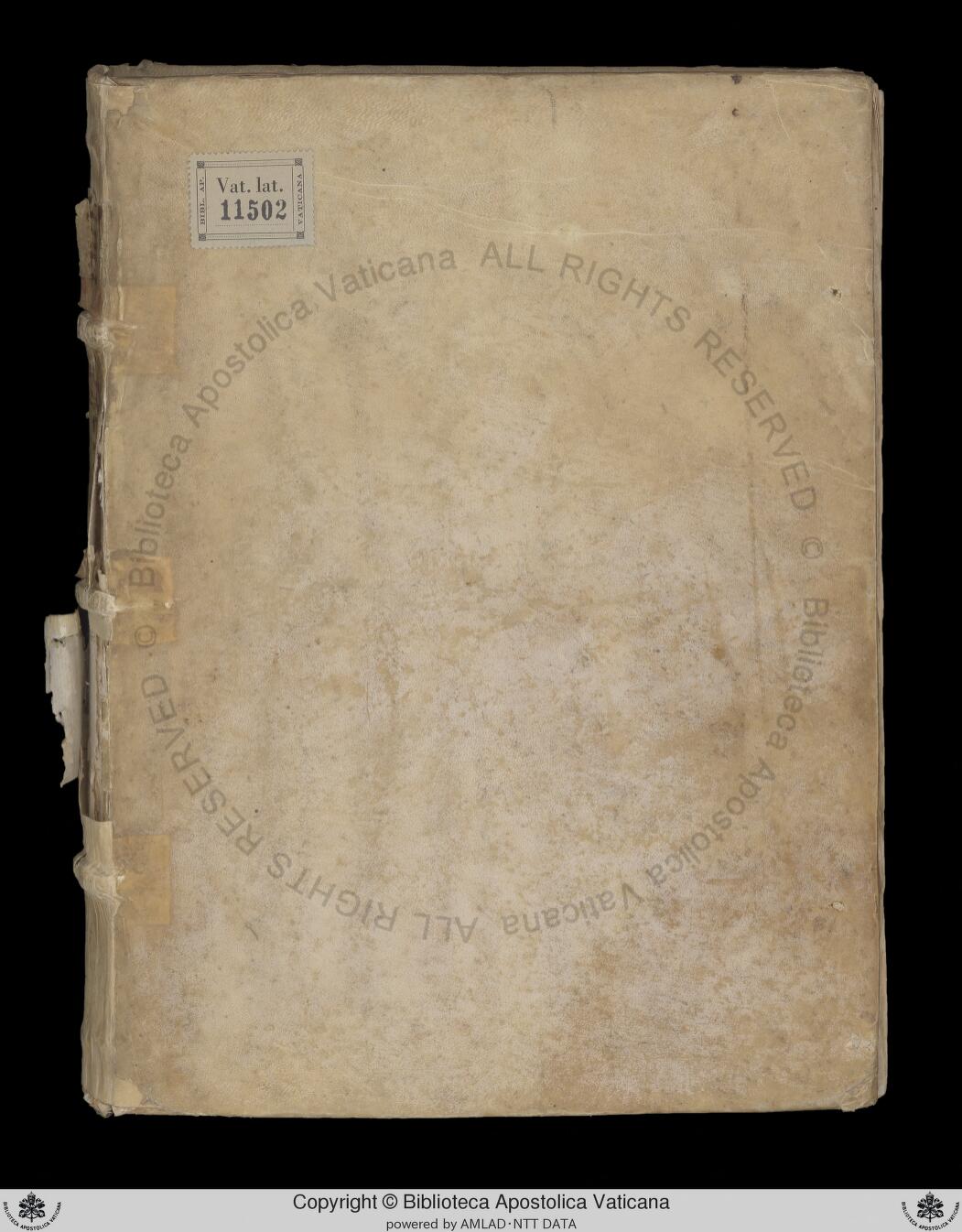
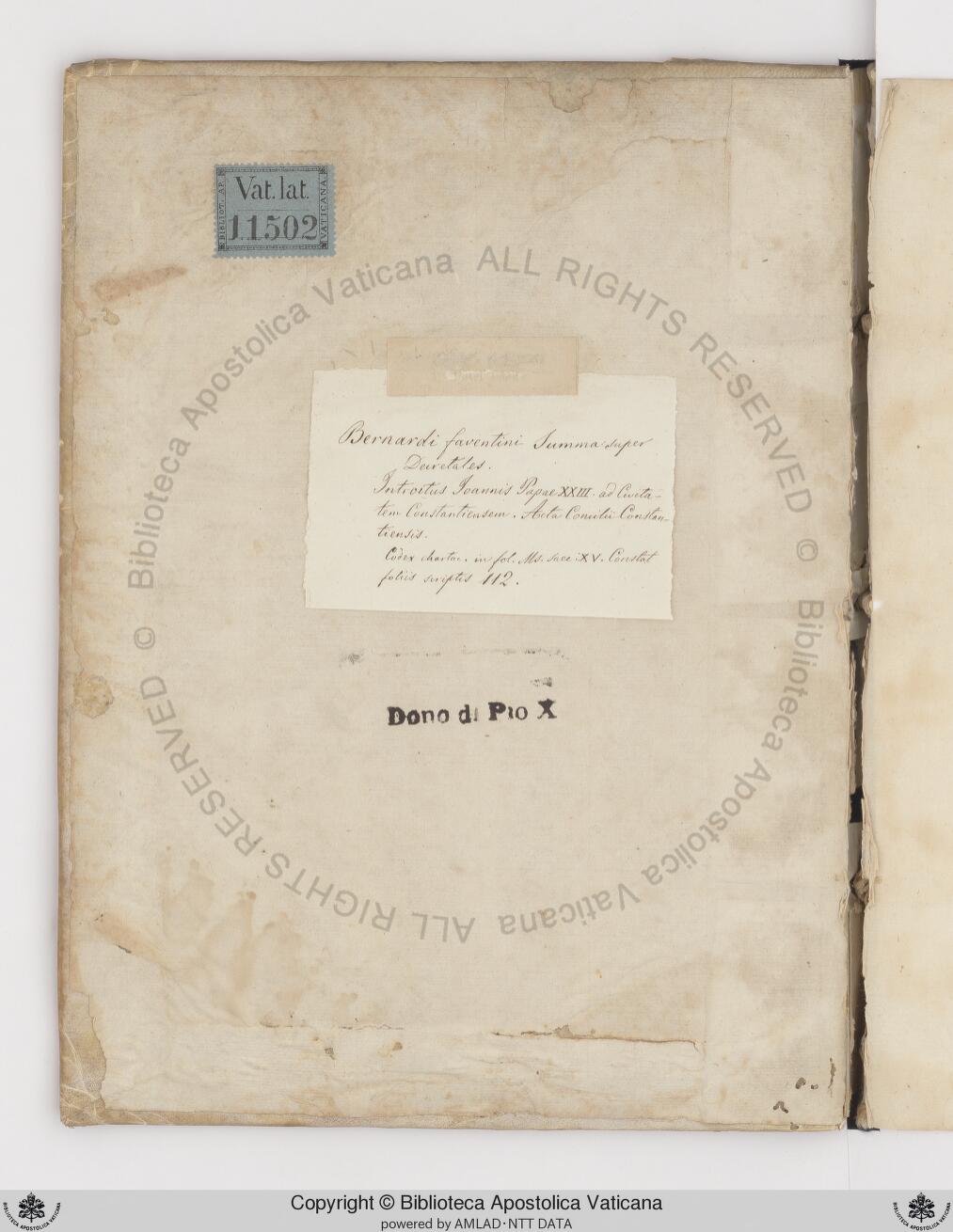
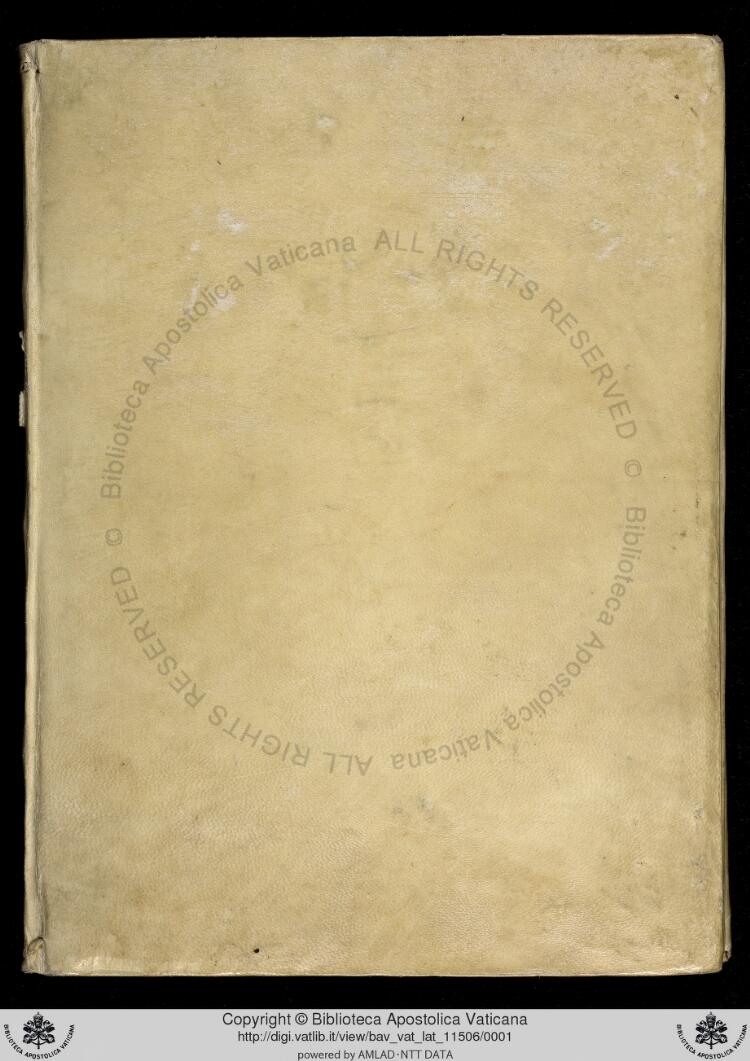
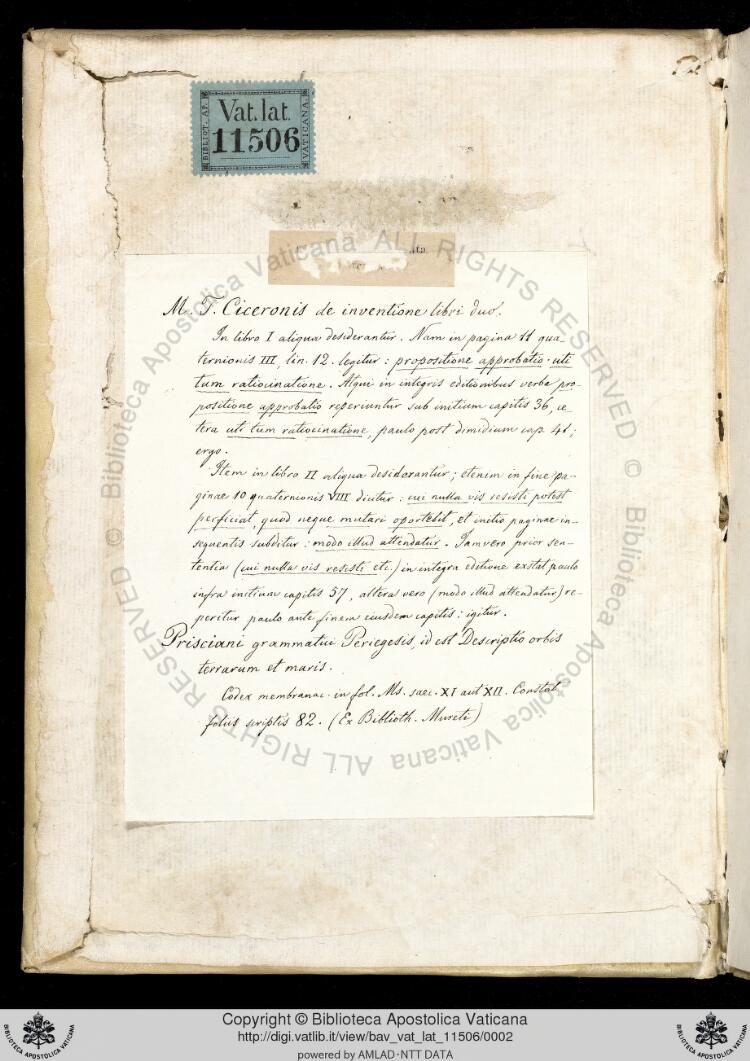
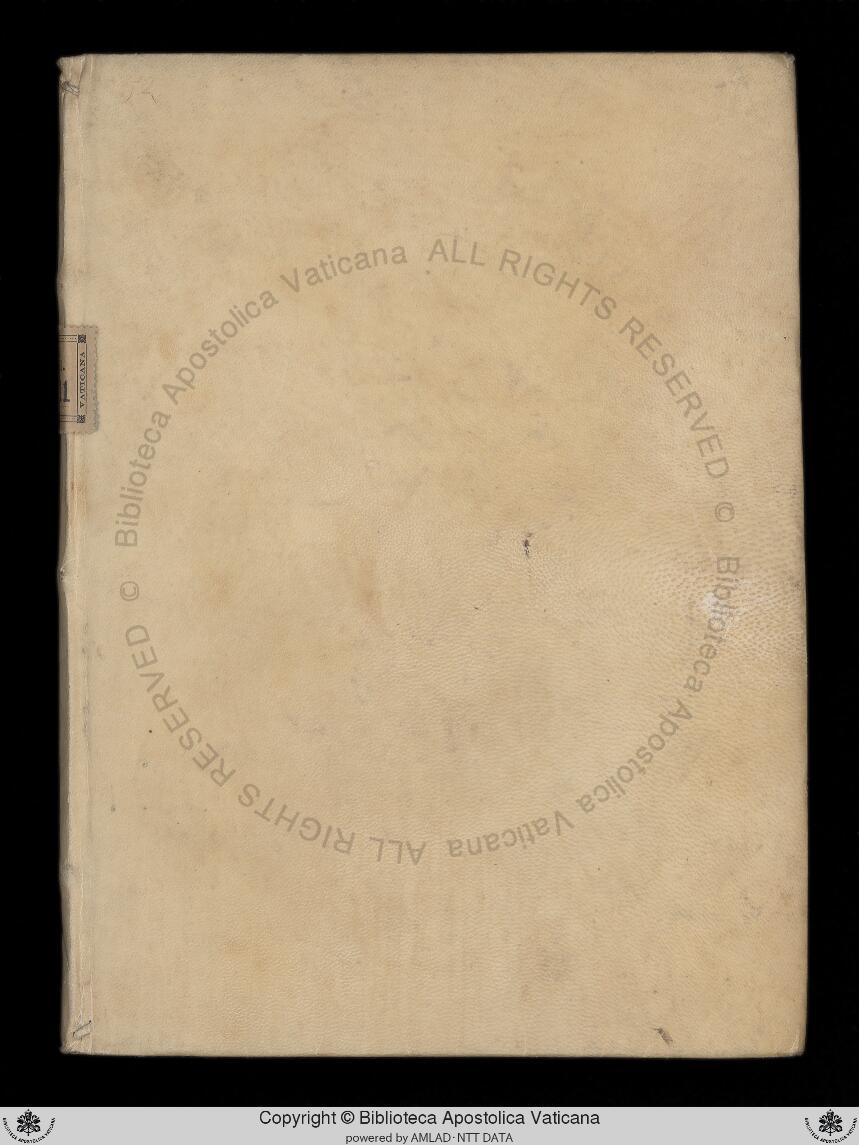
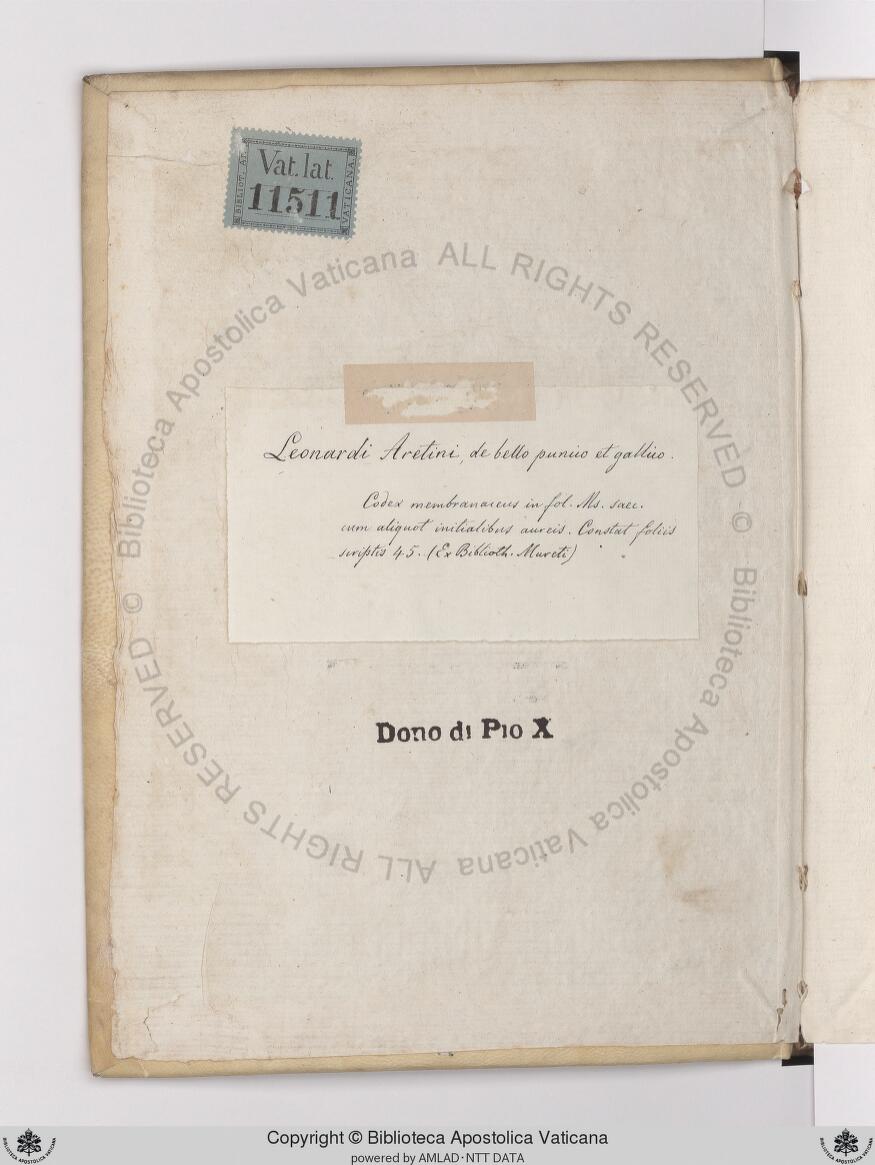
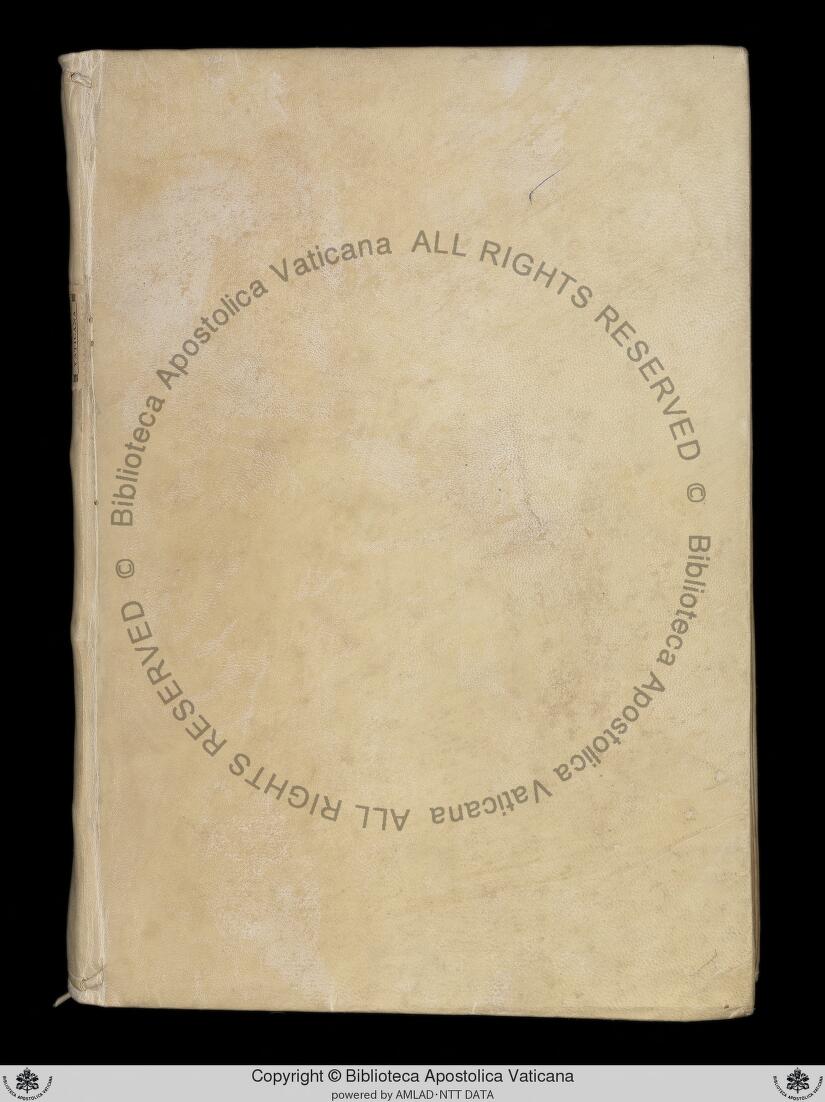
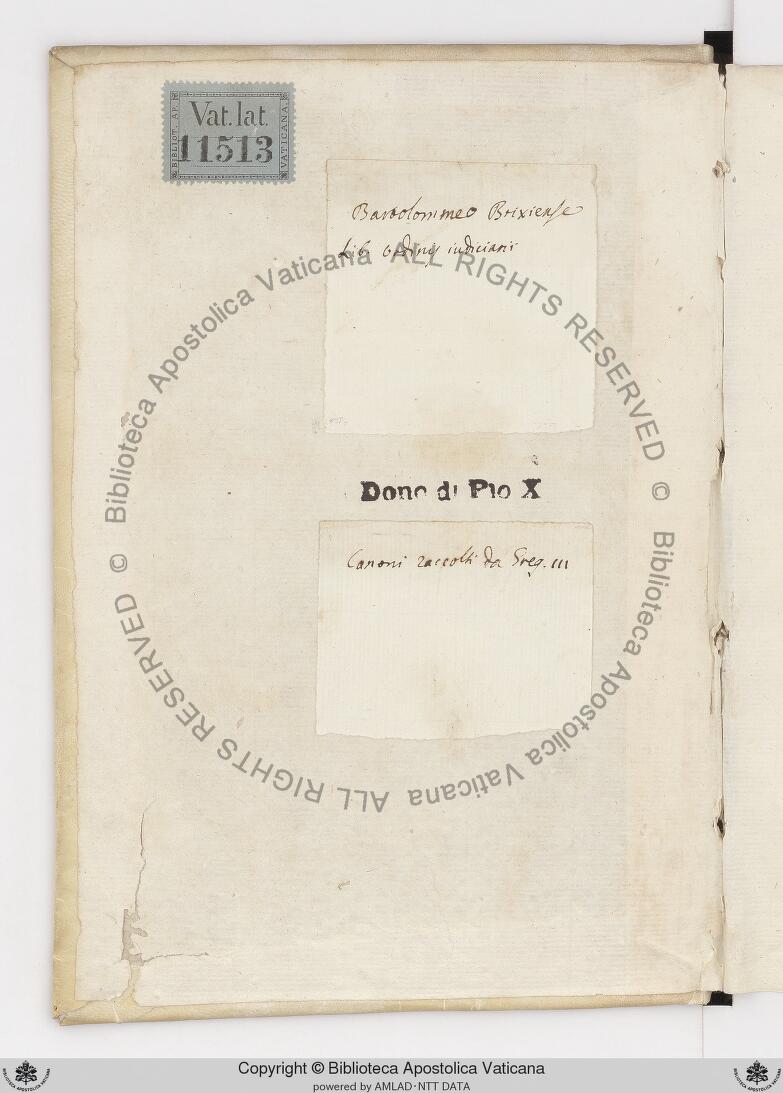
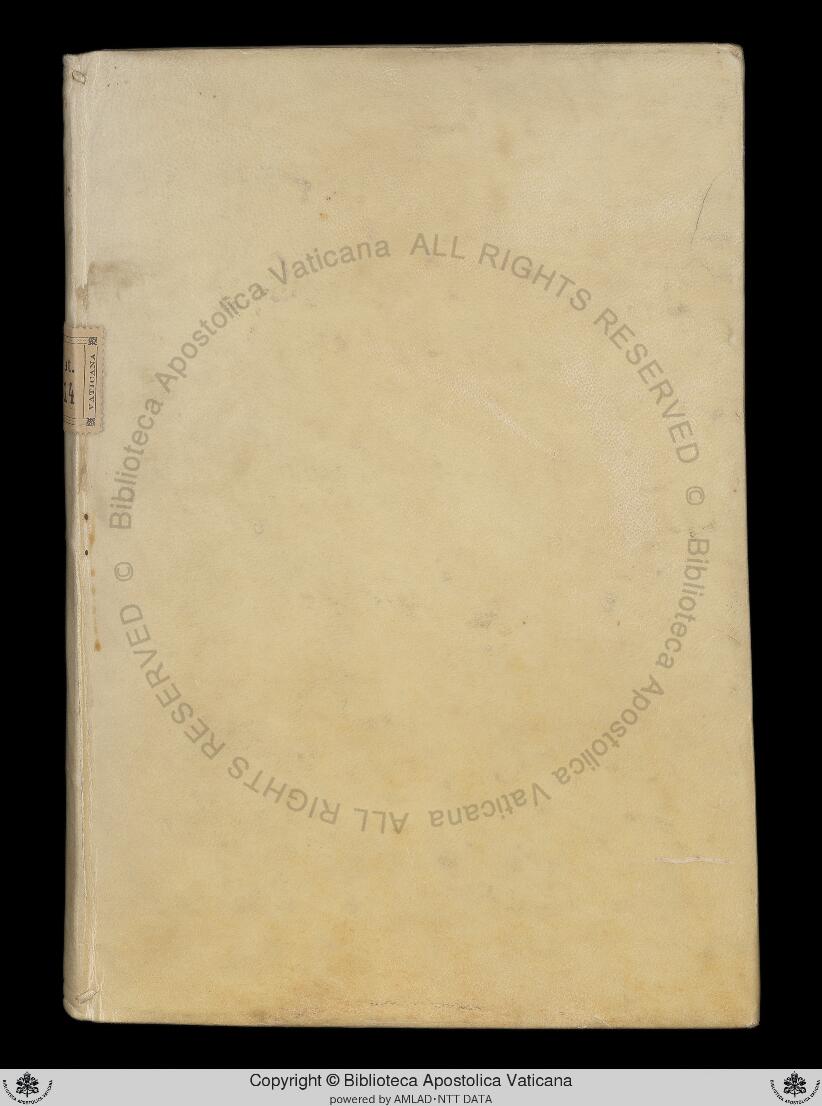
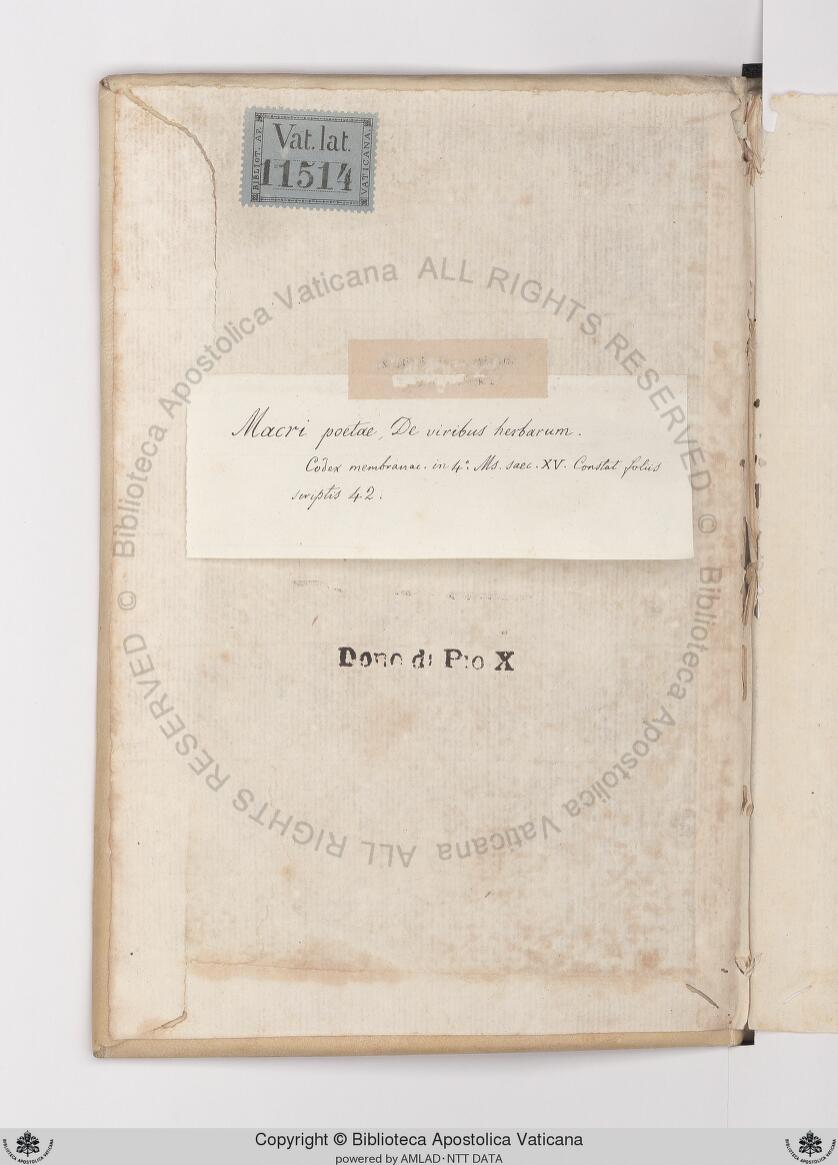
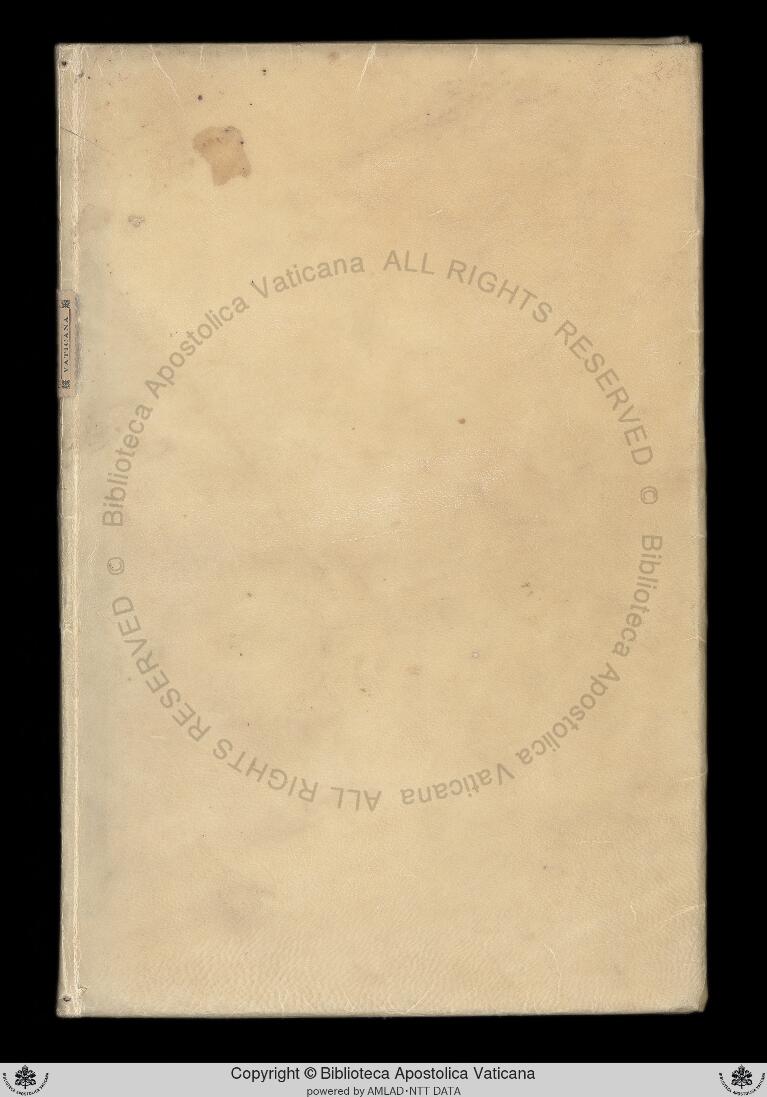
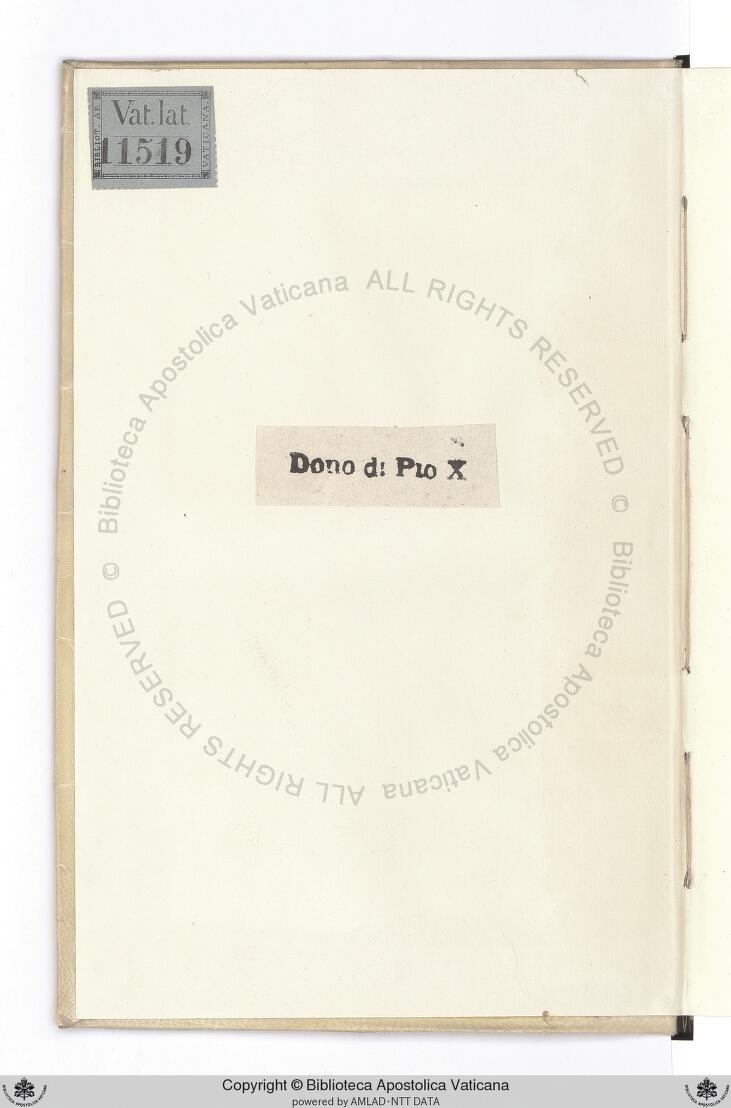
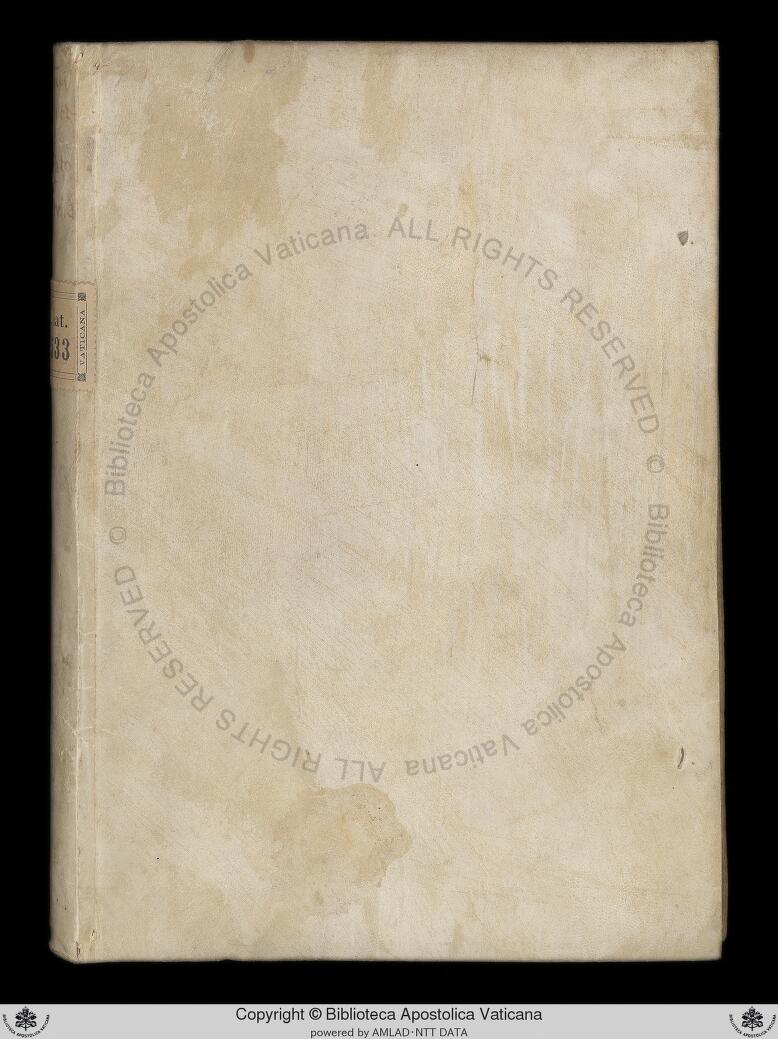
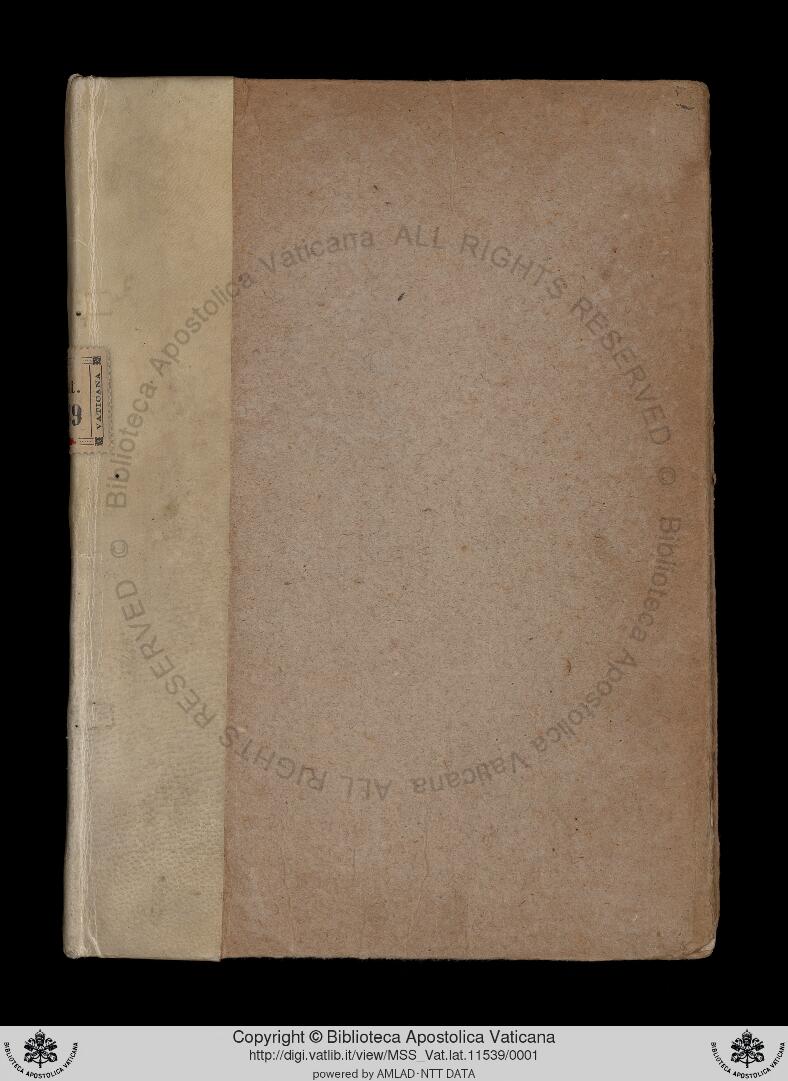
One claim used to support the claim of a Jesuit rebinding is that the vast majority of former Collegio Romano manuscripts in the range Vat. lat. 11414–11709 reportedly have identical covers, and that the Voynich’s is quite similar. The Vatican Library has digitized many of these books, including their covers, so this is something we can actually check.
So, are the vast majority of those manuscript covers identical? Or even similar? And how does the cover of the Voynich Manuscript compare to them? And how does it compare to manuscripts found elsewhere that have nothing to do with the Jesuits?
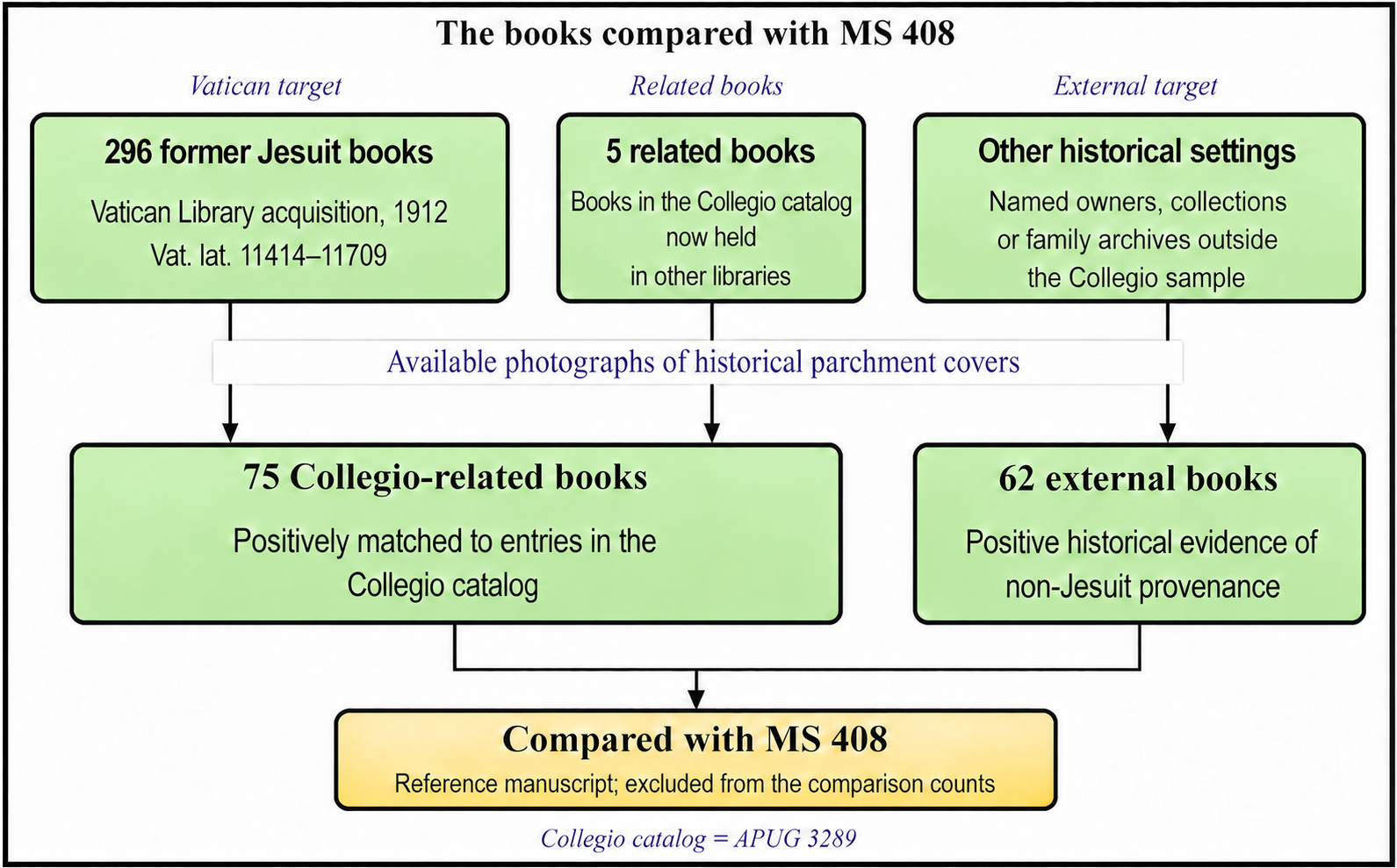
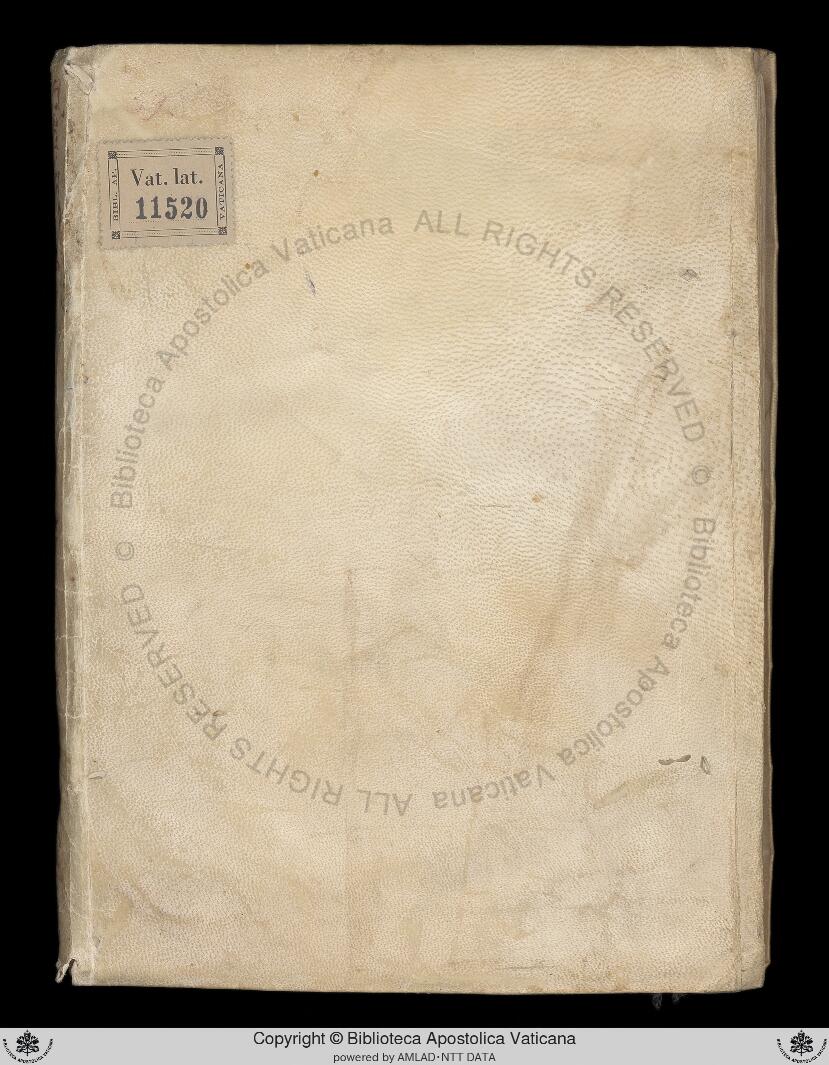
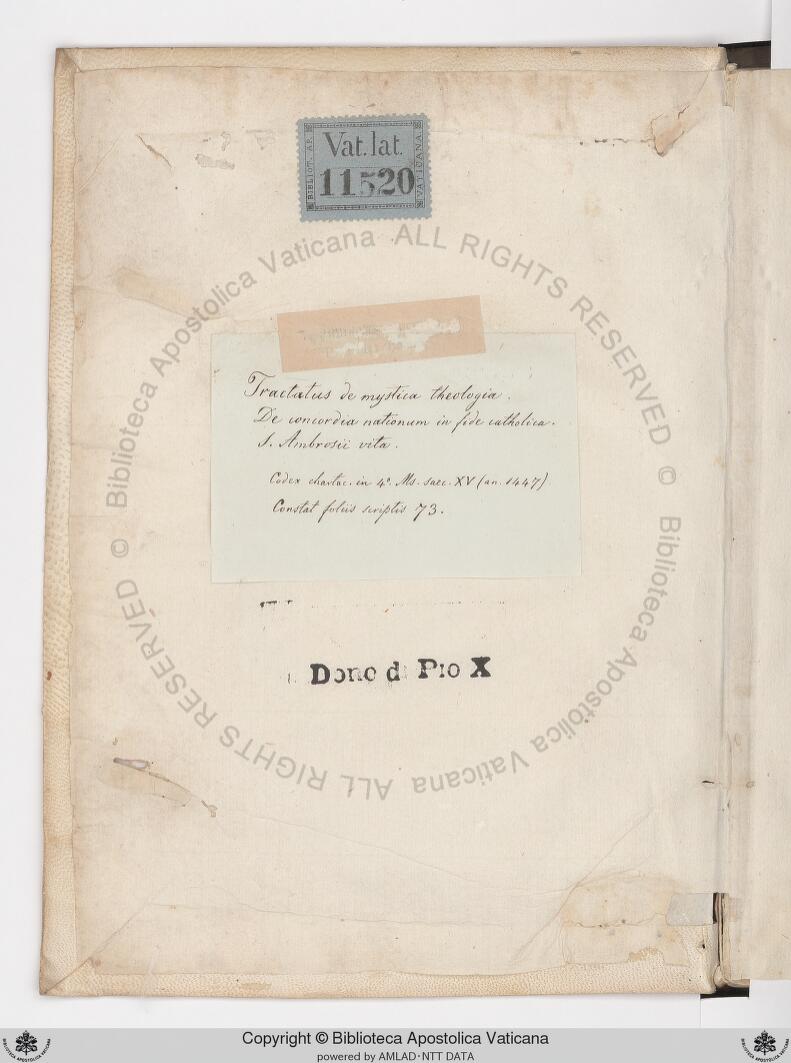
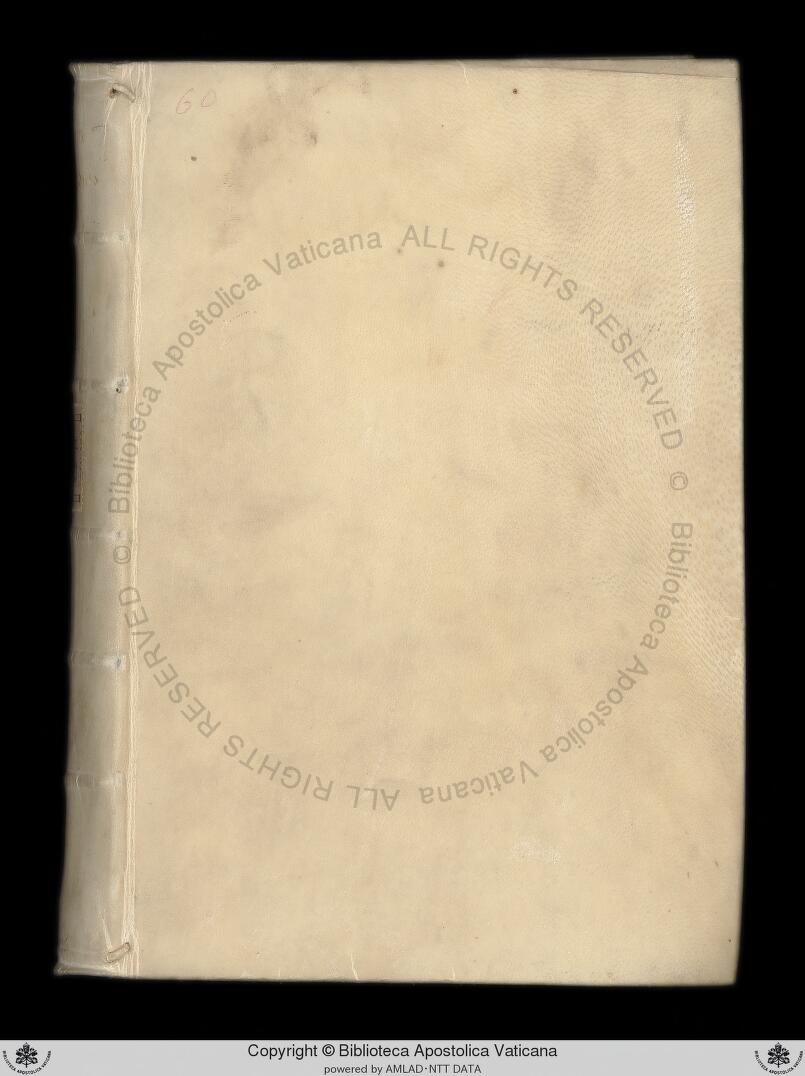
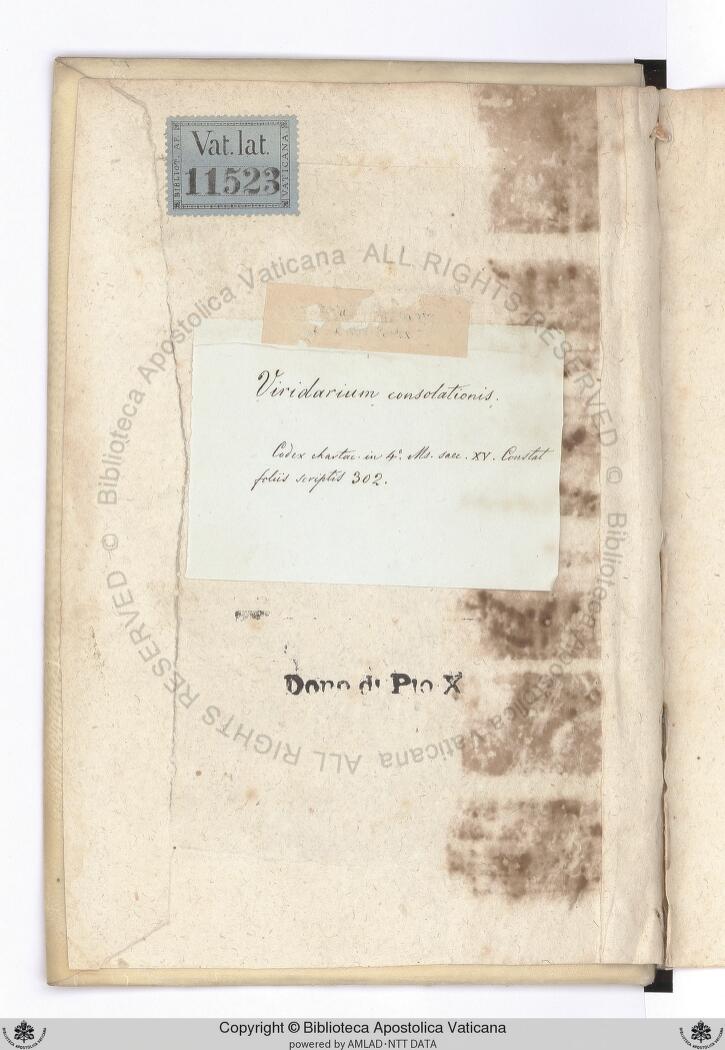
A visual inspection of the available digital images allows us to check these questions for ourselves. To assemble a group for comparison with the Voynich’s cover, I looked for manuscripts with both available cover photographs and a confident link to a specific entry in the Collegio catalog, through a later shelfmark annotation or a strong bibliographical match. I identified 75 manuscripts with historical parchment or partial-parchment covers that met those criteria. Of these, 70 are held by the Vatican Library within Vat. lat. 11414–11709—the 296-shelfmark range covered by the “identical covers” claim—and 5 are held in other libraries.
Leather bindings and modern replacements were treated as intended exceptions to the claim that the “vast majority” had identical covers so those were not included in the sample set either. There is no apparent connection between the covers’ physical characteristics and the availability of photographs or documented catalog matches, so it seems reasonable that we can treat this Collegio-related group as an unbiased sample within eligible surviving parchment-covered manuscripts.
Alongside this group, we can look at an external comparison sample of parchment-covered books with documented ties to other historical owners, collections or contexts in which they were created. For that I identified a sample of 62 manuscripts. Together, these two groups let us ask whether the similarities to the Voynich Manuscript's cover are distinctive to the Collegio comparison group or not.
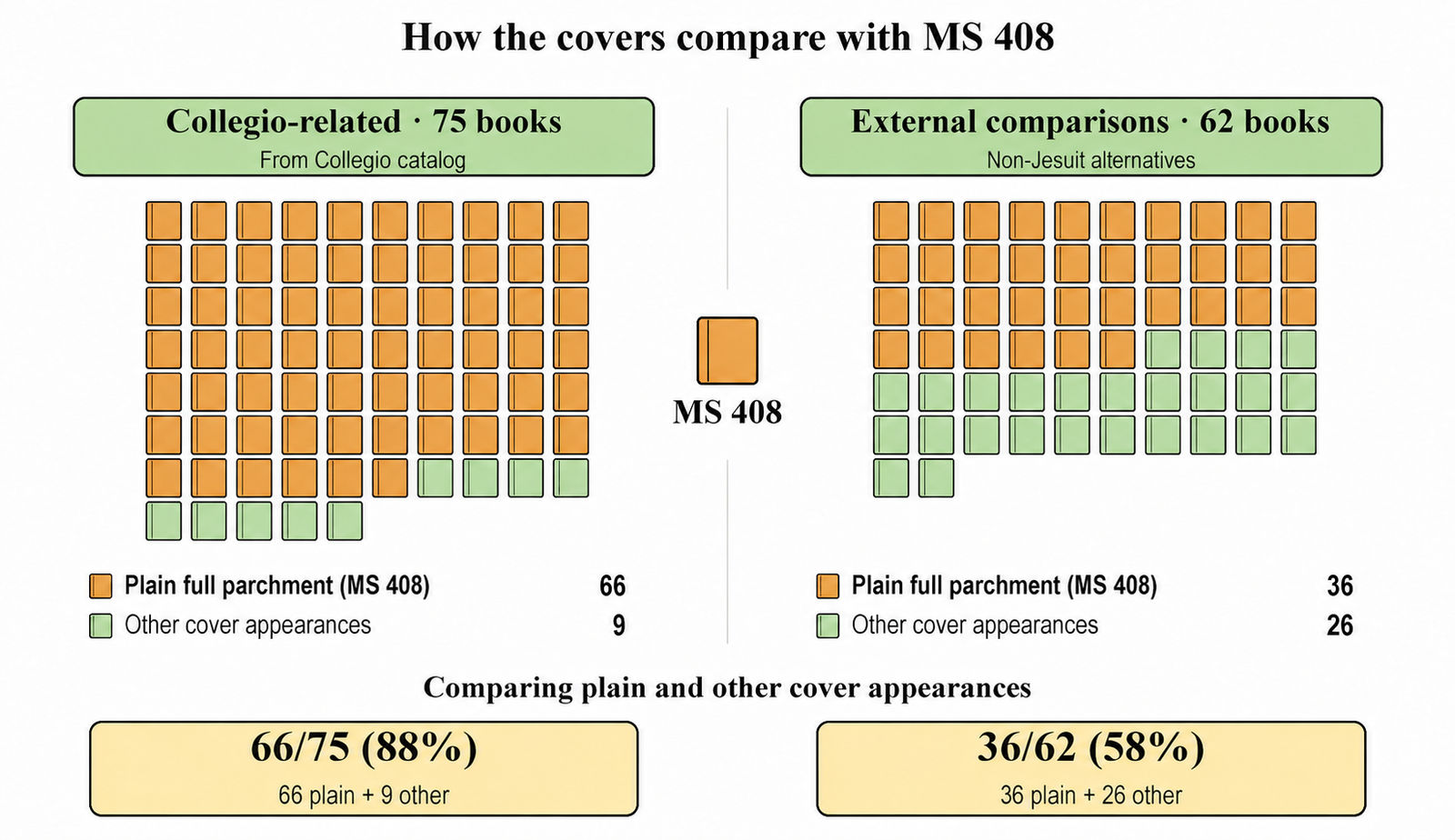
Figure 2 depicts the process with the two comparison groups: 75 Collegio-related books and 62 external examples.
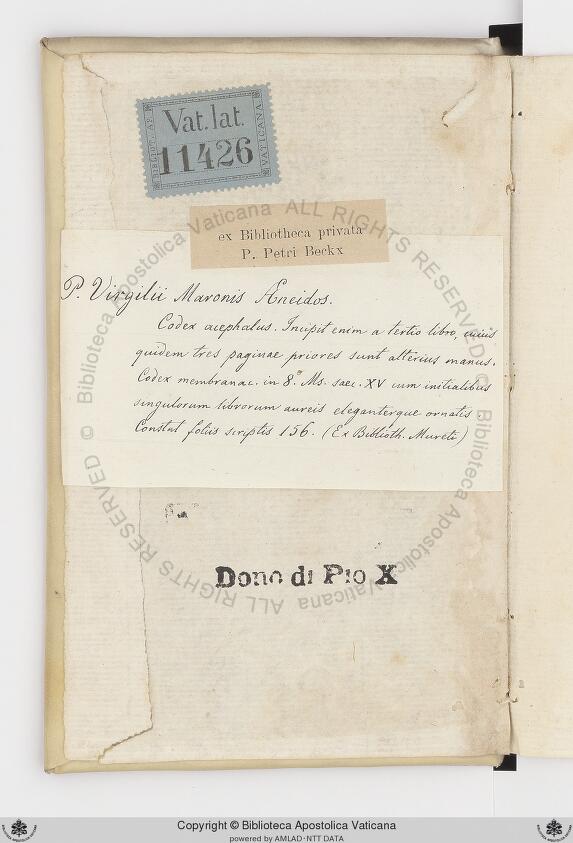
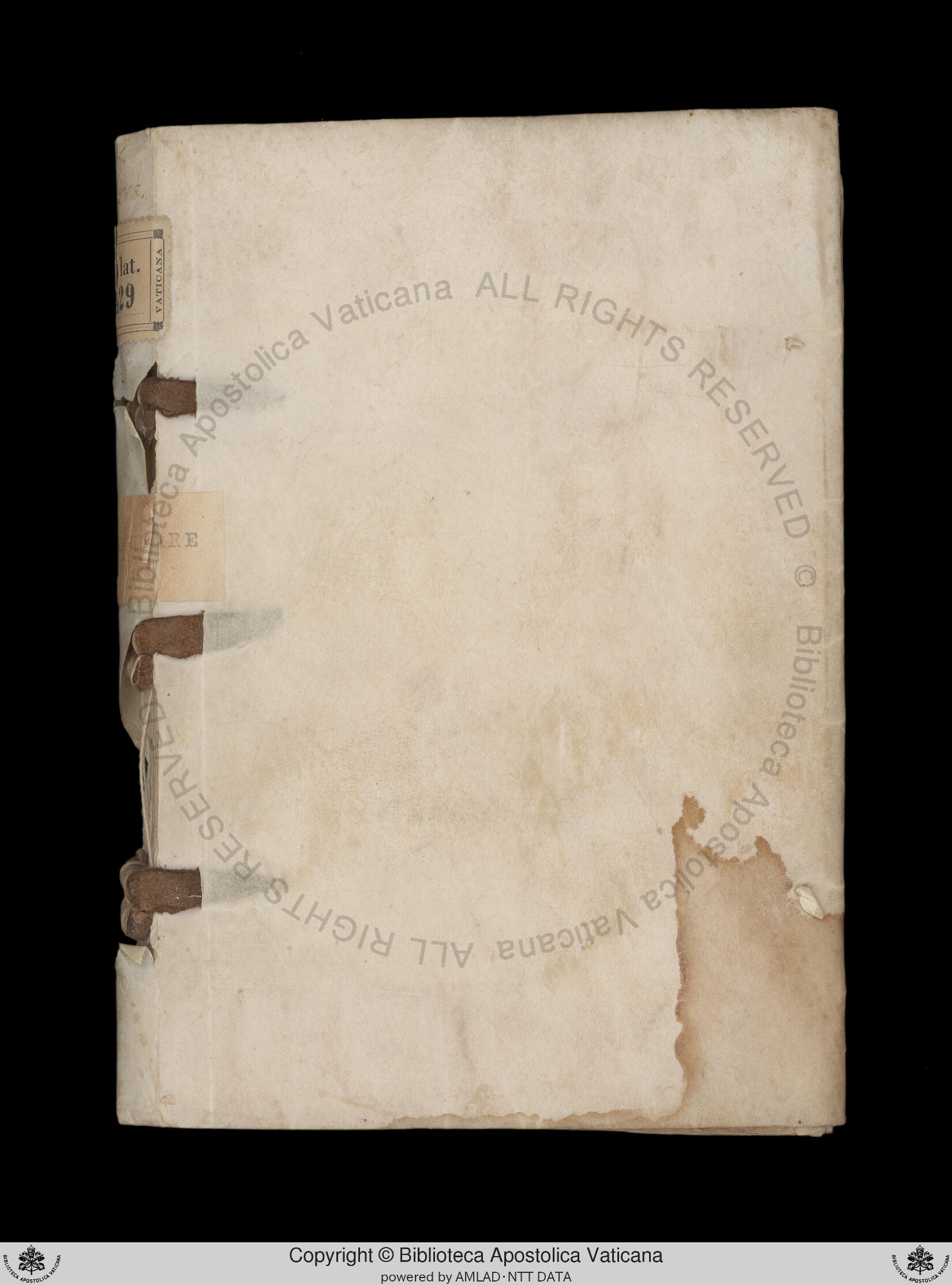
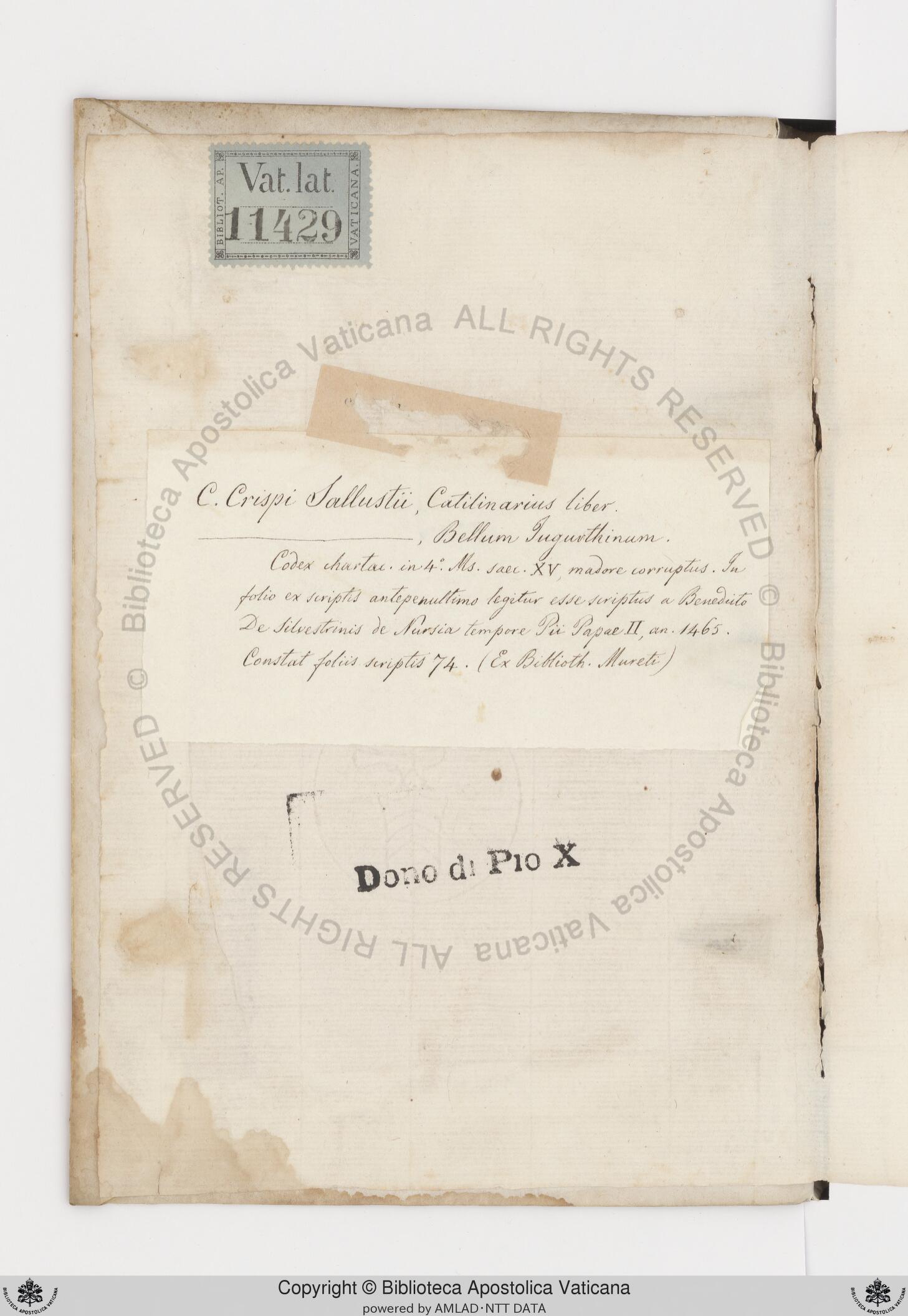
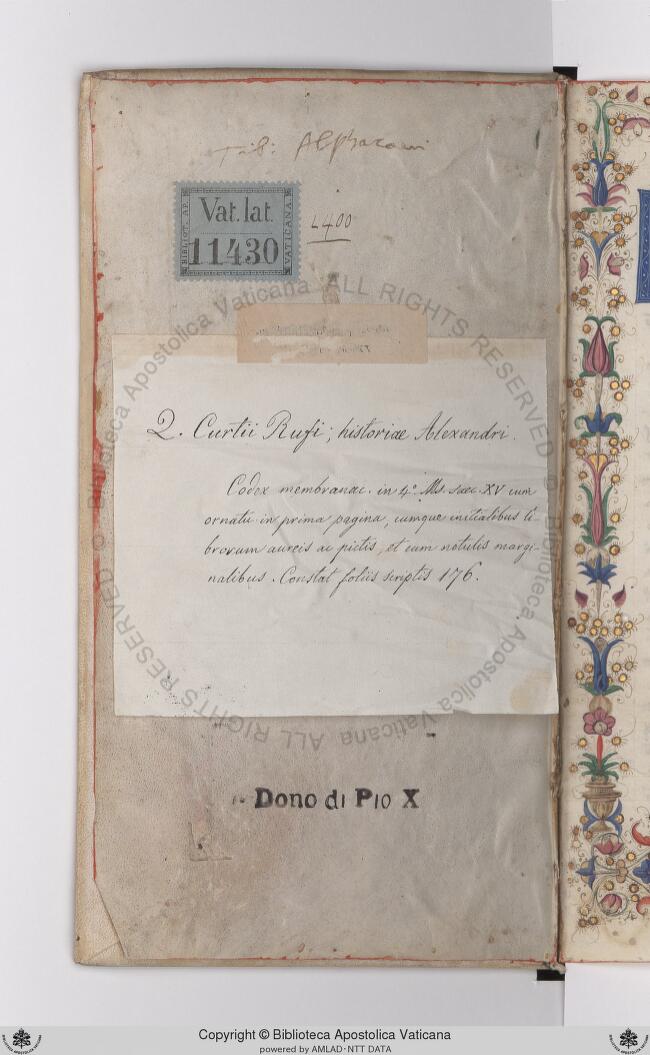
There are actually some broad differences across the covers of the Collegio-related manuscripts. For example, Vat. lat. 11430 has a tooled frame and a central ornament, while several others, such as Vat. lat. 11450, have a parchment spines with contrasting sides. Figure 3 illustrates the typical variation one finds across the sample set.
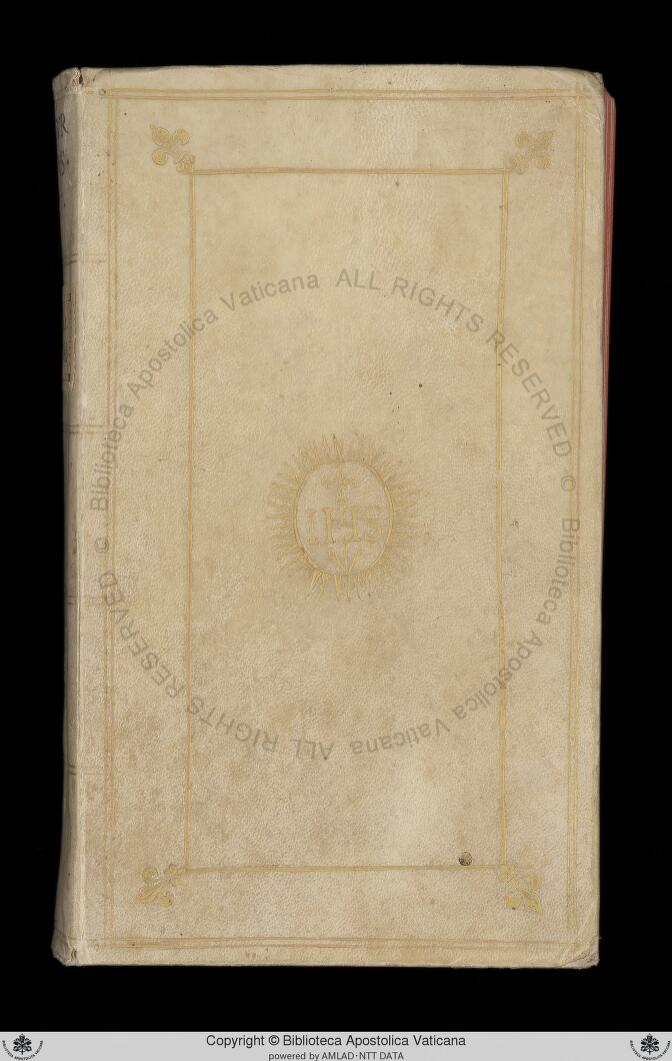
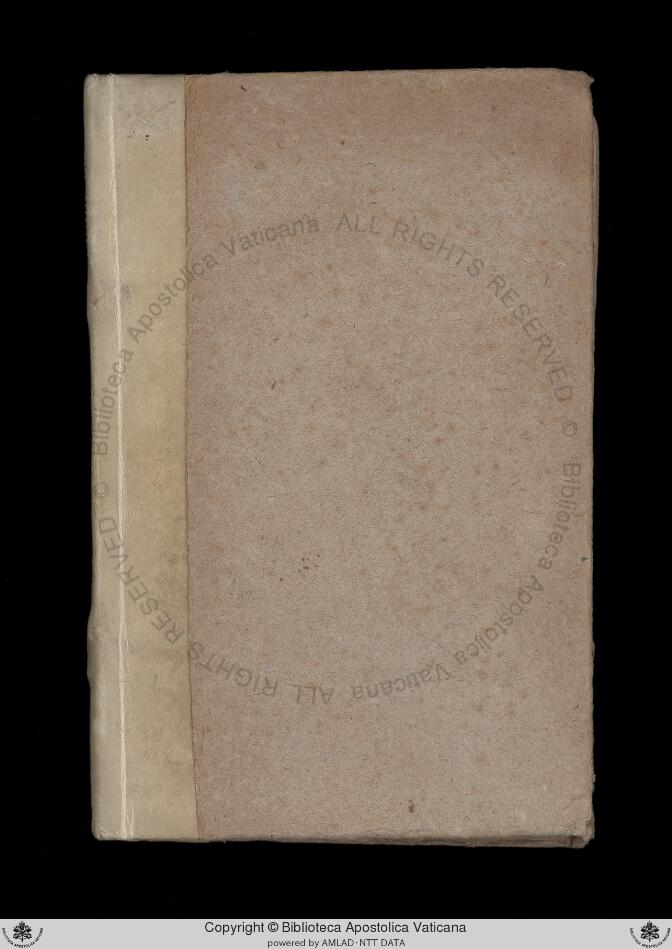
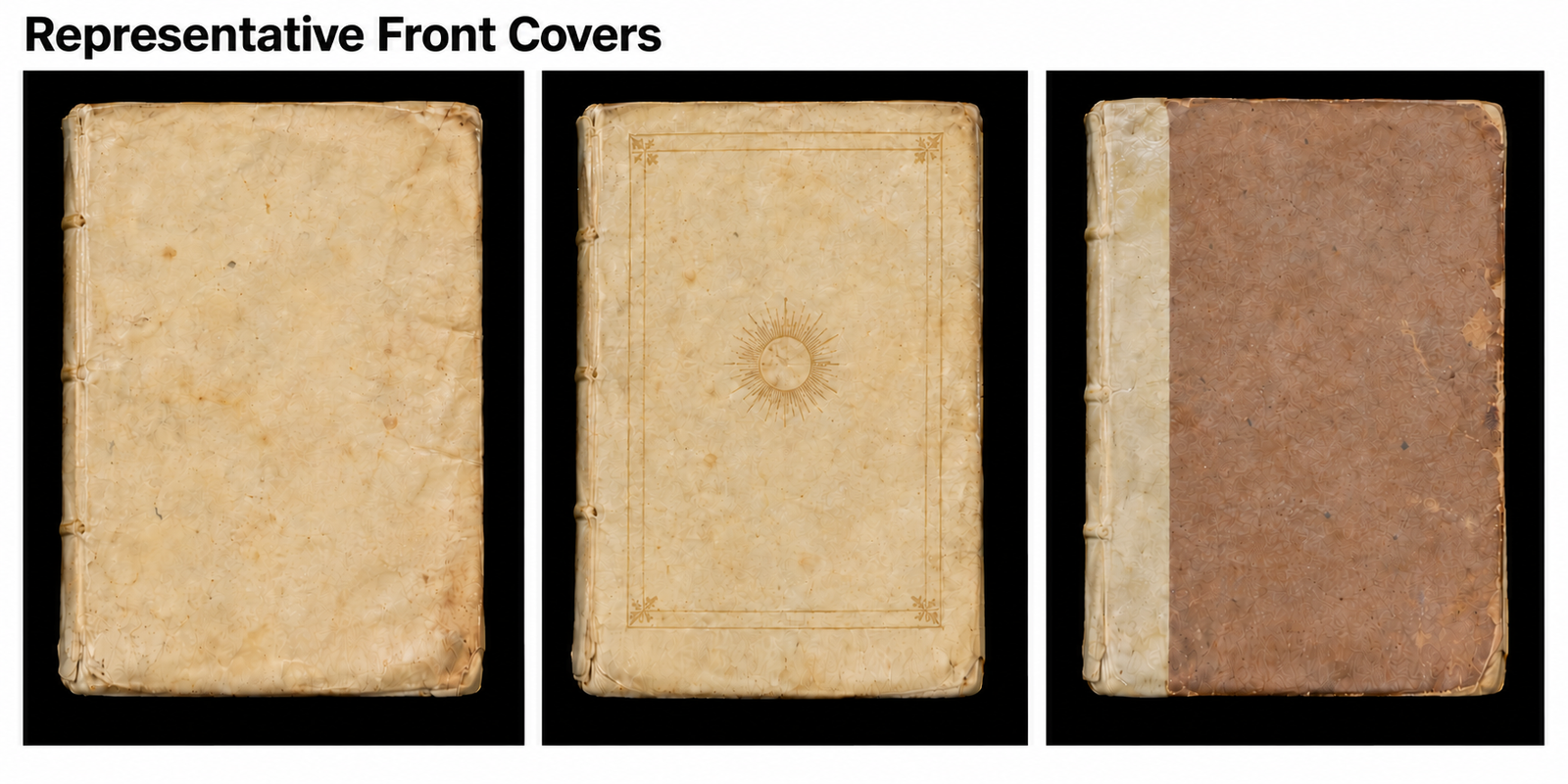
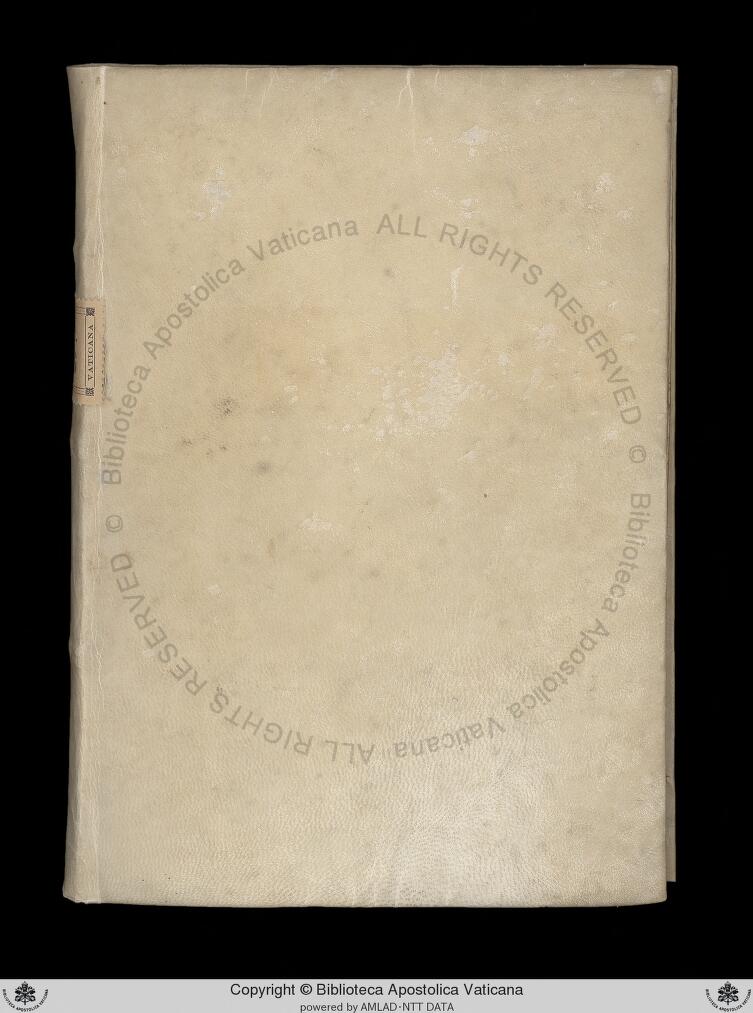
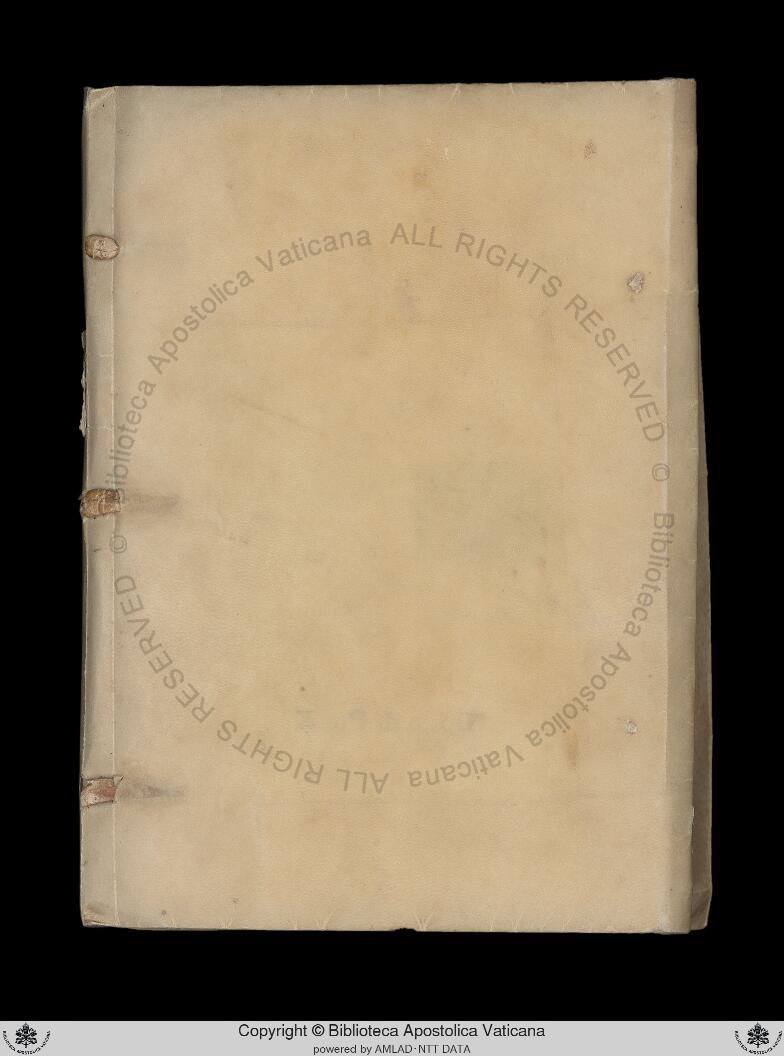
Figure 4 summarizes how the cover appearances in the two comparison groups compare with the Voynich Manuscript’s. Plain parchment covers are depicted in each of the comparison groups as orange icons. Yes, plain parchment covers predominate: 66 of the 75 catalog-linked books, or 88%, have a plain full-cover appearance broadly like the Voynich’s. But "identical" to each other? Not really.
And is the Voynich cover "quite similar" to them? Well, it's similar to some of them. In some ways. But is it enough to suggest the same binding history? That’s a bigger claim.
Those exceptions don’t by themselves disprove a claim about the “vast majority.” Most of the books still do share a general appearance. But is that appearance distinctive to the Collegio Romano manuscripts? That's a key question. So we need to also compare them to manuscripts from elsewhere.
And that comparison is also revealing. Looking at the sample of 62 manuscripts from other sources—ones not associated with the Jesuits—we find plain full parchment covers occur on only 36 of them. That's 58%, against 88% in the catalog-linked Collegio group. So the resemblance of the Voynich Manuscript's cover to a majority of books in the Collegio Romano is real, but the same broad appearance also occurs on more than half of the comparison covers from elsewhere. A plain parchment cover isn't a distinct calling card for a Jesuit holding!
Plain parchment covers may have appealed to the Jesuits as a simple, economical choice. That could help explain their higher proportion in the Collegio sample, but the preference itself has not even been demonstrated. Nor would such a preference tell us whether the Jesuits supplied the Voynich’s cover.
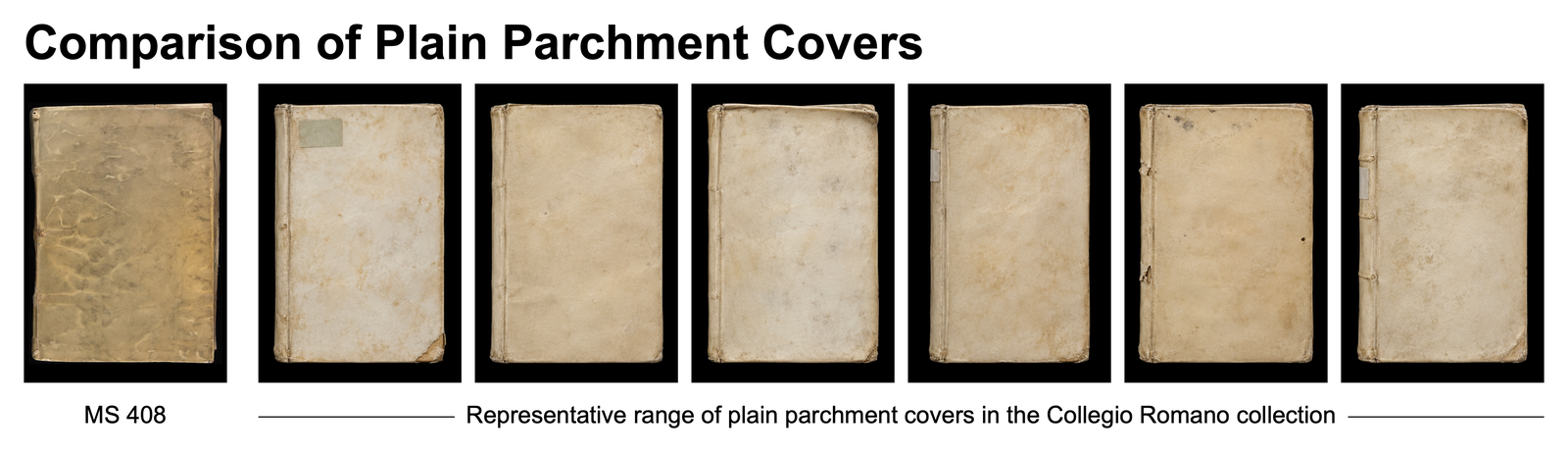
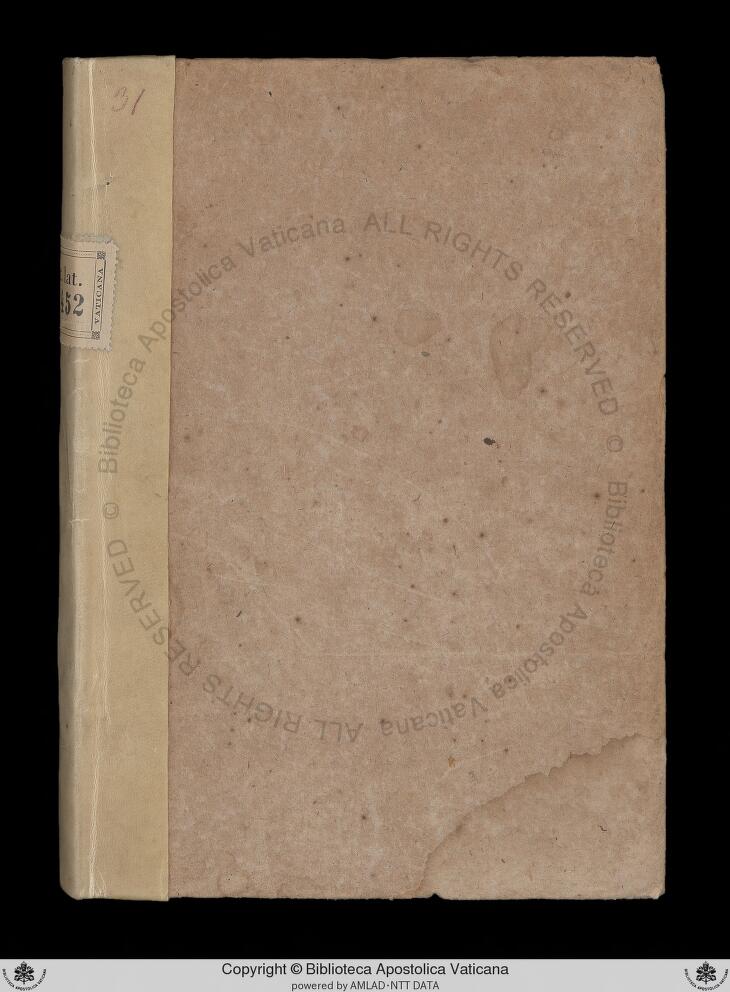
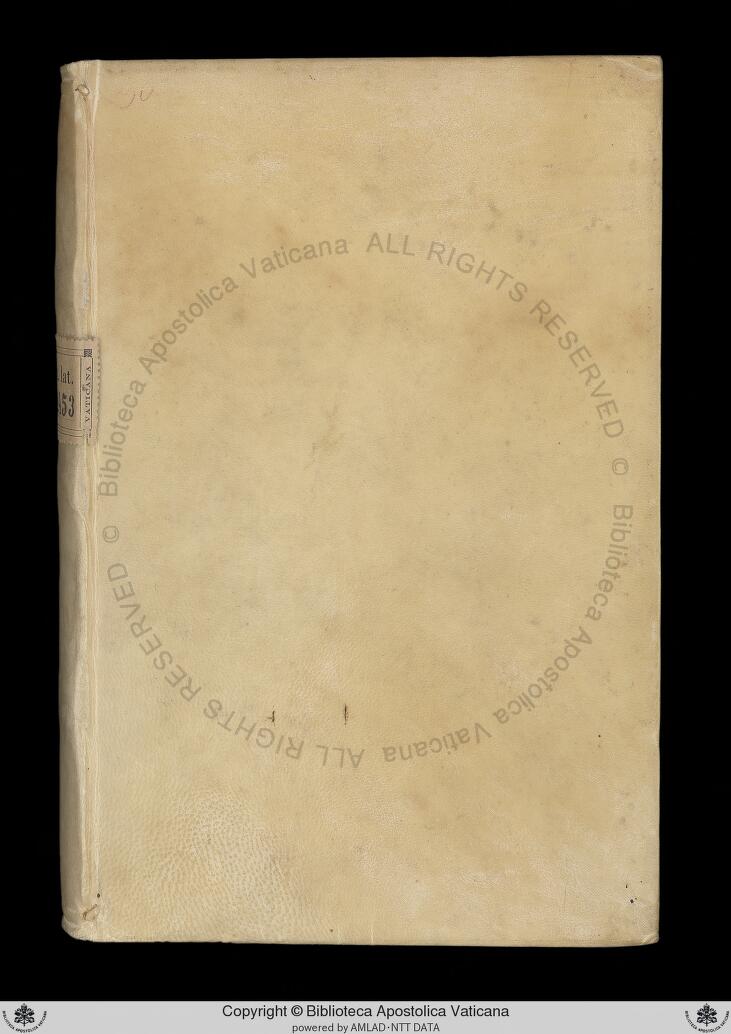
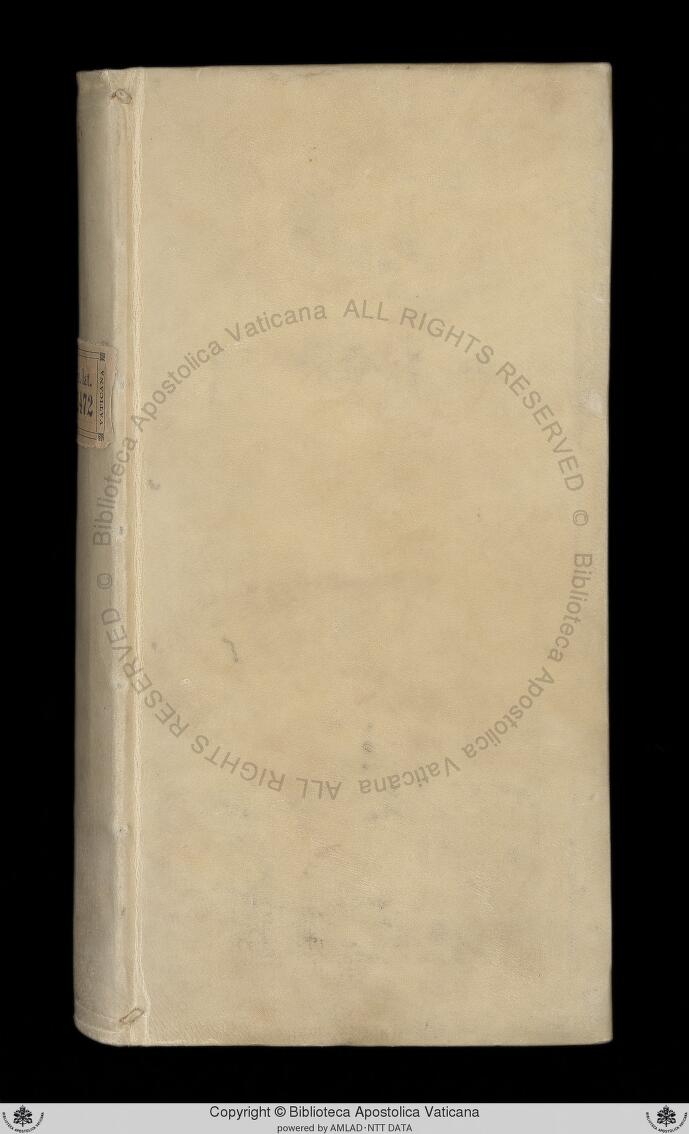
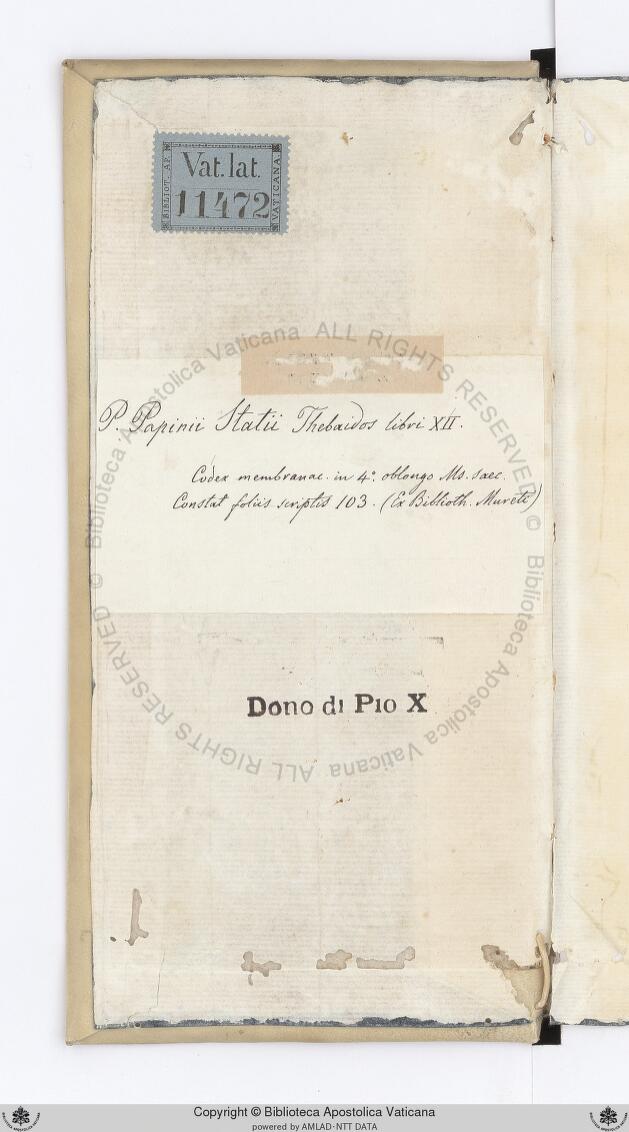
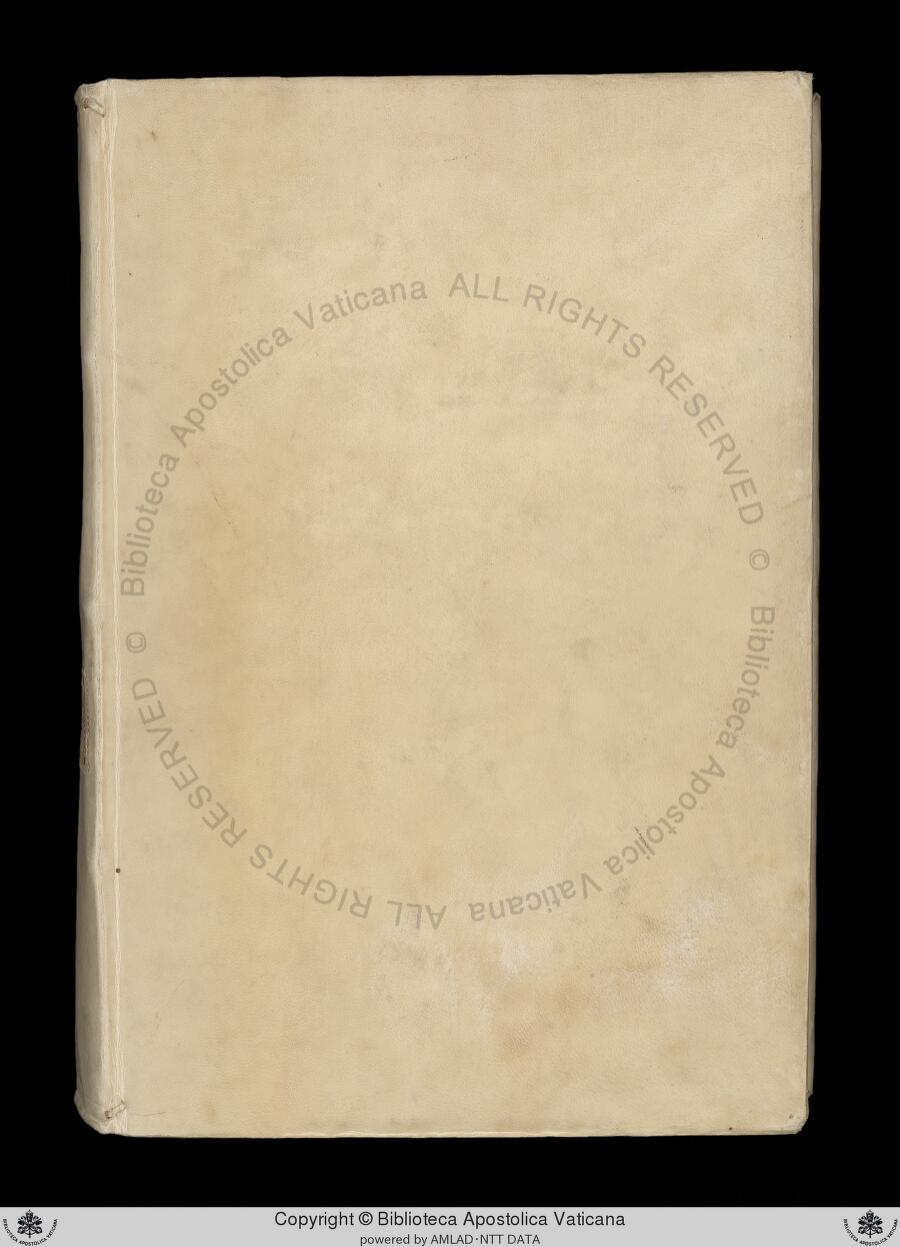
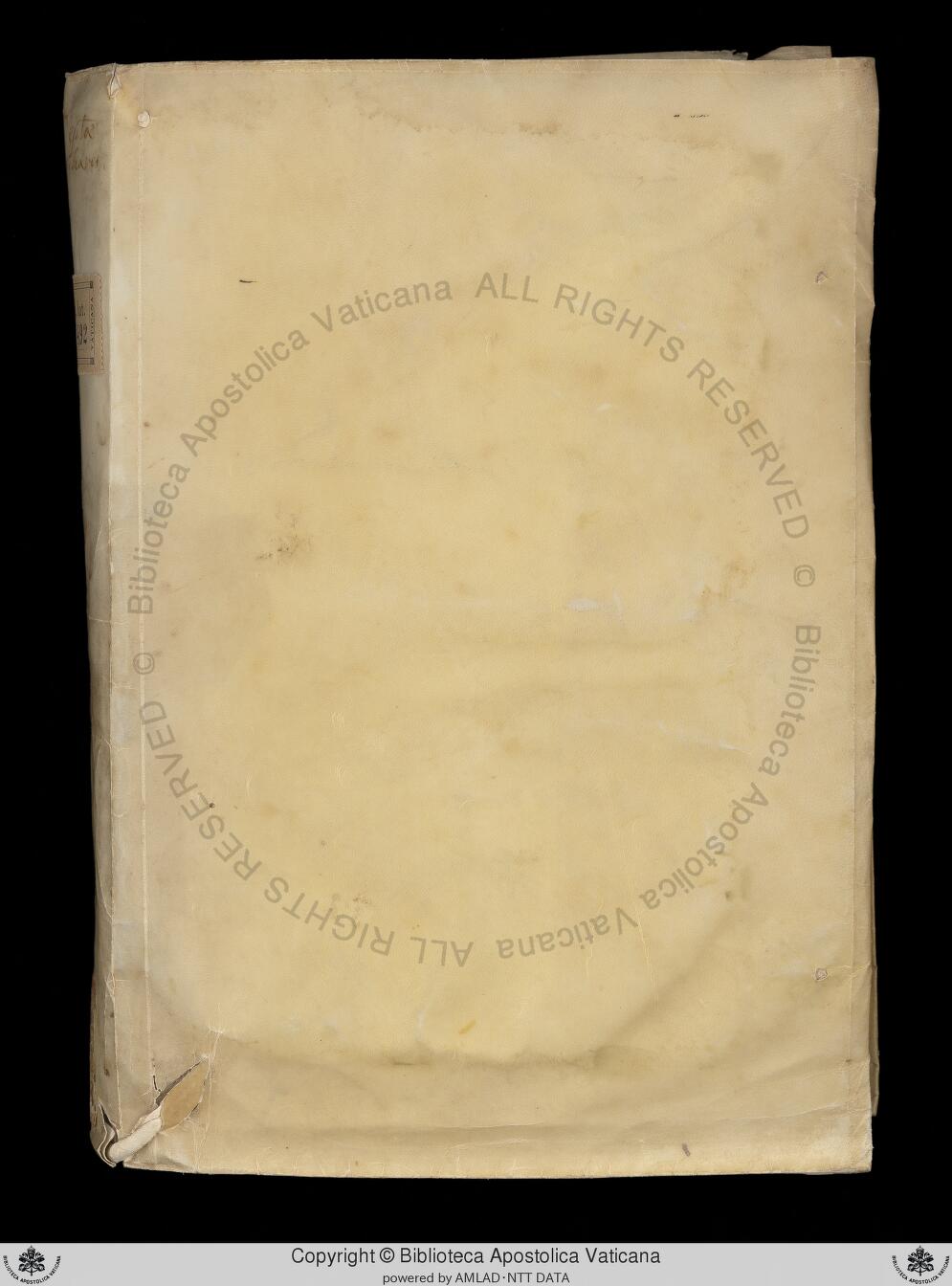
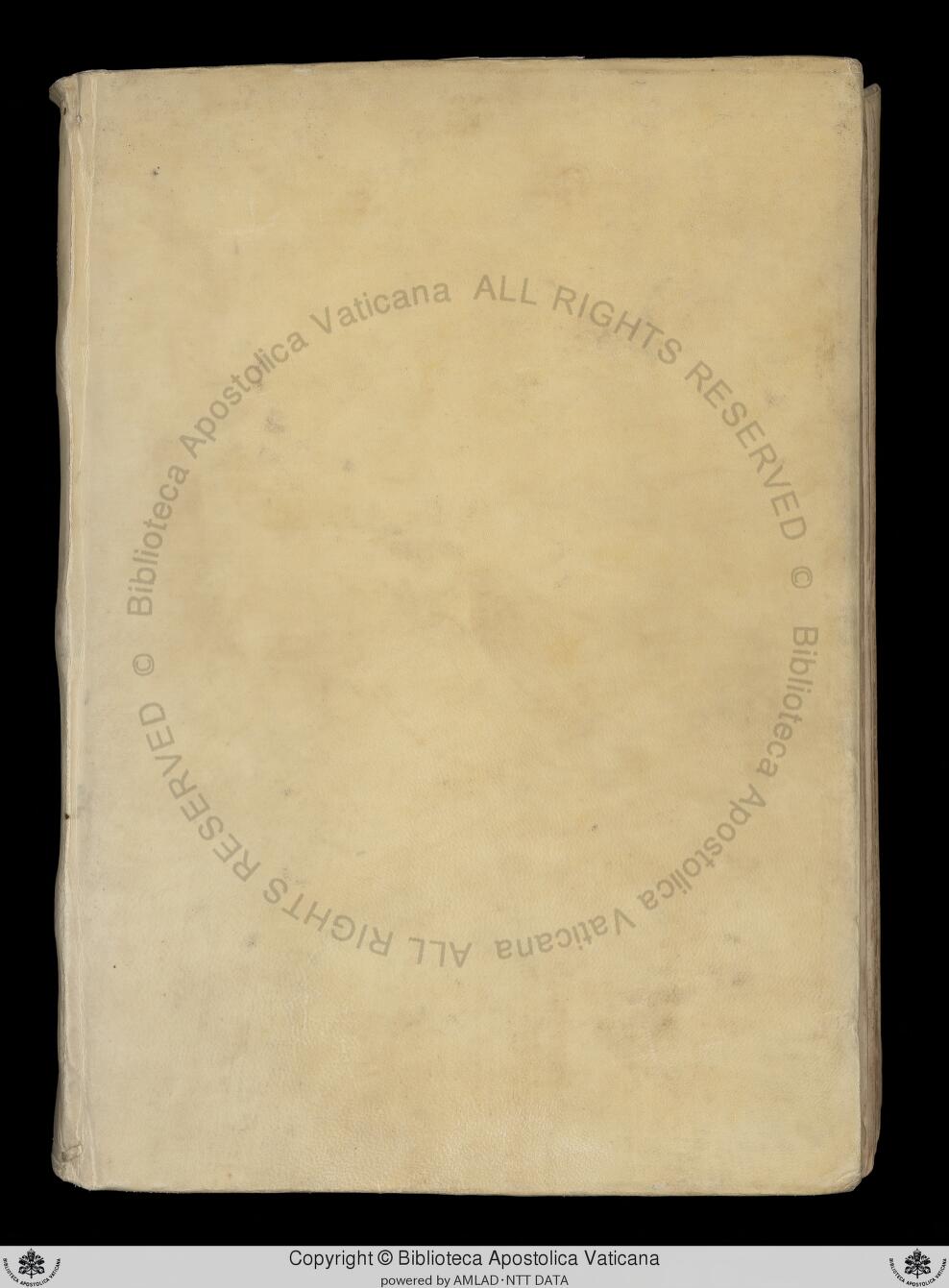
A cover being “plain parchment” still allows considerable variation in the parchment itself and how the cover was fitted and attached to the book. Figure 5 illustrates that variety, placing the actual Voynich cover beside images representative of plain Collegio covers. All seven share the broad appearance of plain parchment covers, but there are also distinct differences in the Voynich cover's appearance from the others. Enough that there's a good chance most people would come with the same answer in a game of “Which one of these things is not like the others?”. But these six images are still just composite illustrations representative of features seen across the Collegio samples, not facsimiles of six actual manuscripts.
The original cover photographs, however, will let you judge the resemblance for yourself so you can check the observations made here. I'll provide links to those shortly, but when inspecting those photographs, pay particular attention to the parchment quality, surface textures, folds, fitting and attachment—the details that may preserve evidence of how and when a cover was made. Allow for changes caused by later handling and storage. Apparent color differences also require caution because the photographs were taken in entirely different setting, and therefore under different lighting and photographic conditions.
So the question we should be asking is whether the books merely share a general look or do they share construction features that might point to a common binding history. The next obvious question is whether the construction of the Voynich’s cover might supply a more distinctive connection.
Never overlook the corner cases
Here's the observation I find most telling, and as far as I know it hasn't been raised in the Voynich literature.
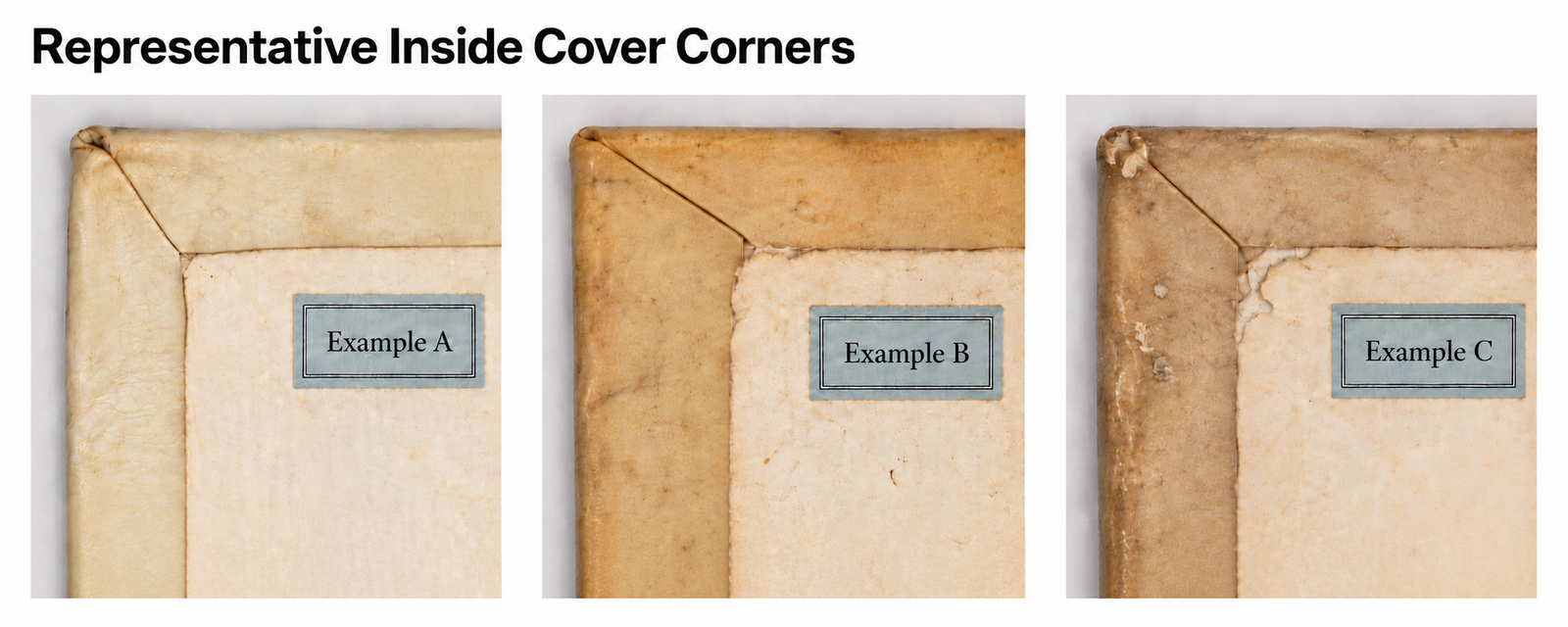
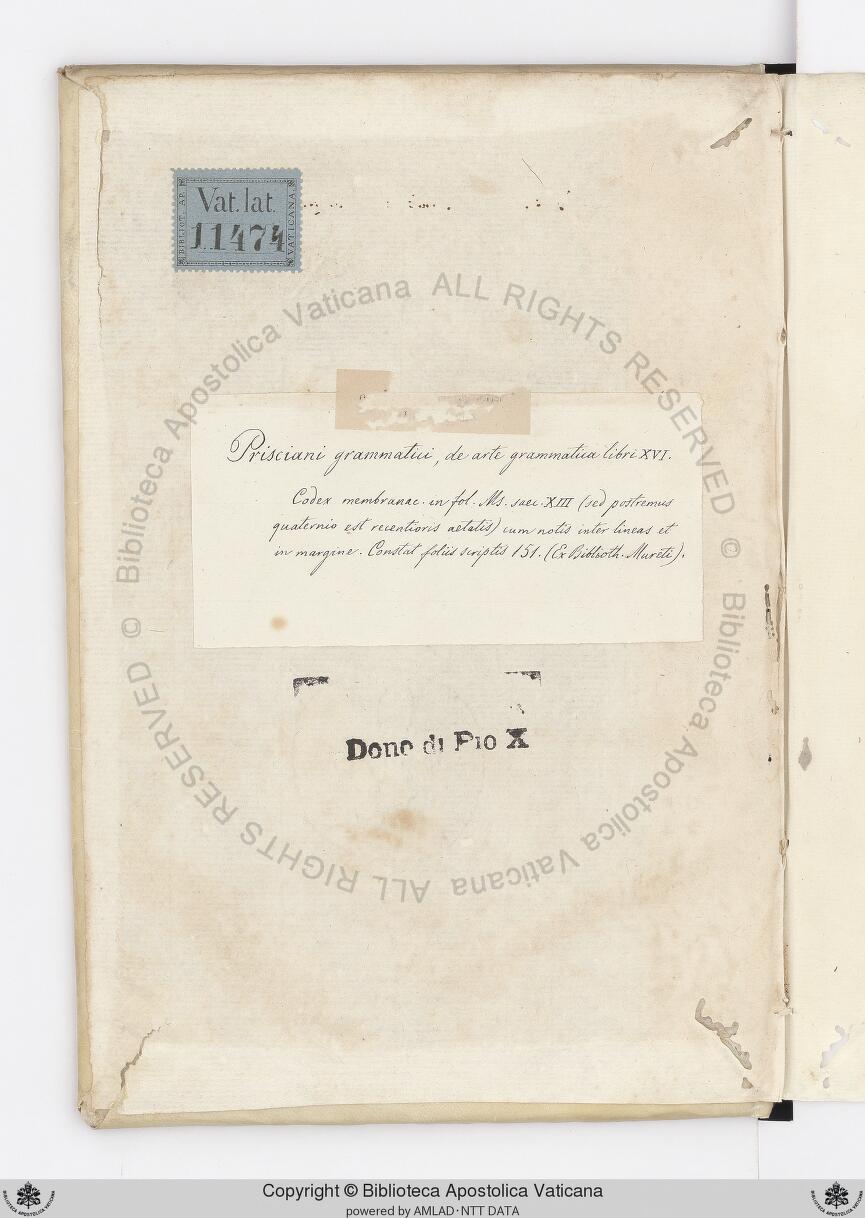
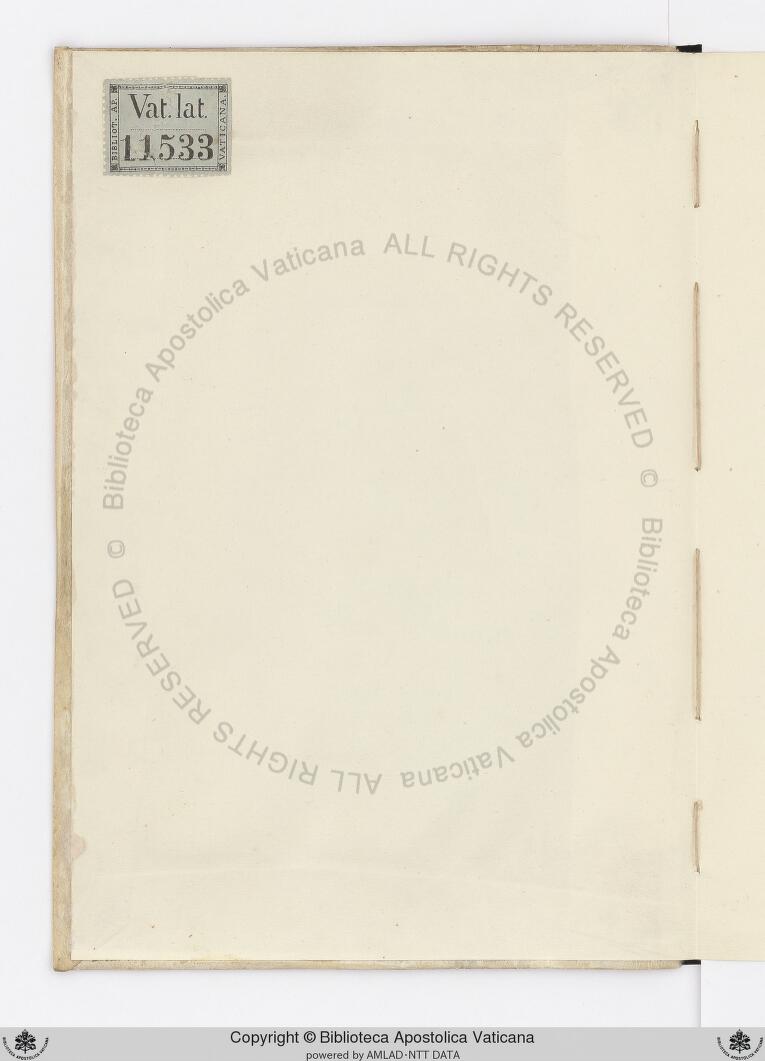
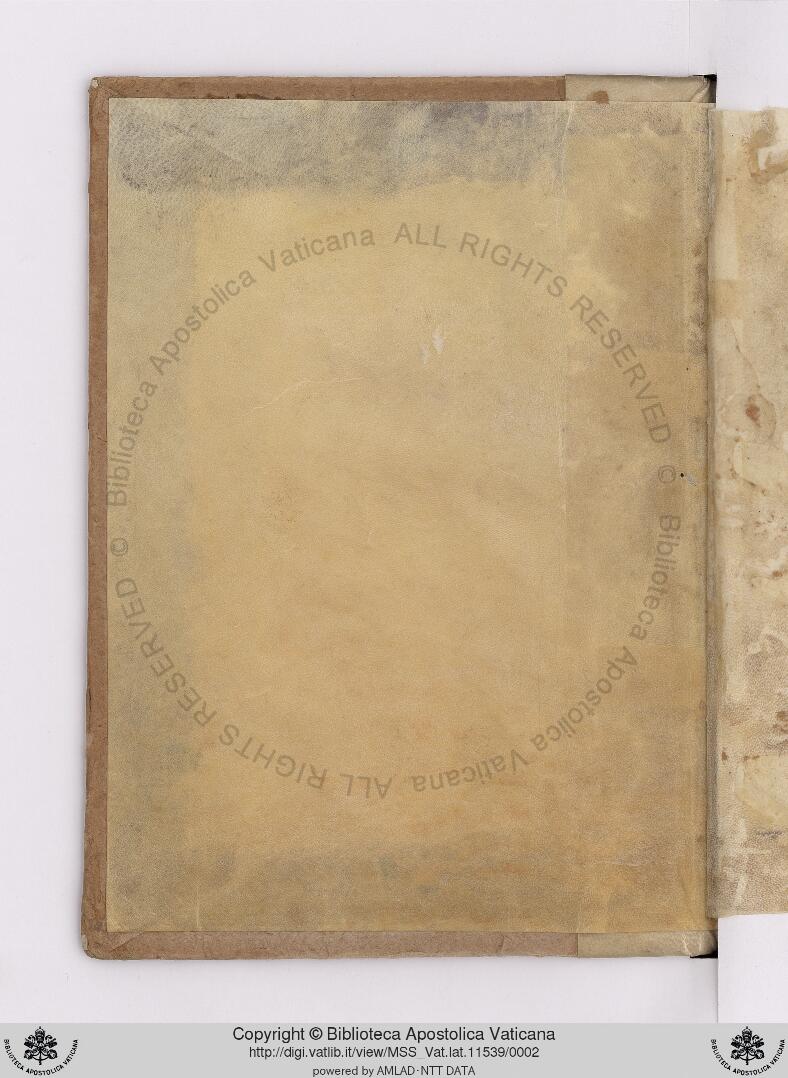
When a binder wraps parchment around a cover, the excess at the edges gets folded over to the inside: these are the turn-ins. Where two turn-ins meet at a corner, the binder has to deal with the extra bulk somehow. A common solution is to cut the corner on a diagonal, so the two turn-ins meet along a roughly diagonal line, something like a mitered picture frame; the angle and overlap can vary. Another option is to simply square off one turn-in and let it butt against, or sit on, the other.
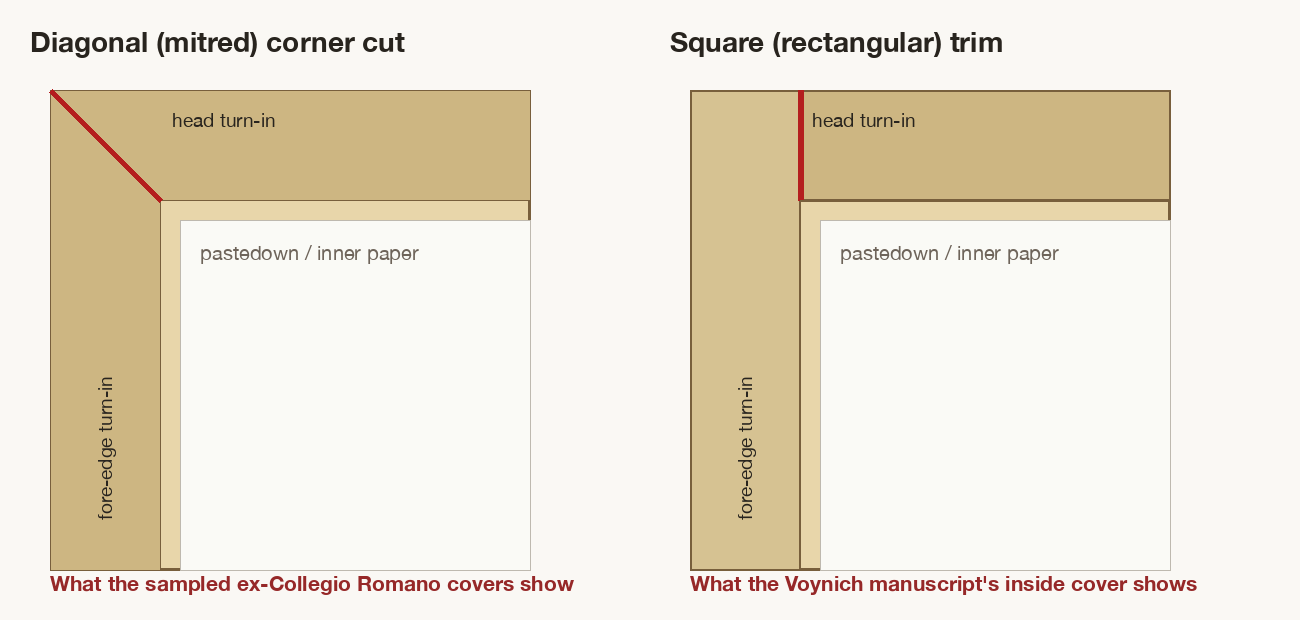
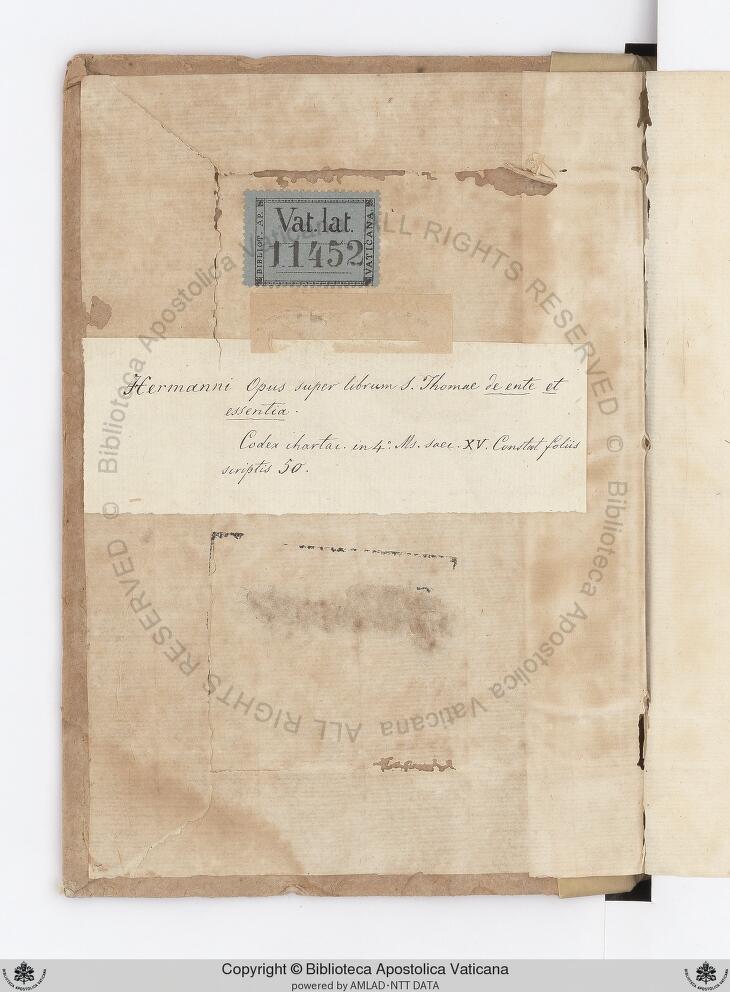
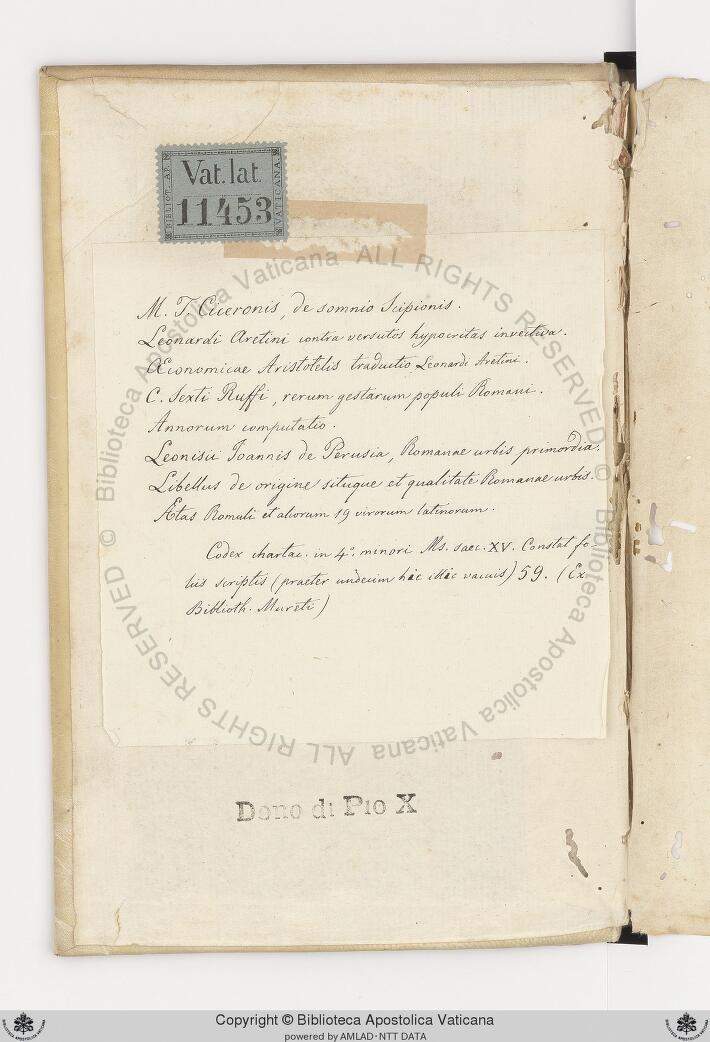
Figure 7 illustrates representative corner details found among the comparison manuscripts, including variations in diagonal turn-ins, pastedowns and joins.
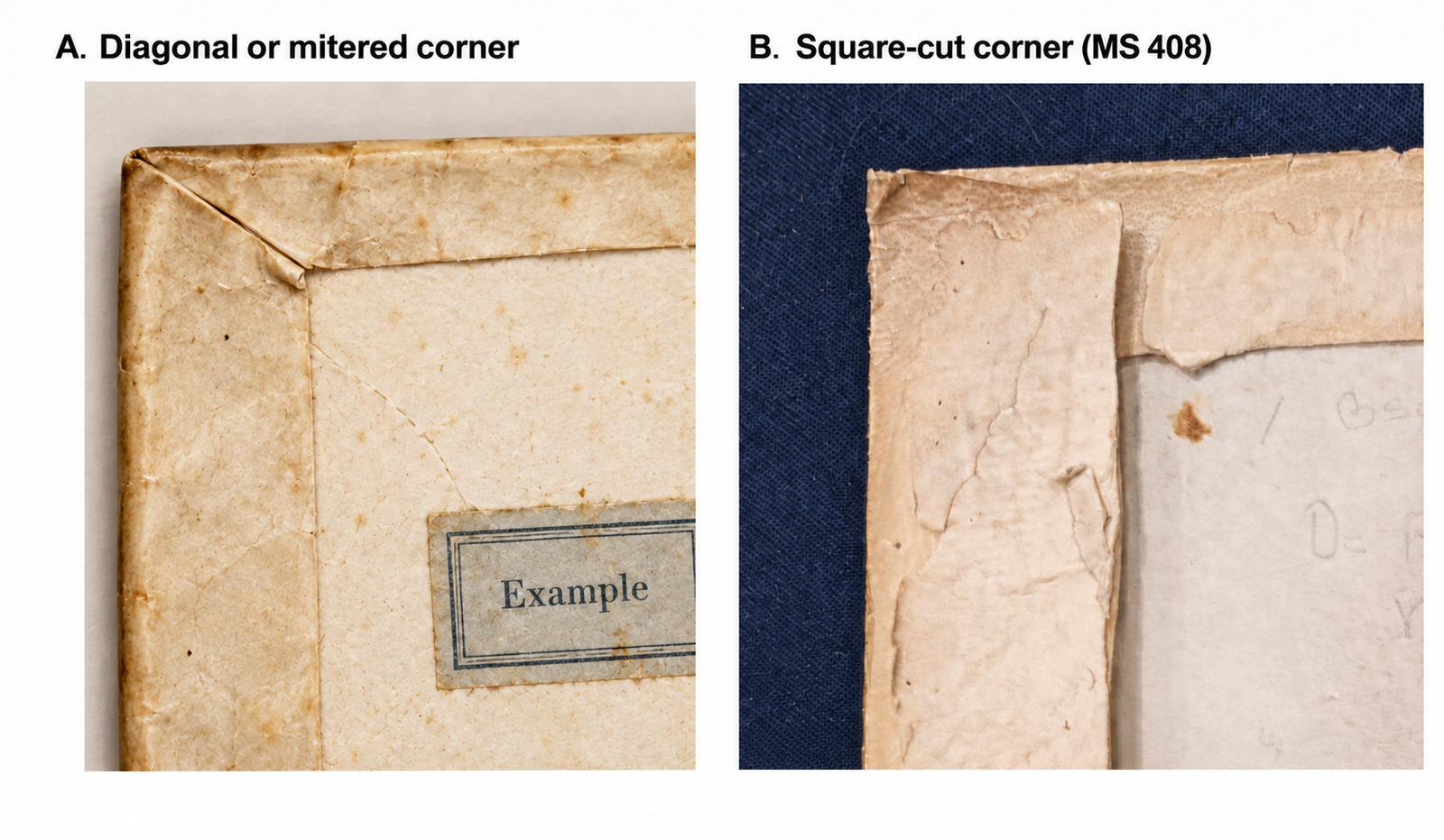
Now look at Figure 8 to see a side-by-side comparison of a representative diagonal arrangement with MS 408’s photographed corner. The Voynich's photographed corner shows an approximately square-ended meeting, rather than a mitered arrangement. That's a distinct way of finishing the cover—a different technique altogether!
So let's look closer at the prevalance of these corner techniques by inspecting the photographs of the inside front covers of the same sample sets as before. I used the same rules for both comparison groups, recording the visible upper fore-edge meeting rather than assuming what kind of cut might be hidden beneath a pastedown. A diagonal paper crack alone did not count. Curved or tapered edges, concealed junctions, and bindings without a comparable parchment junction were all recorded separately.
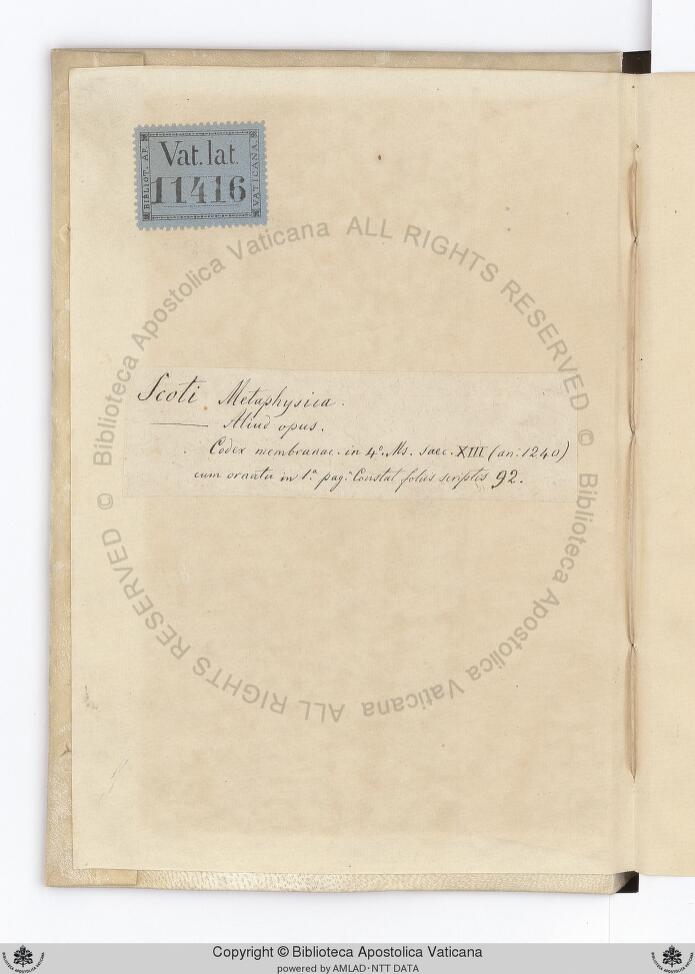
Figure 9 shows how the corner details of two groups compare with the Voynich Manuscript’s. Among the 75 catalog-linked Collegio books, there are 46 diagonal junctions, 2 square-ended overlaps, 6 without a comparable junction, and 21 indeterminate or unavailable. Both square-ended examples—Vat. lat. 11416 and Philadelphia Lewis E 136—have recorded Collegio catalog connections.

Thus MS 408's corner arrangement matches 2 of the 48 catalog-linked Collegio books classifiable as diagonal or square-ended: basically just under 5%.
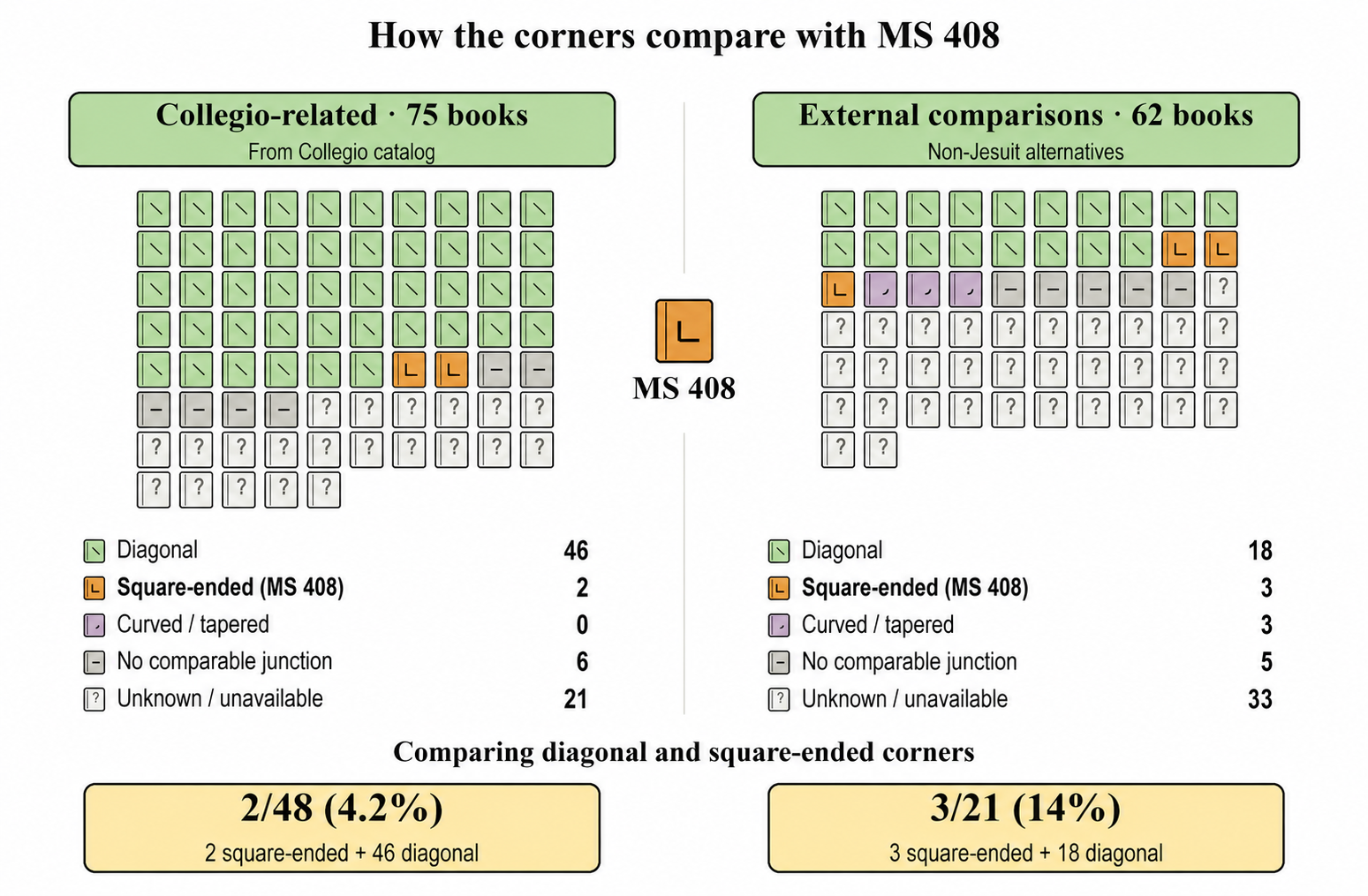
The 62 manuscript external comparison sample has 18 diagonal, 3 square-ended, 3 curved or tapered, 5 non-comparable, and 33 indeterminate junctions. Square-ended cases therefore make up 3 of 21 diagonal-or-square junctions or roughly 14%.
The three square-ended examples in the external group are Lewis E 58 which originated in Spain; Penn Ms. Codex 284, which was probably produced in Tuscany, Italy; and Penn Ms. Codex 1637, a contemporary eighteenth-century parchment binding whose place of manufacture is uncertain. Two of them also have the broad plain full-cover appearance. These are useful comparisons, but they are not claims of identical manufacture or complete non-Jesuit custody histories.


These comparisons neither prove equal populations nor rule out a Collegio origin. What it establishes more securely is recurrence elsewhere, and no demonstrated distinctive Collegio affinity for this visible feature of the plain full-parchment cover.
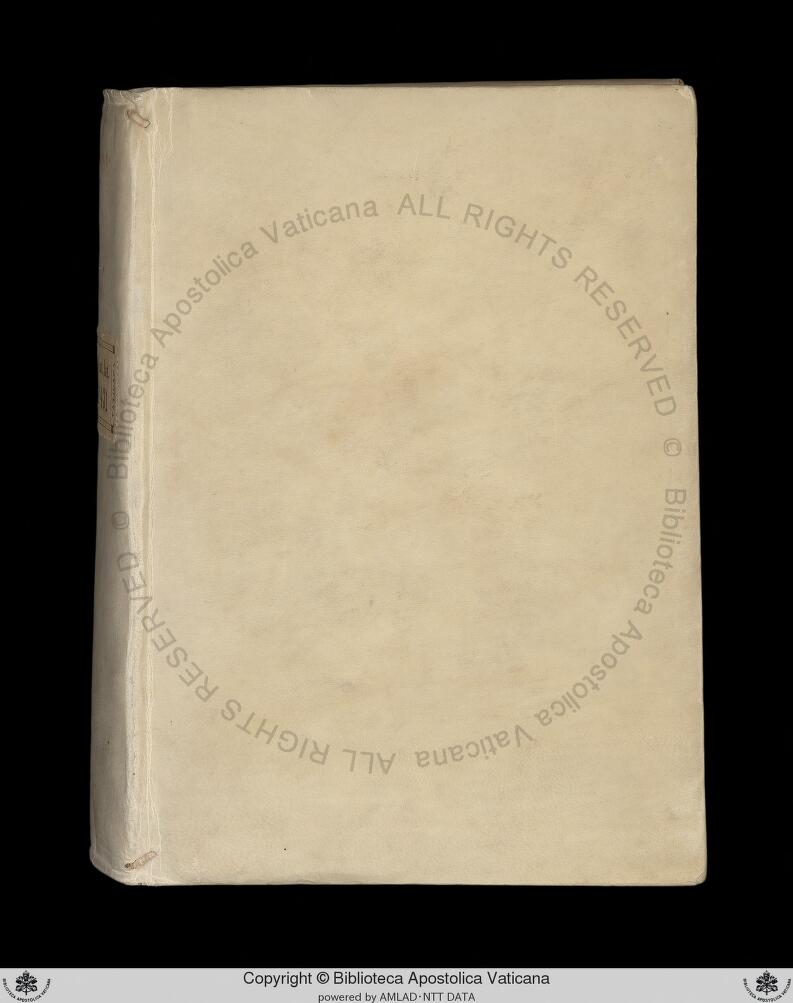
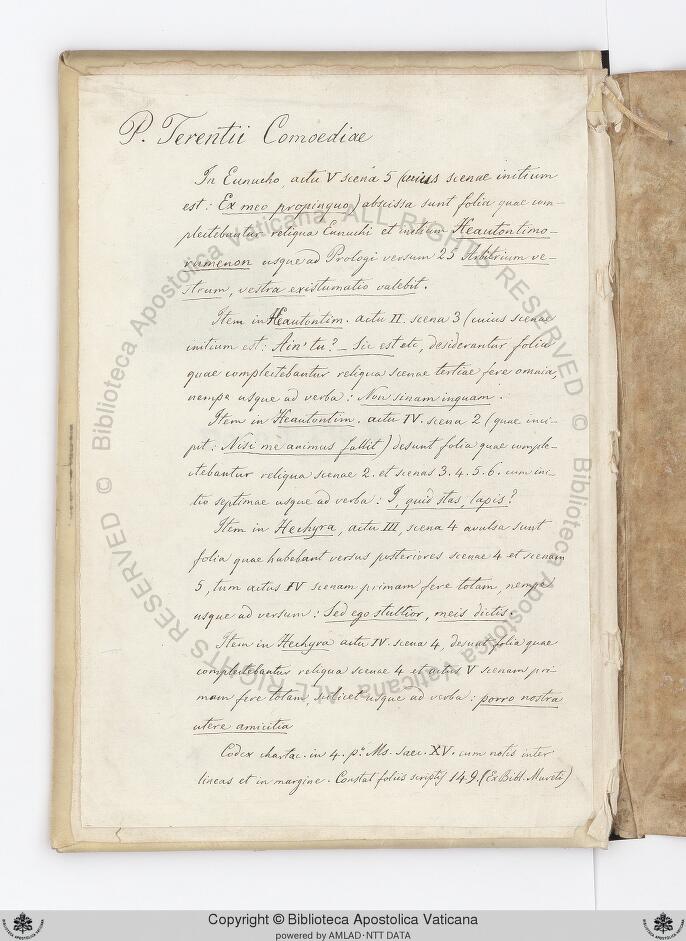
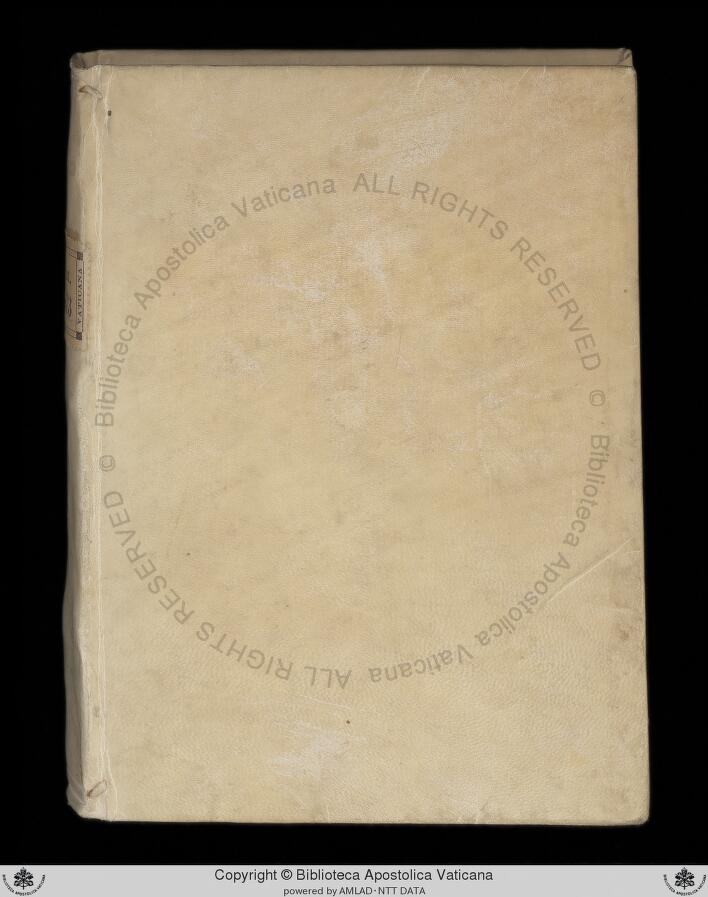
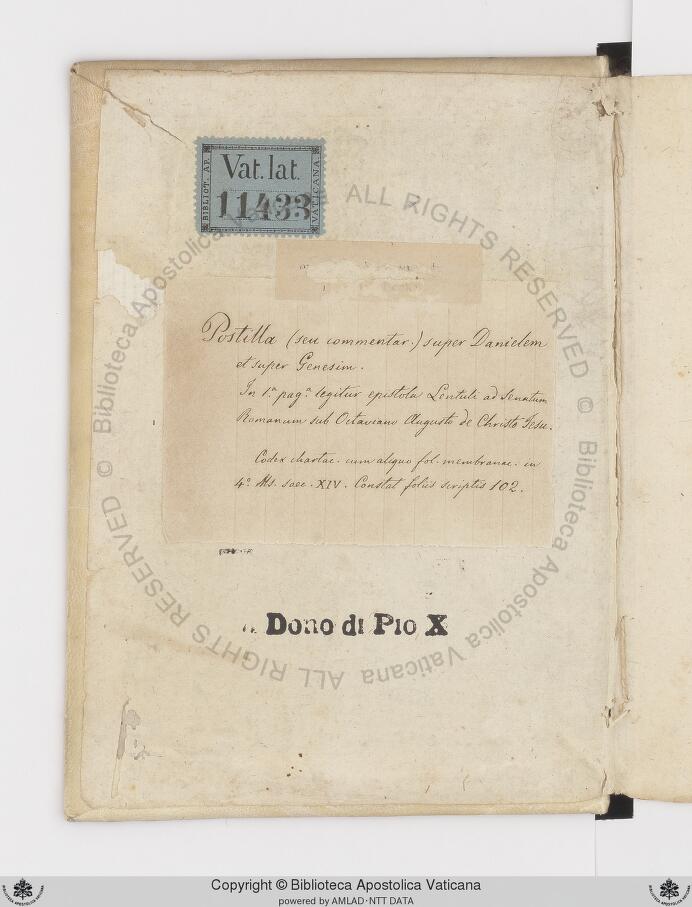
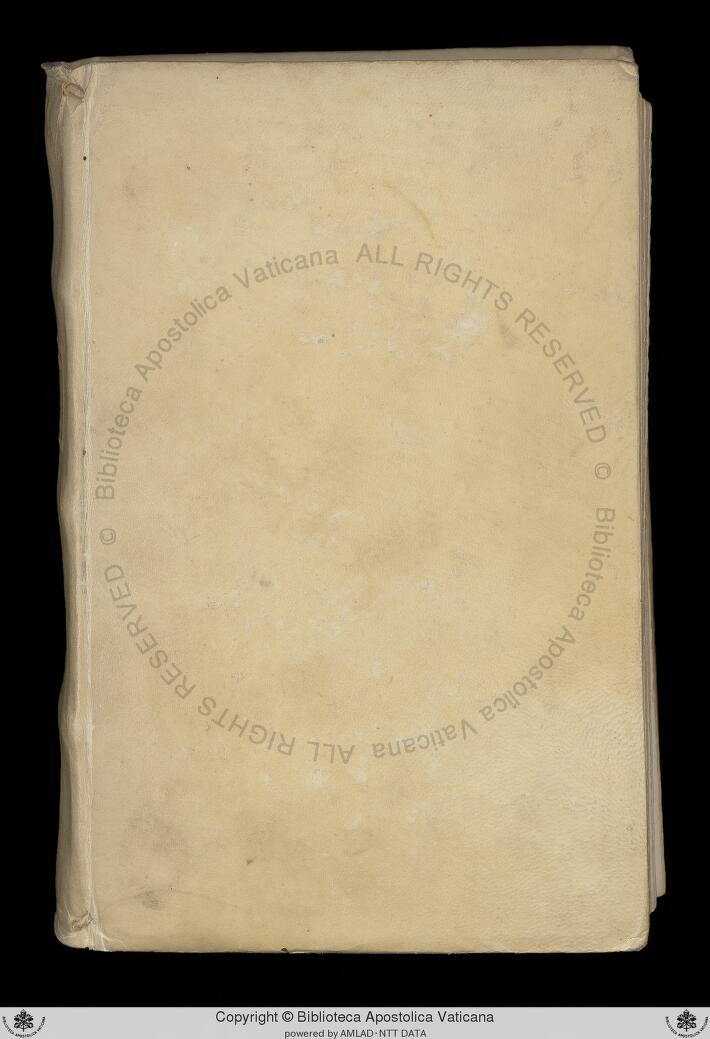
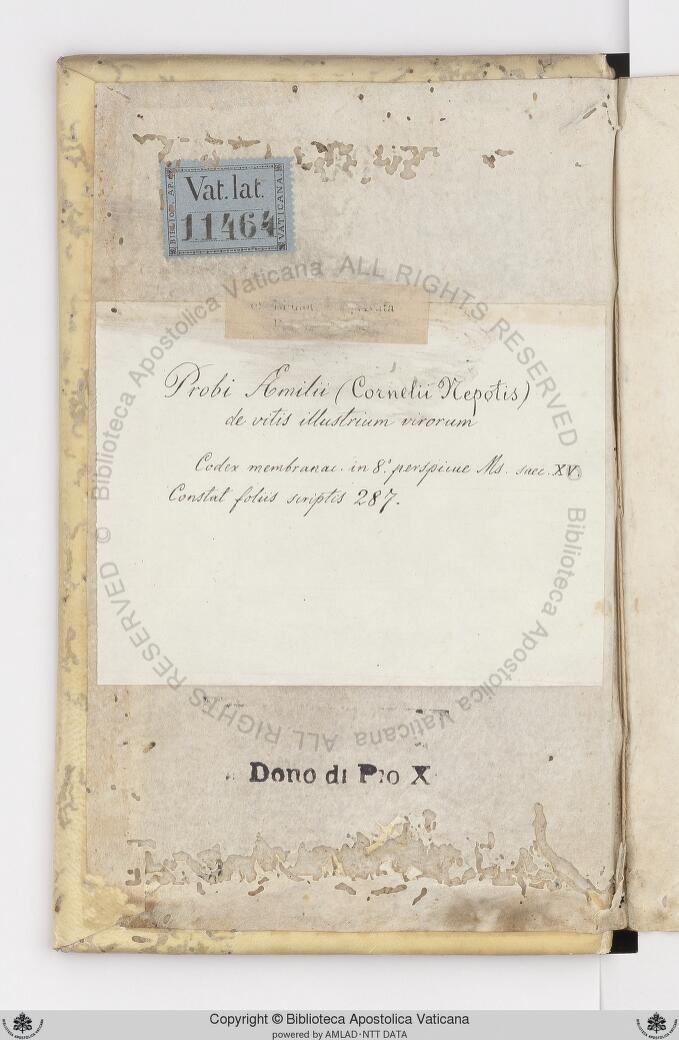
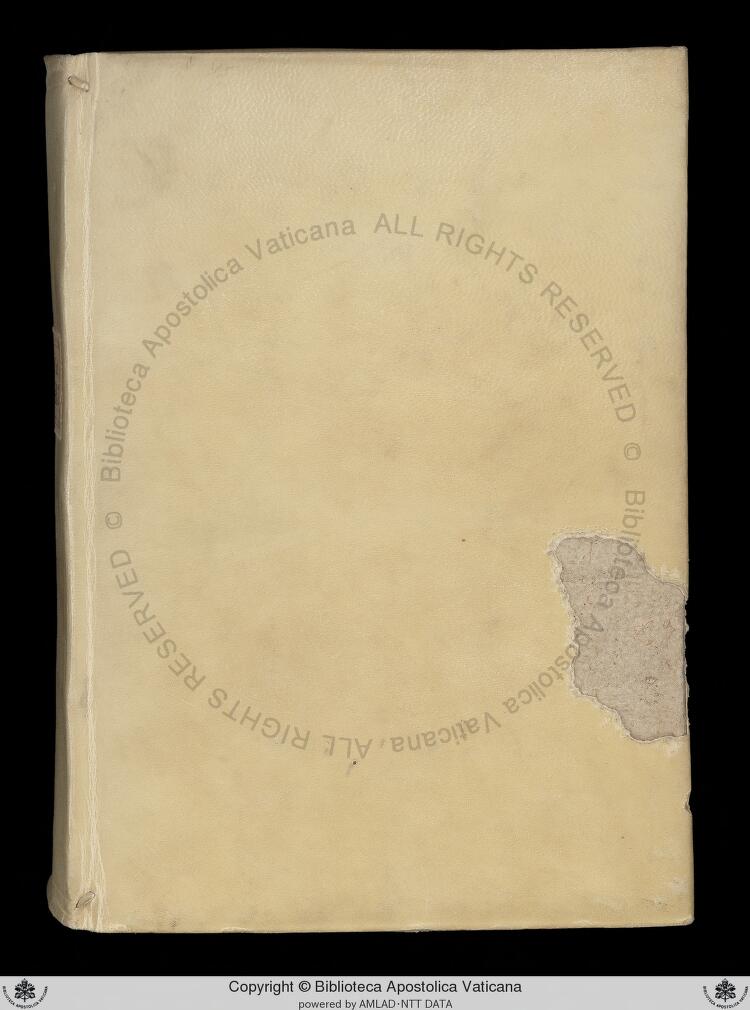
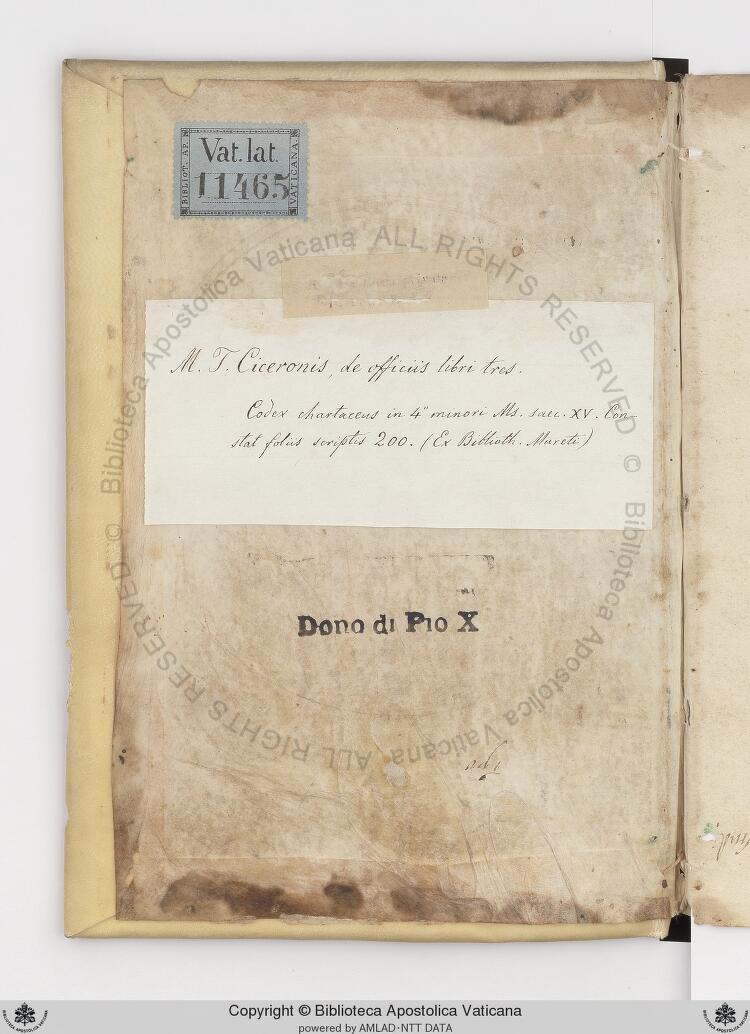
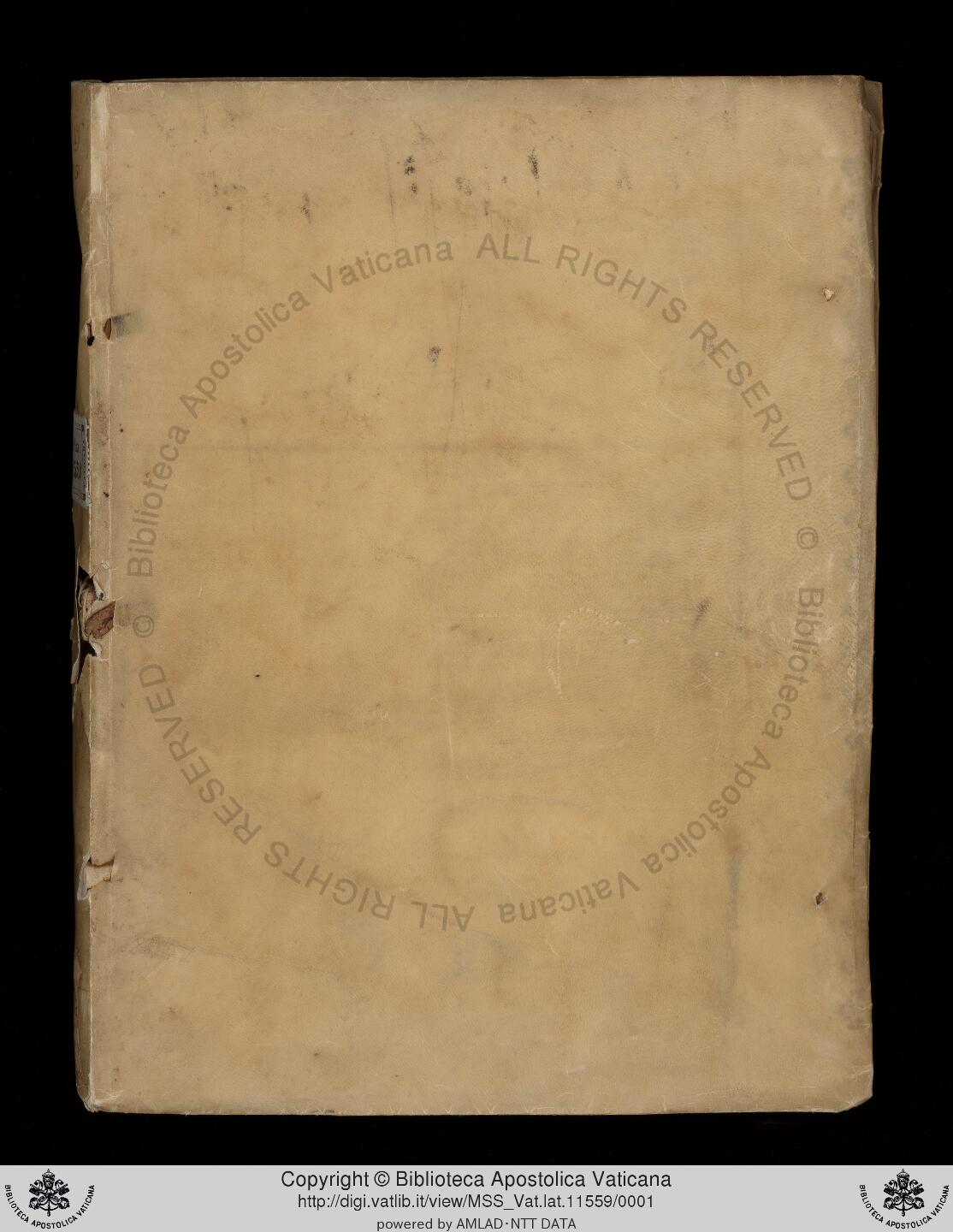
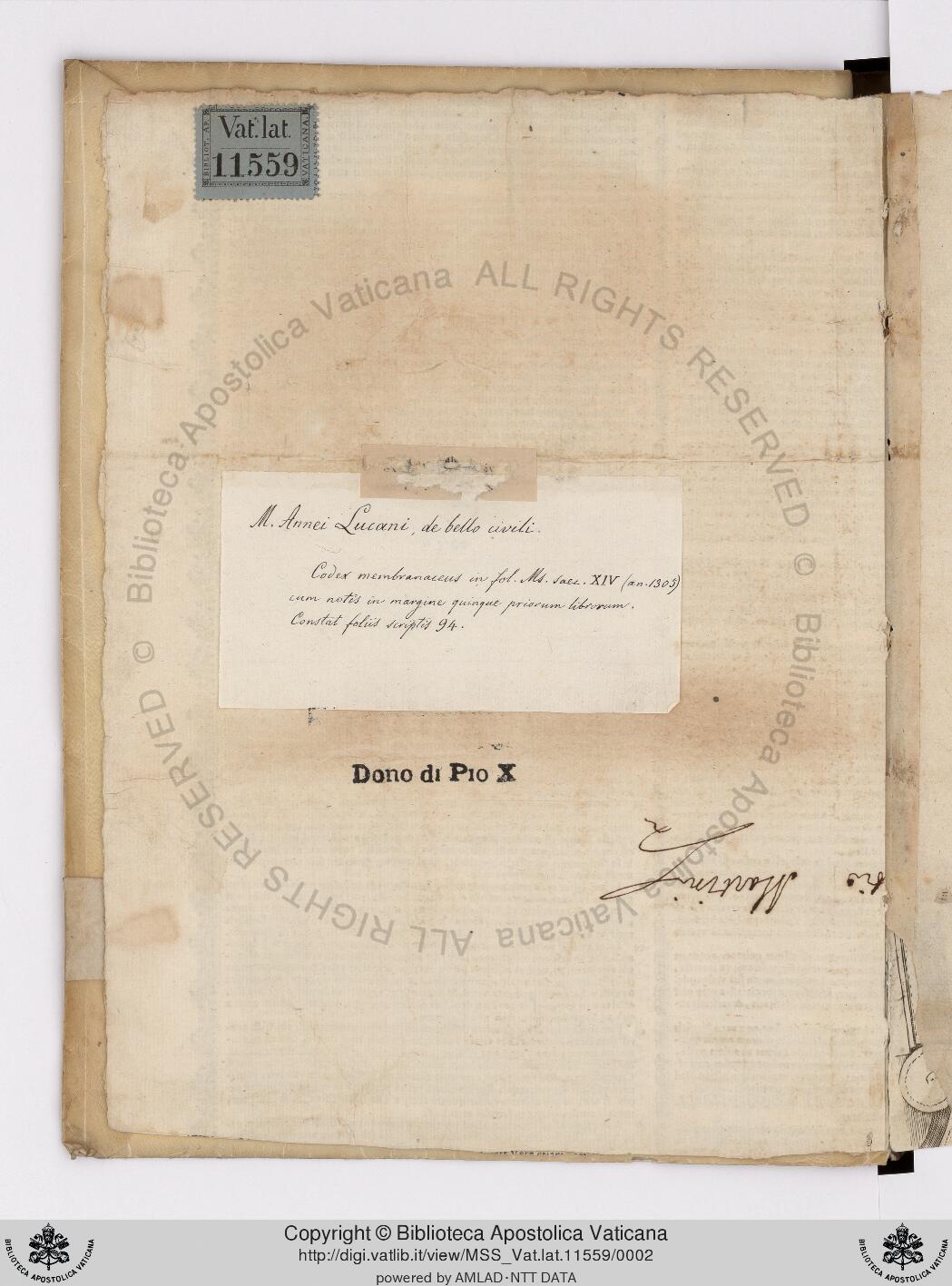
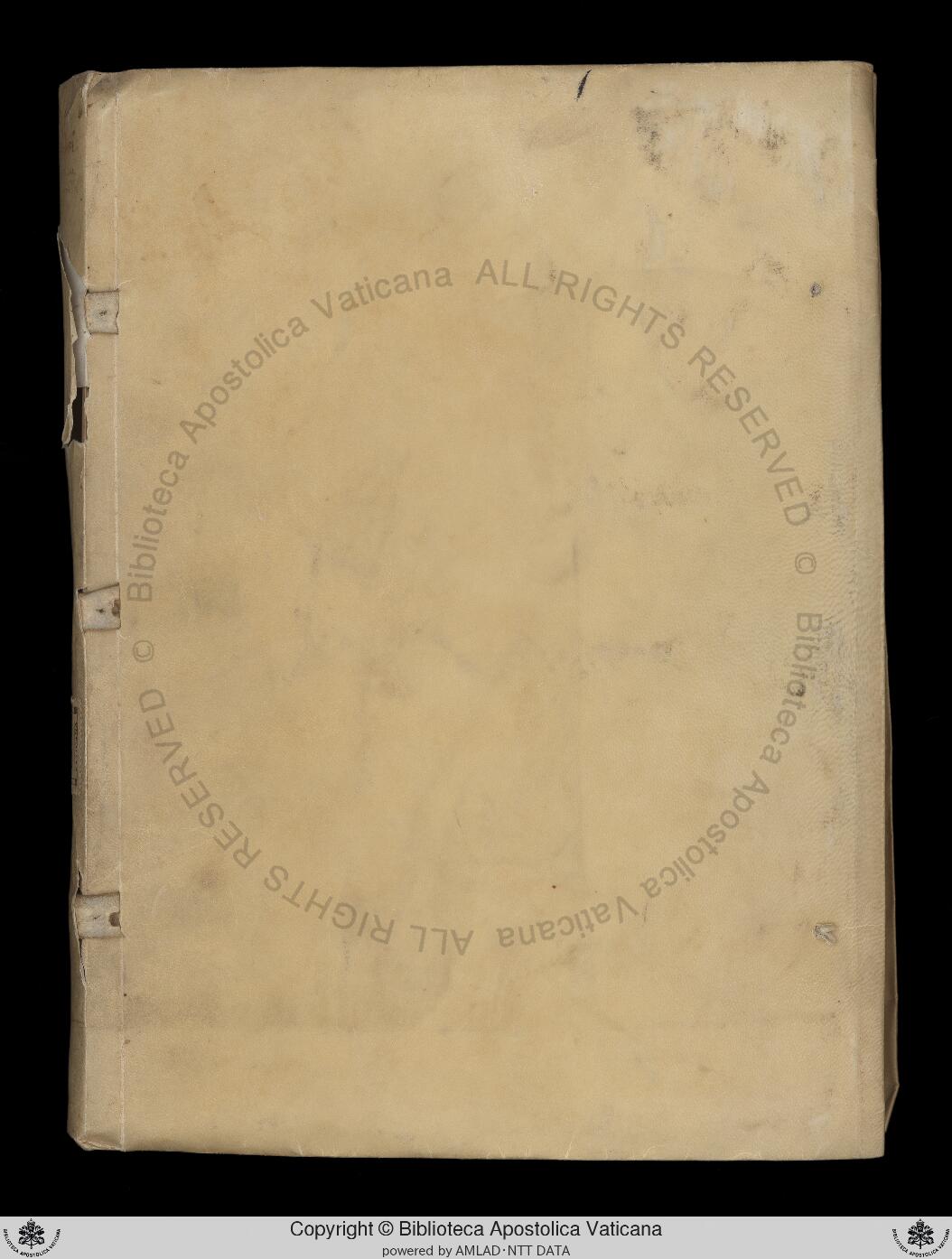
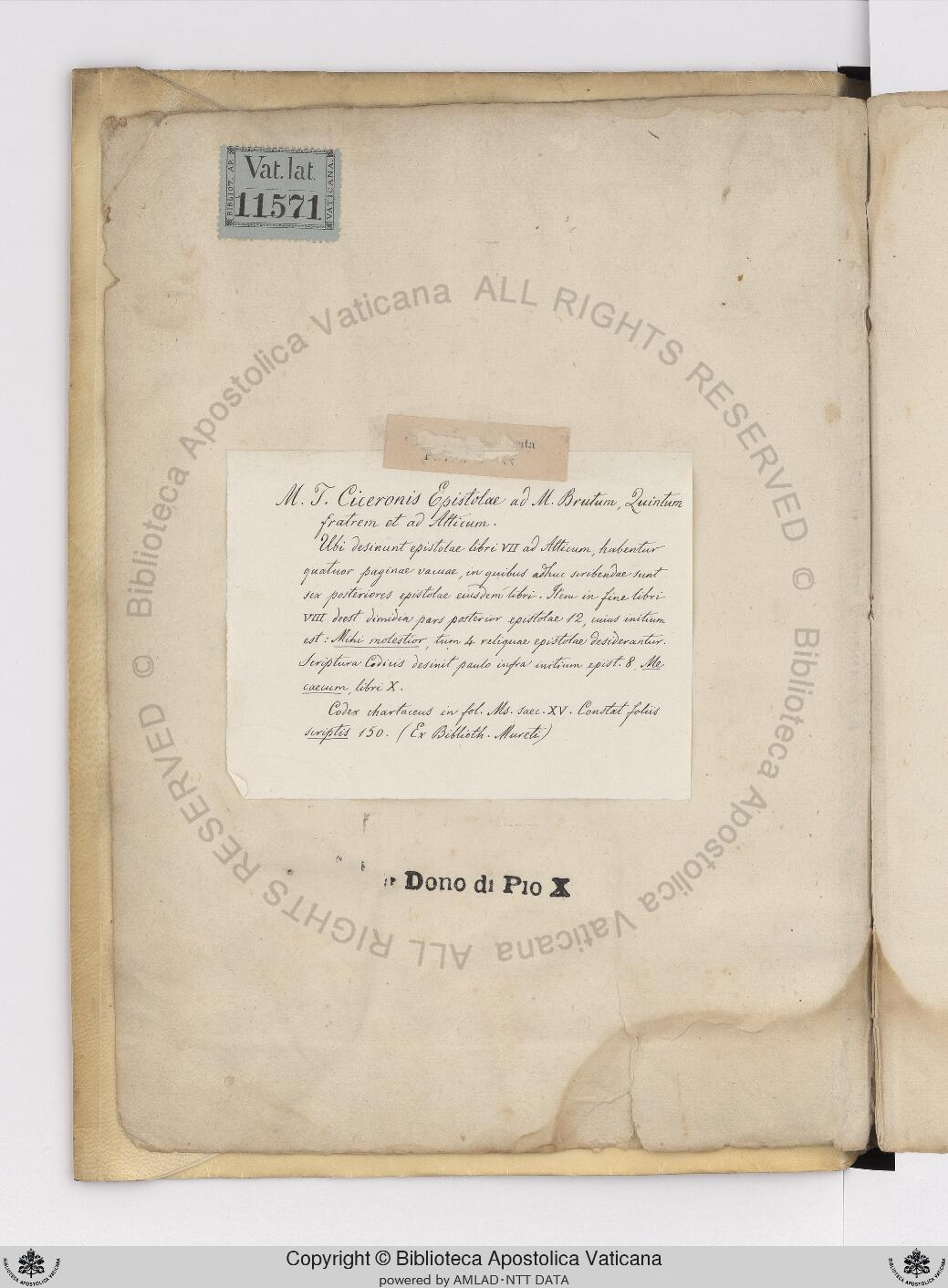
Table 2, which can be expanded below, provides links to the publicly available institutional photographs for the 137 comparison books: 75 Collegio candidates and 62 books in the external sample with documented alternative historical contexts.
Table 2. All comparison samples, Collegio-related and External (expand/collapse)
Open the links to see the digital images of the actual manuscript covers and inside corner details. The light-blue rows identify the six Vatican manuscripts listed voynich.nu's page on The Cover and Binding of the Voynich MS as samples to show the type of cover claimed to be identical for the vast majority of the Collegio Romano collection. Although five of these six examples share the MS 408's plain full-parchment appearance, the sixth has contrasting side material, and none of their recorded turn-in details show the square-ended corner match to MS 408: most show diagonal junctions.
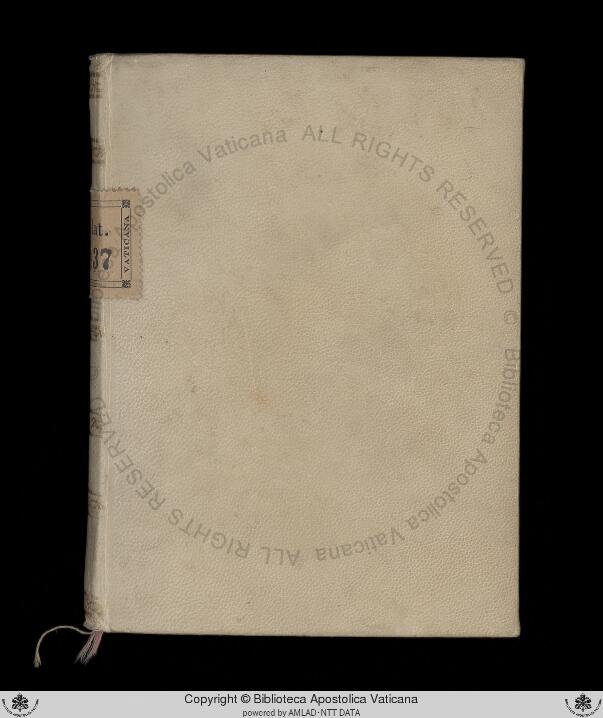
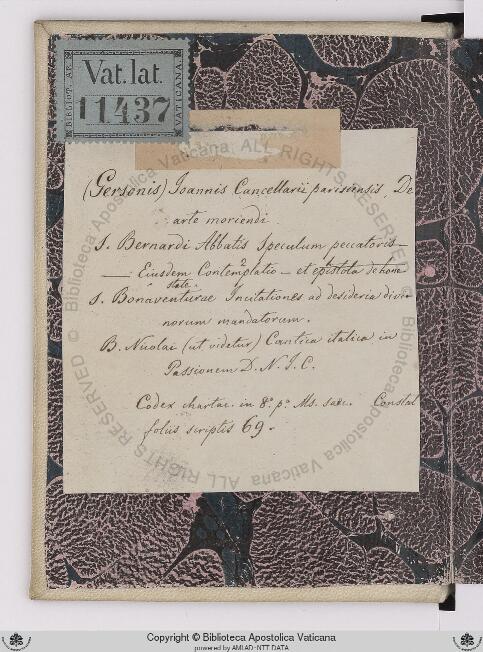
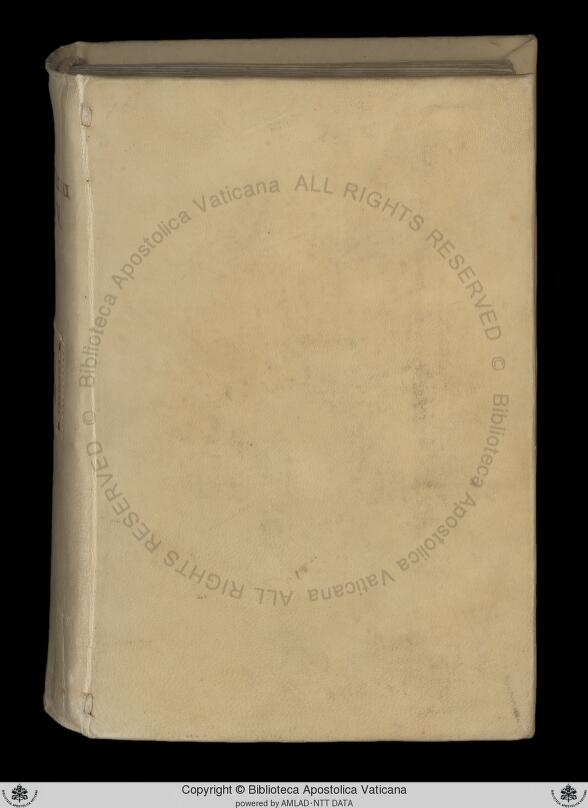
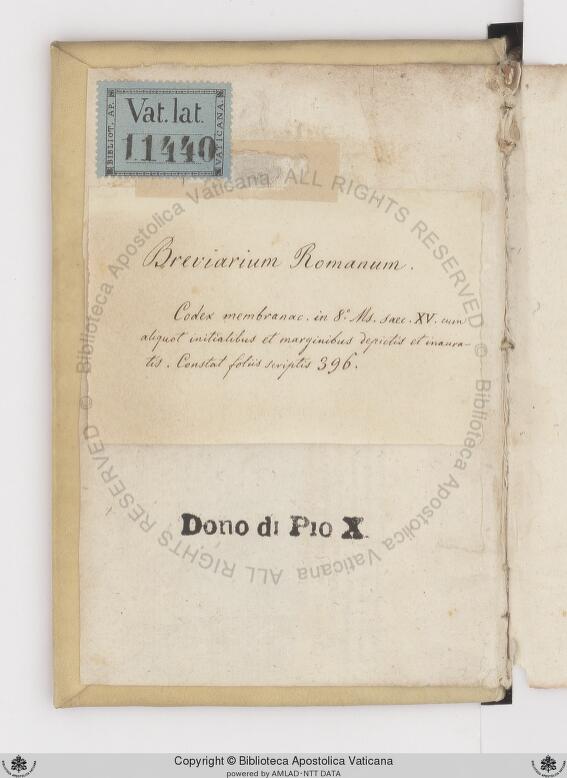
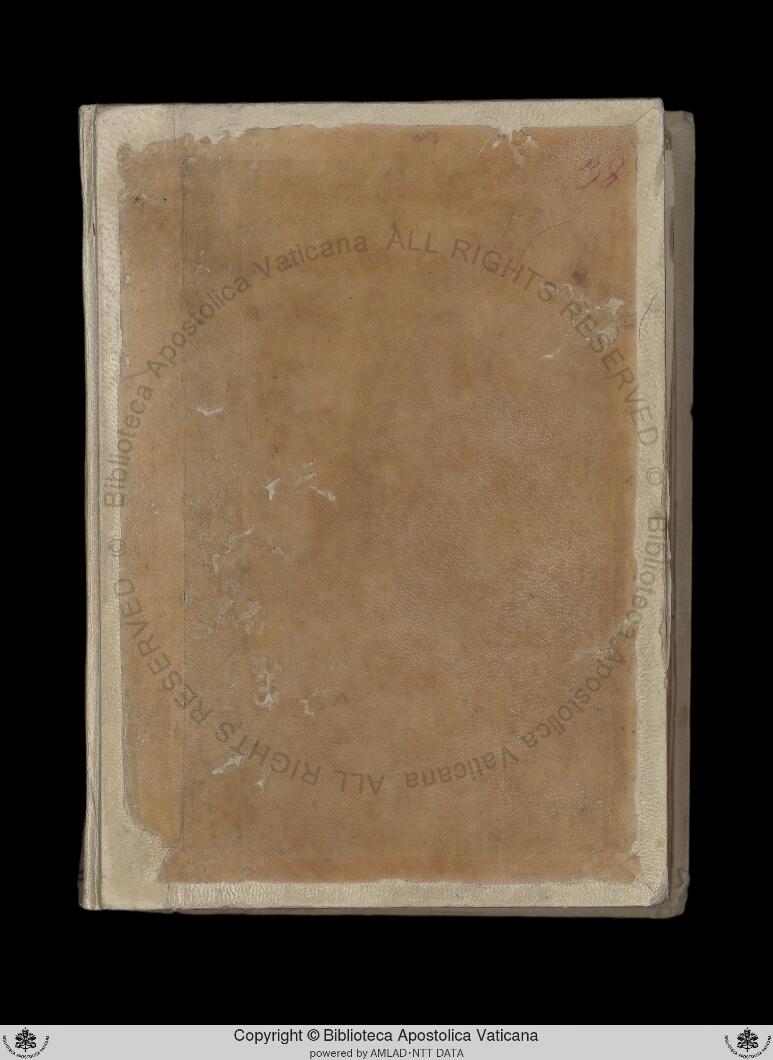
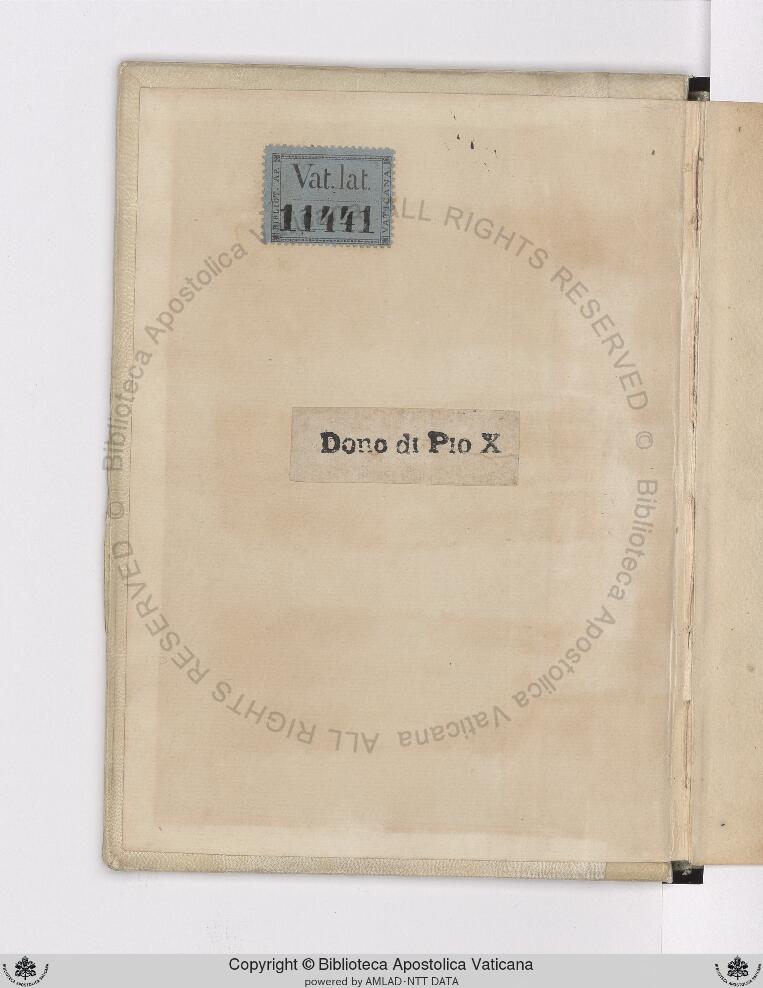
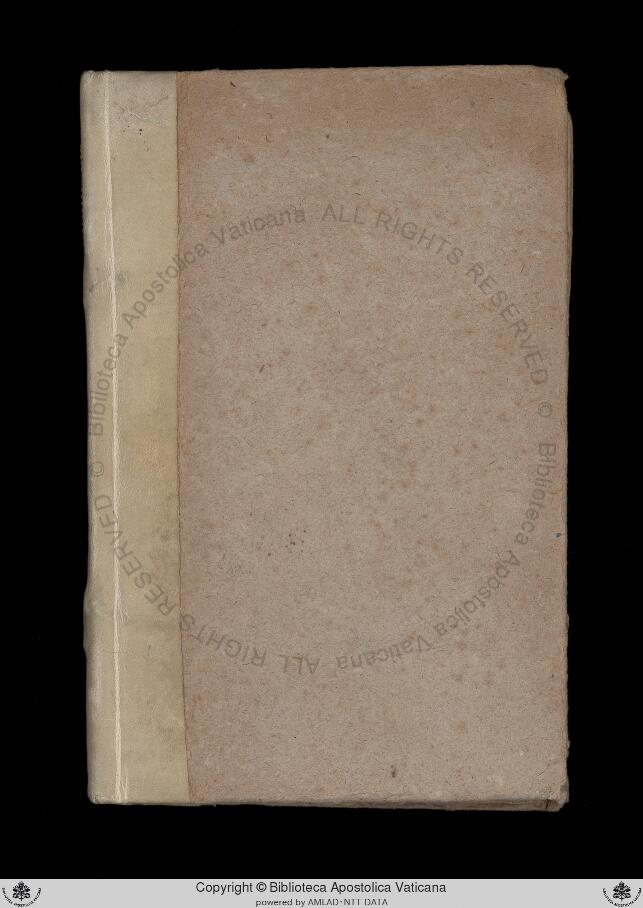
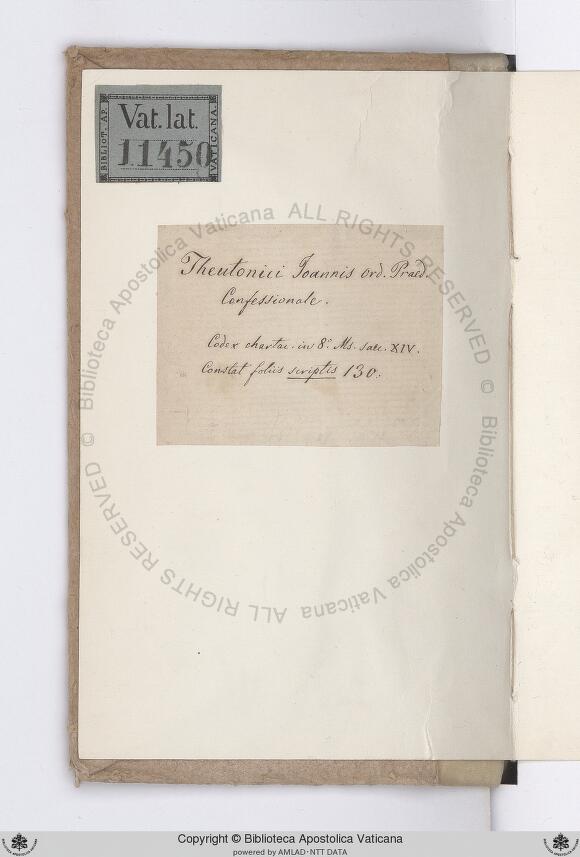
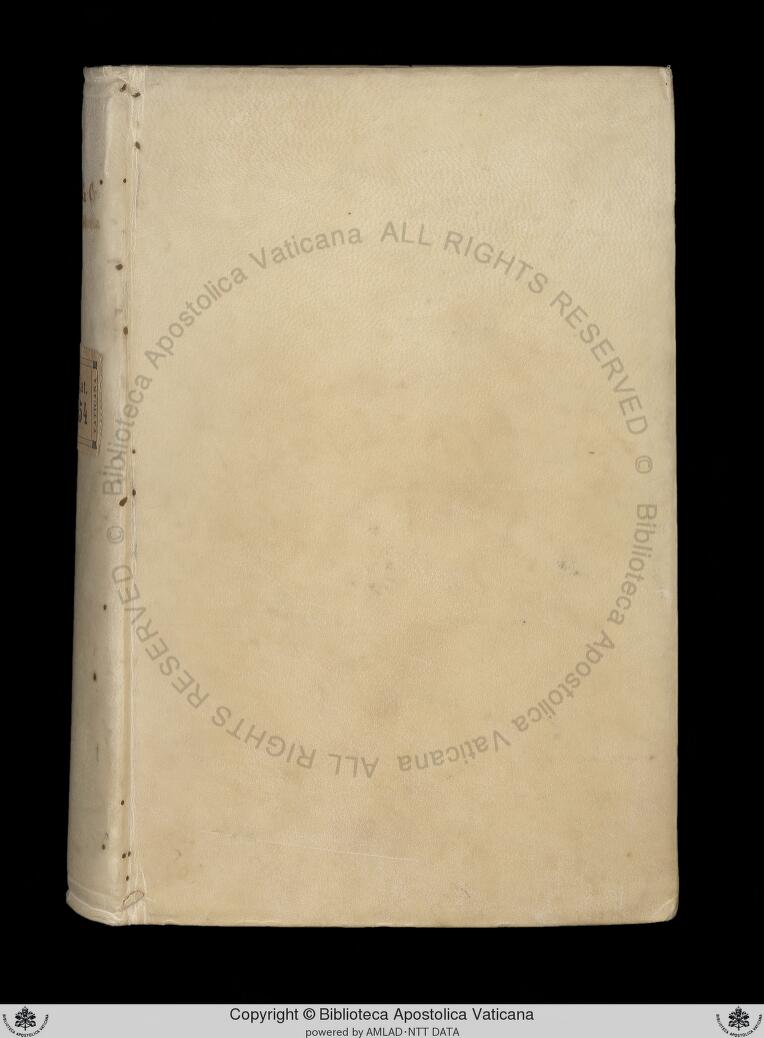
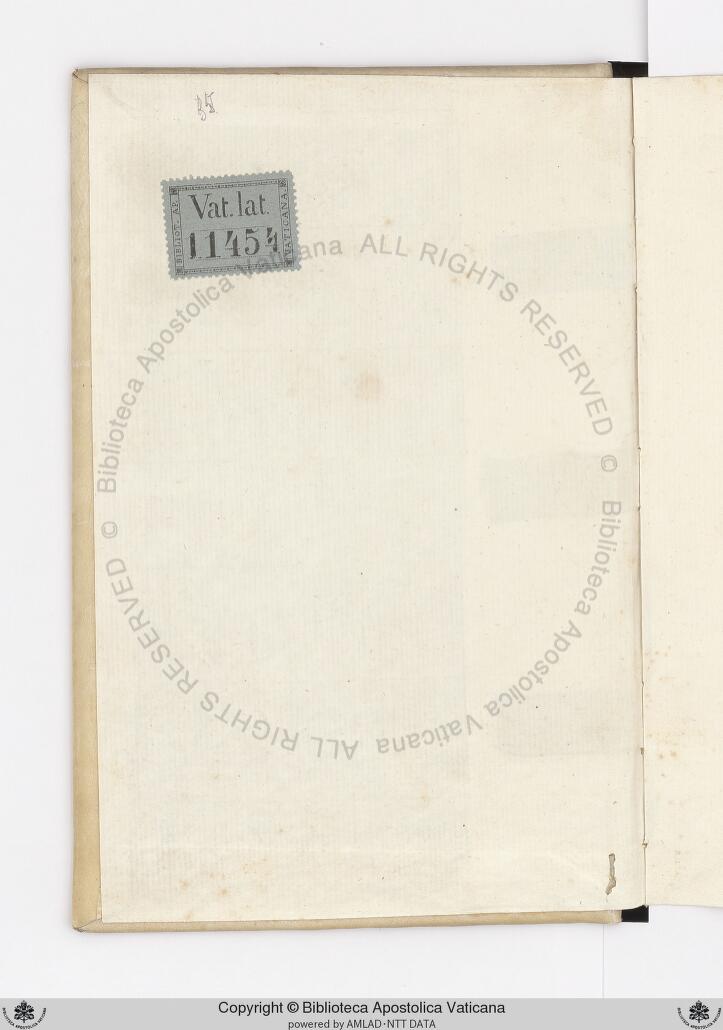
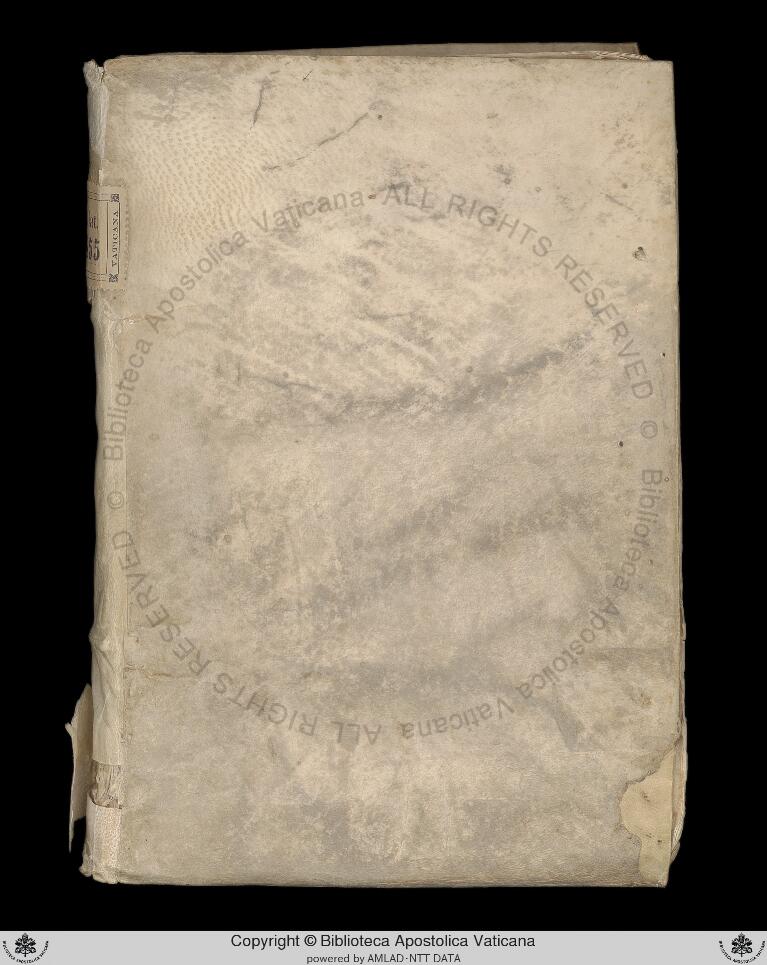
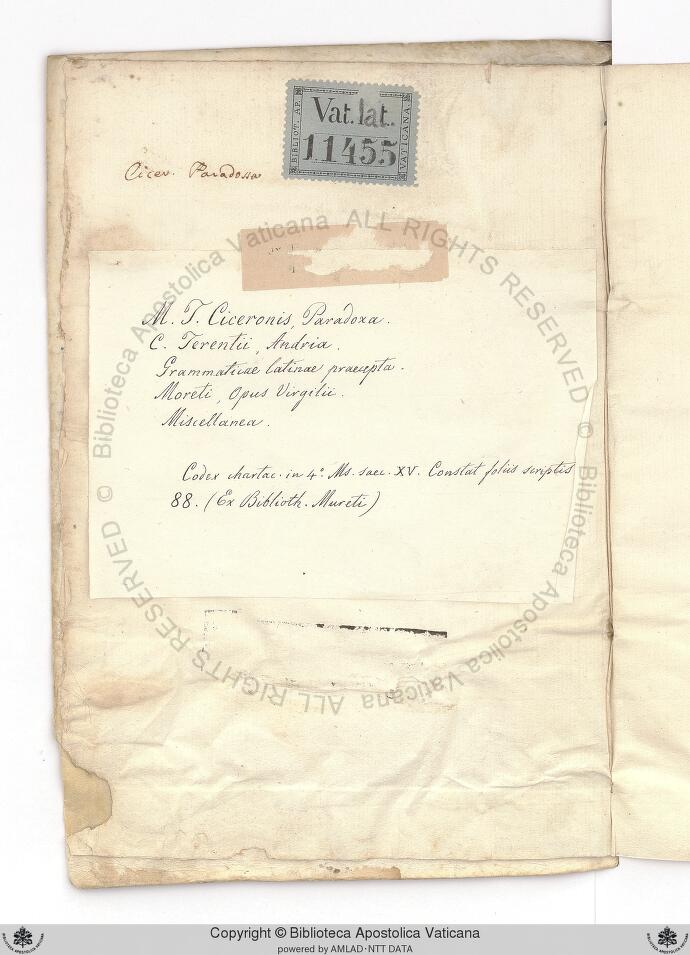
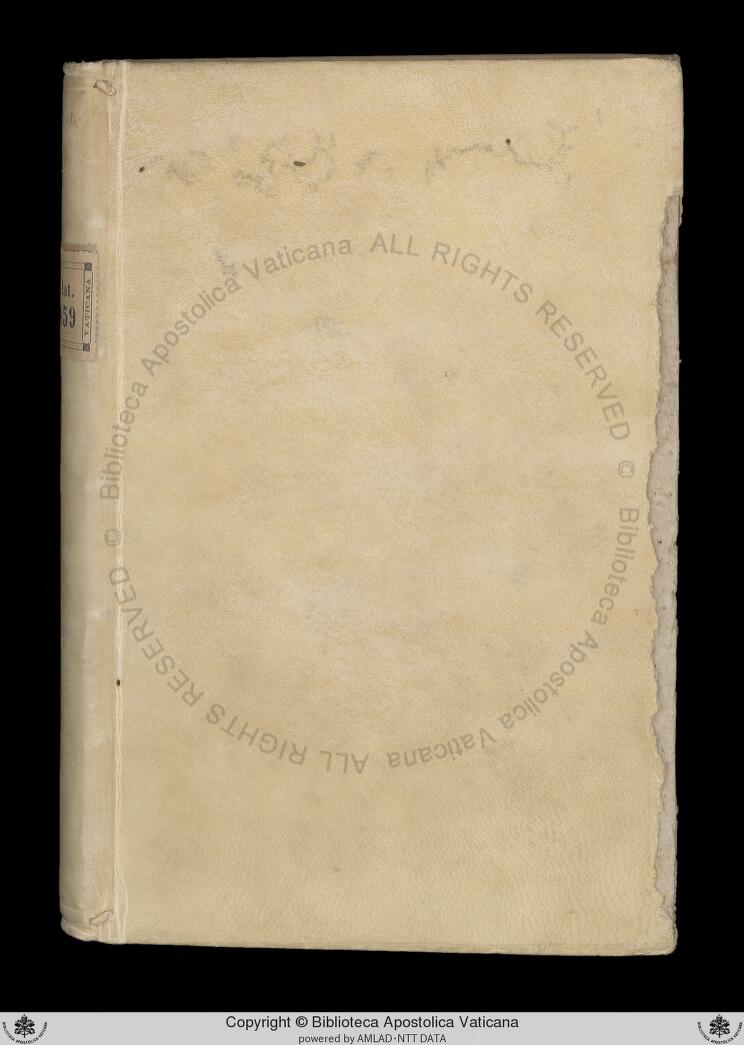
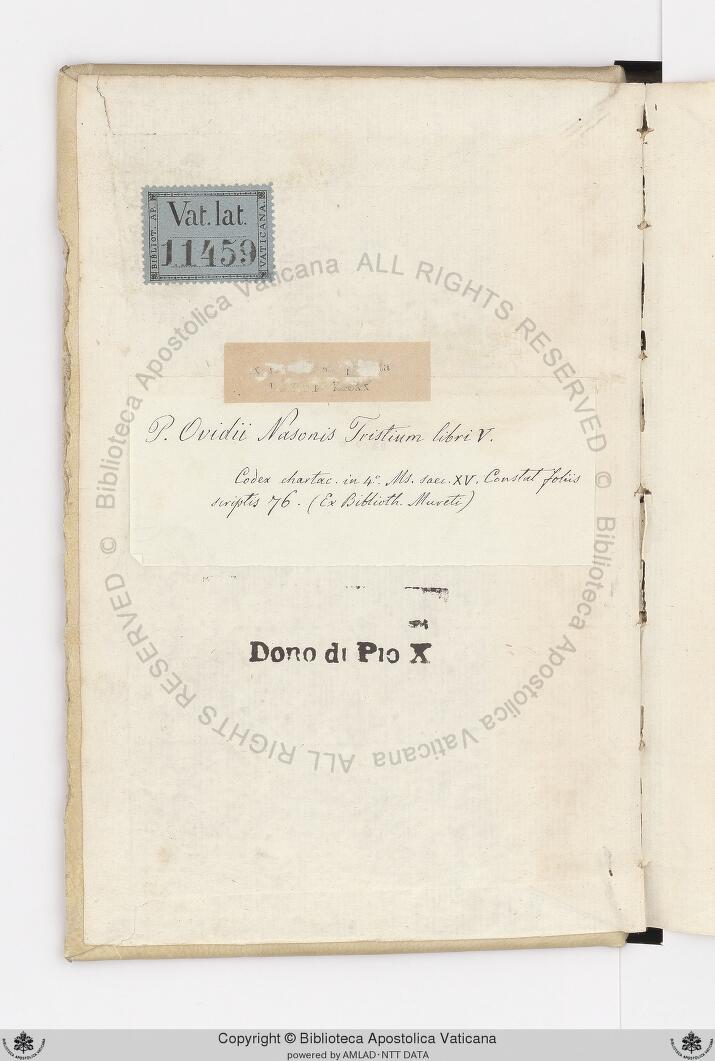
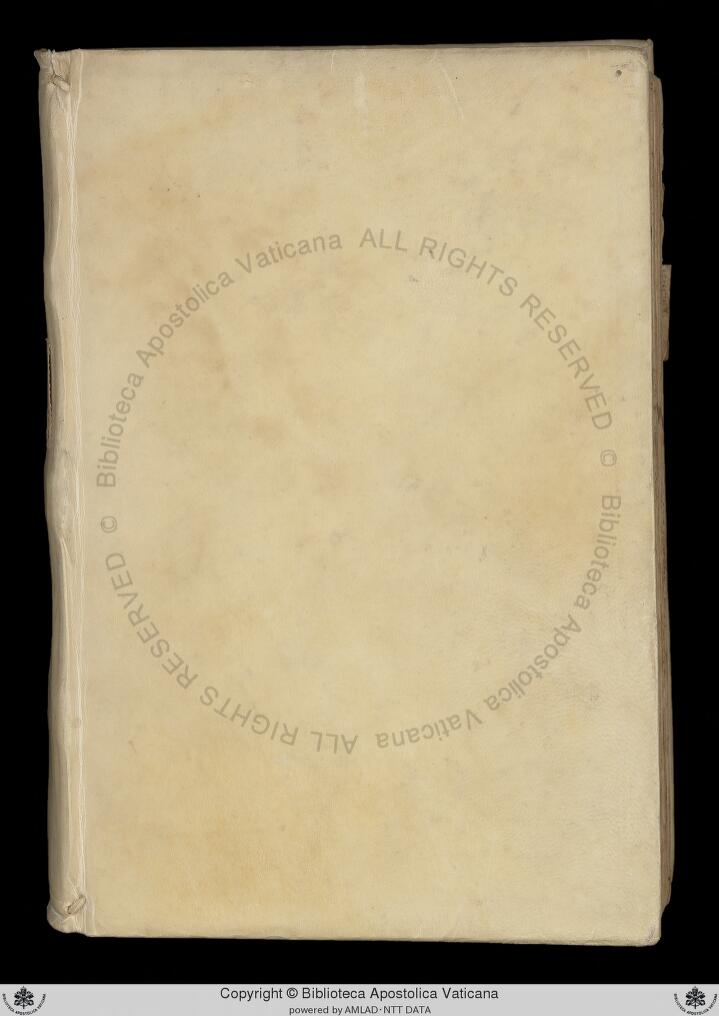
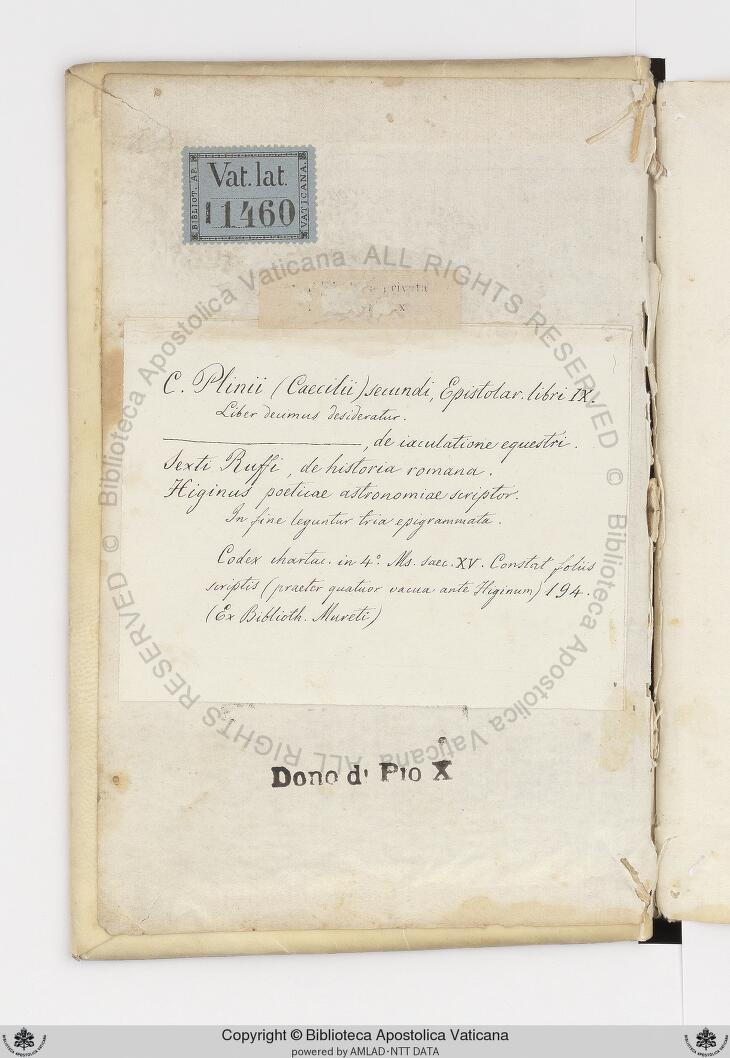
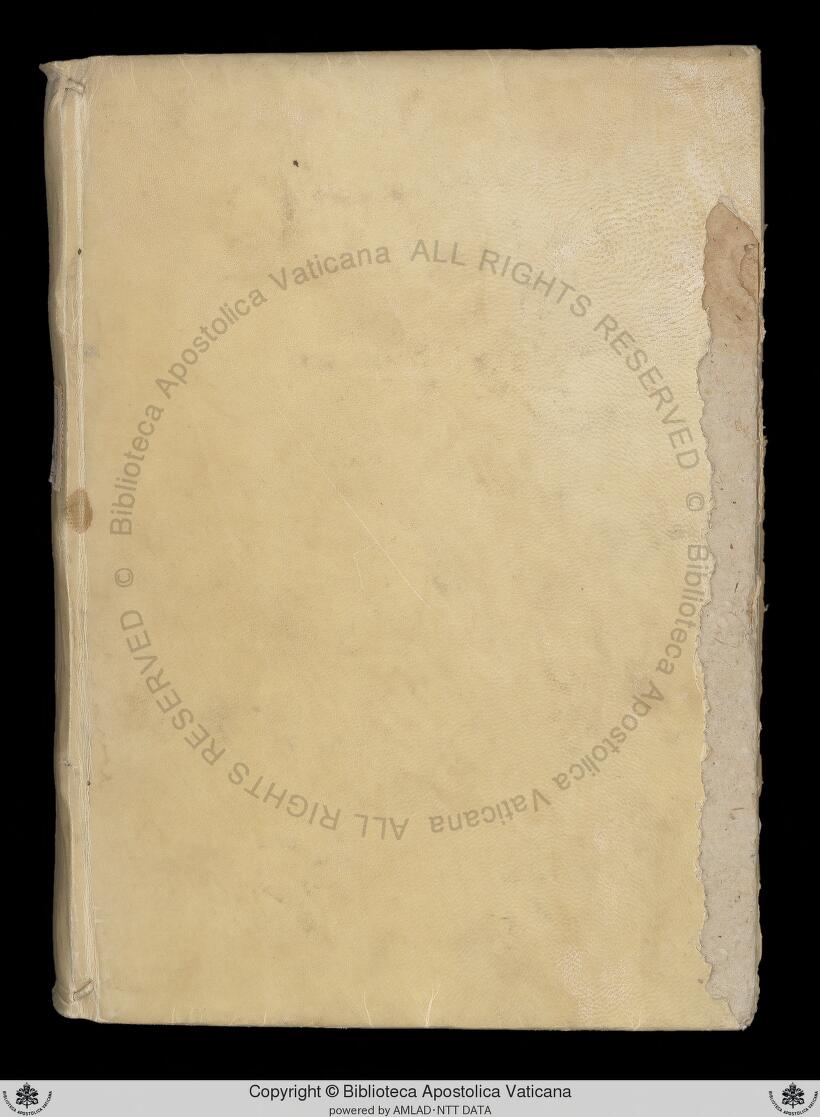
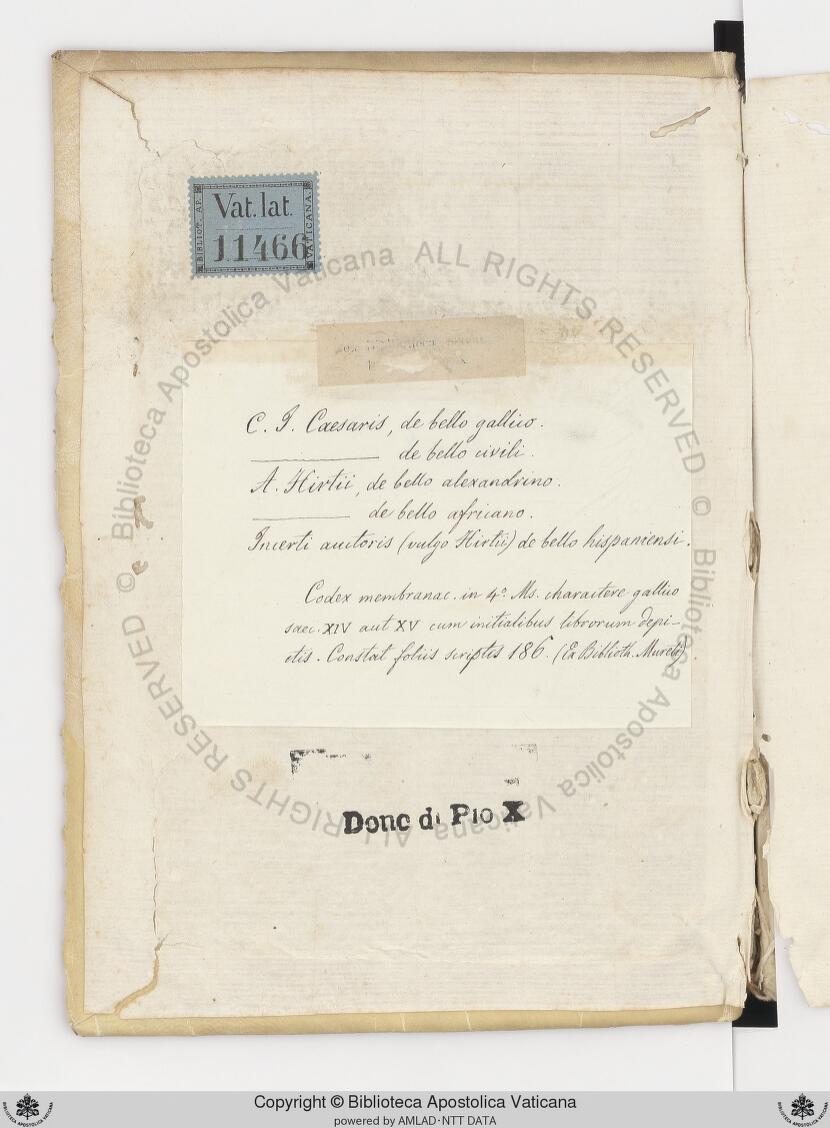
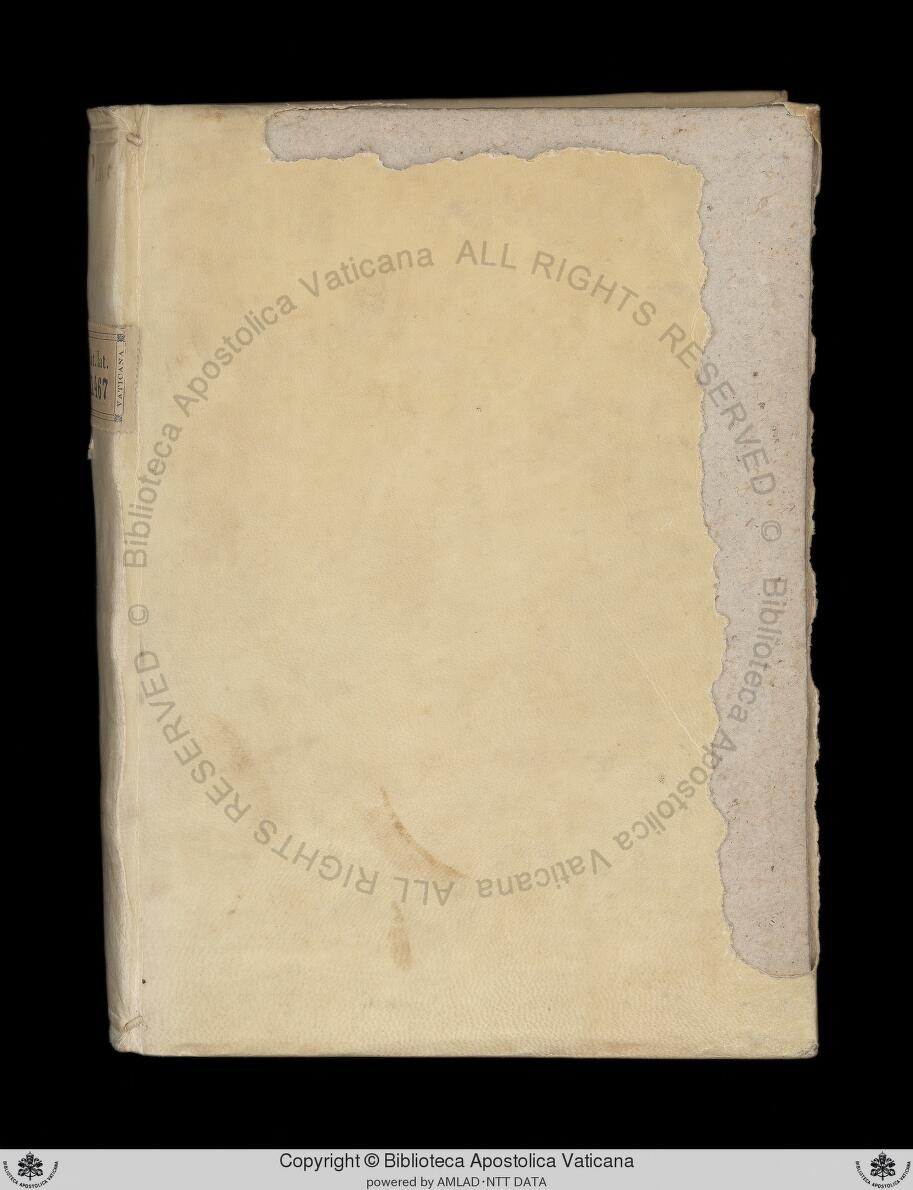
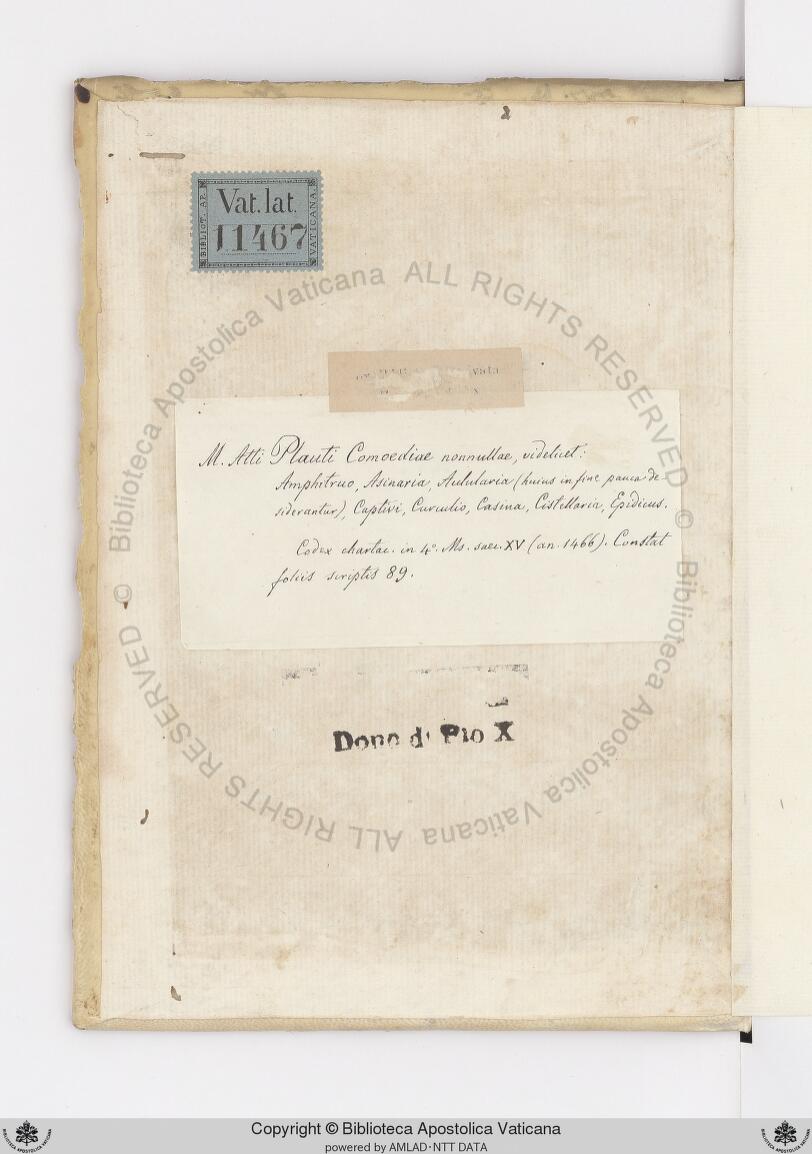
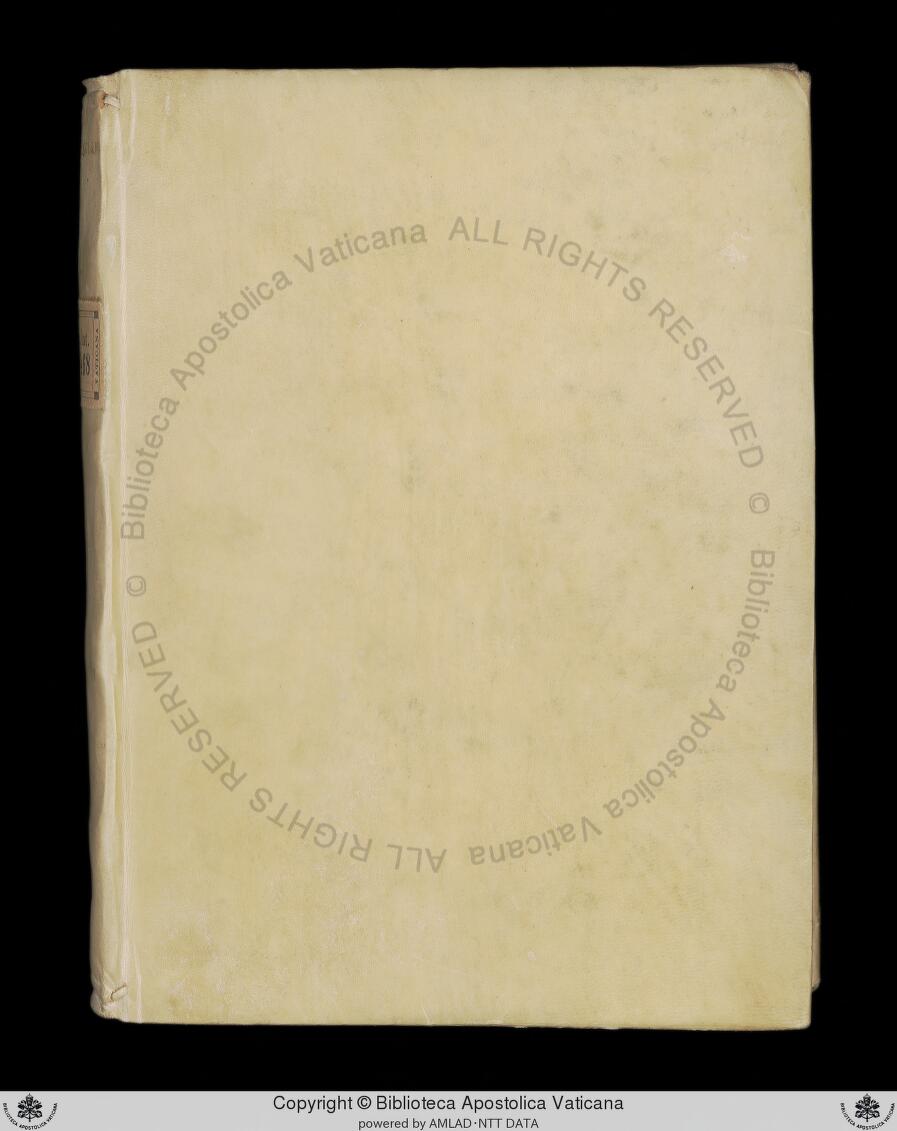
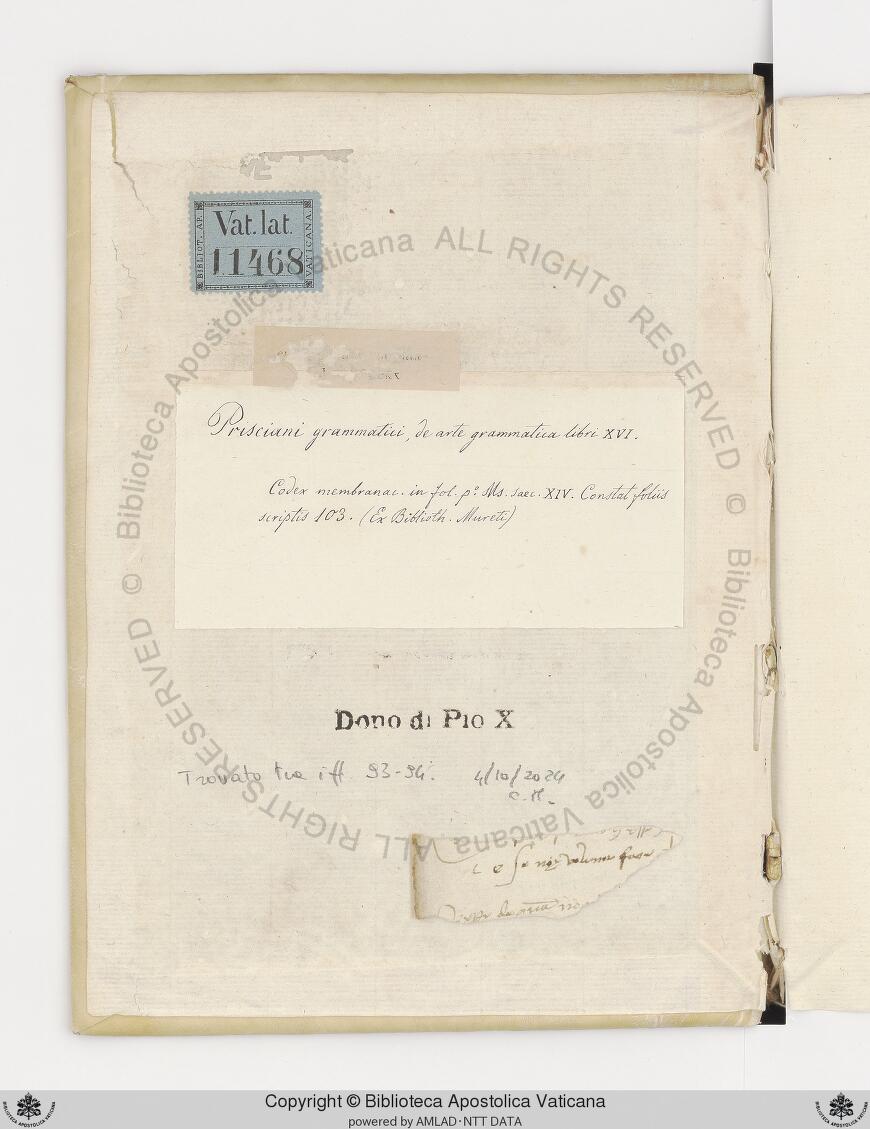
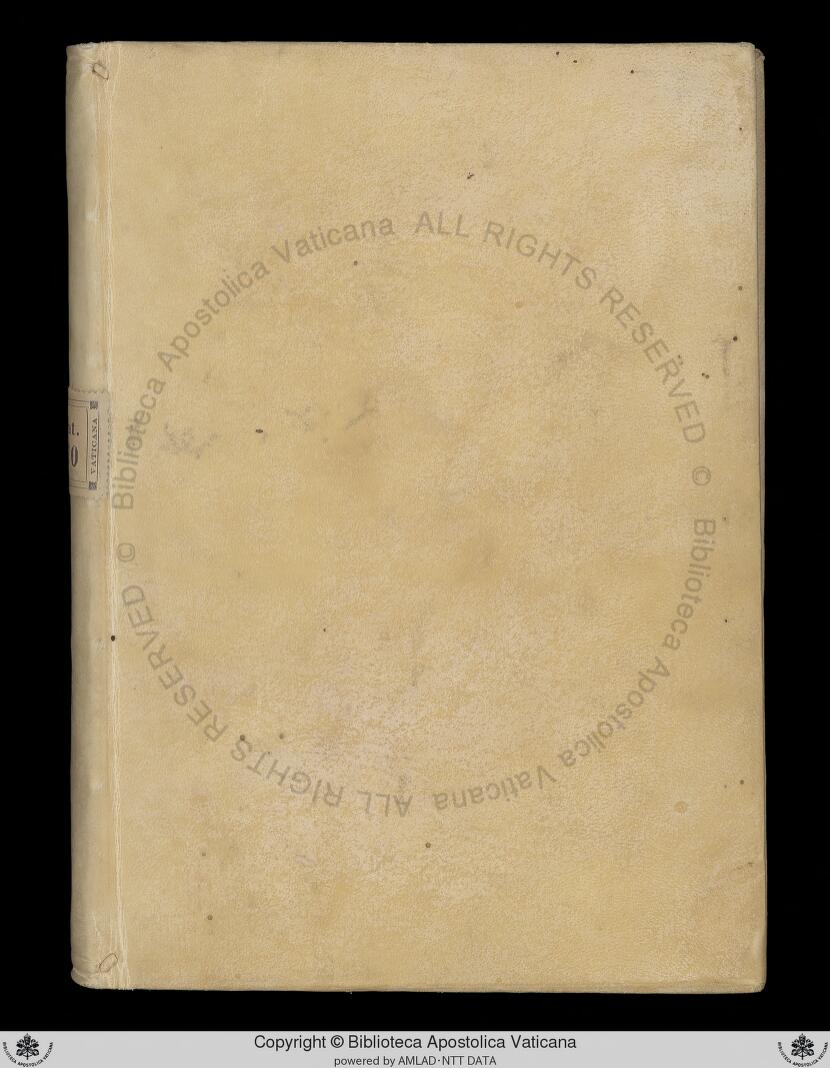
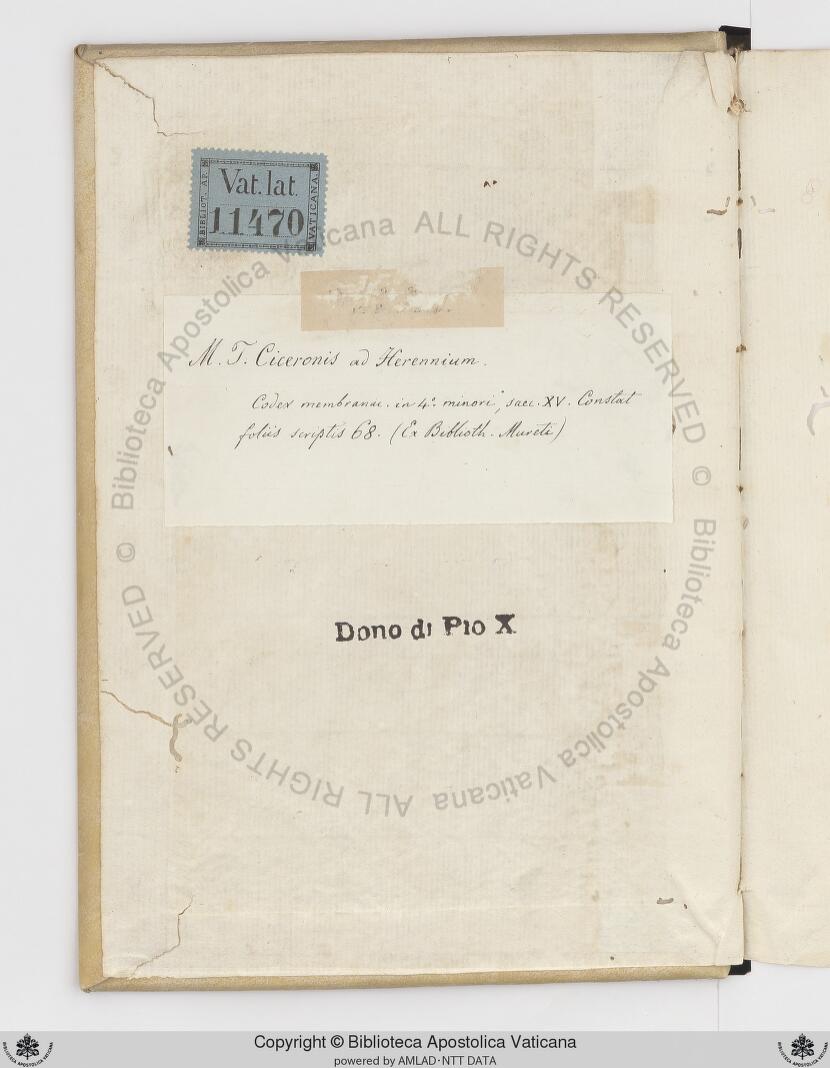
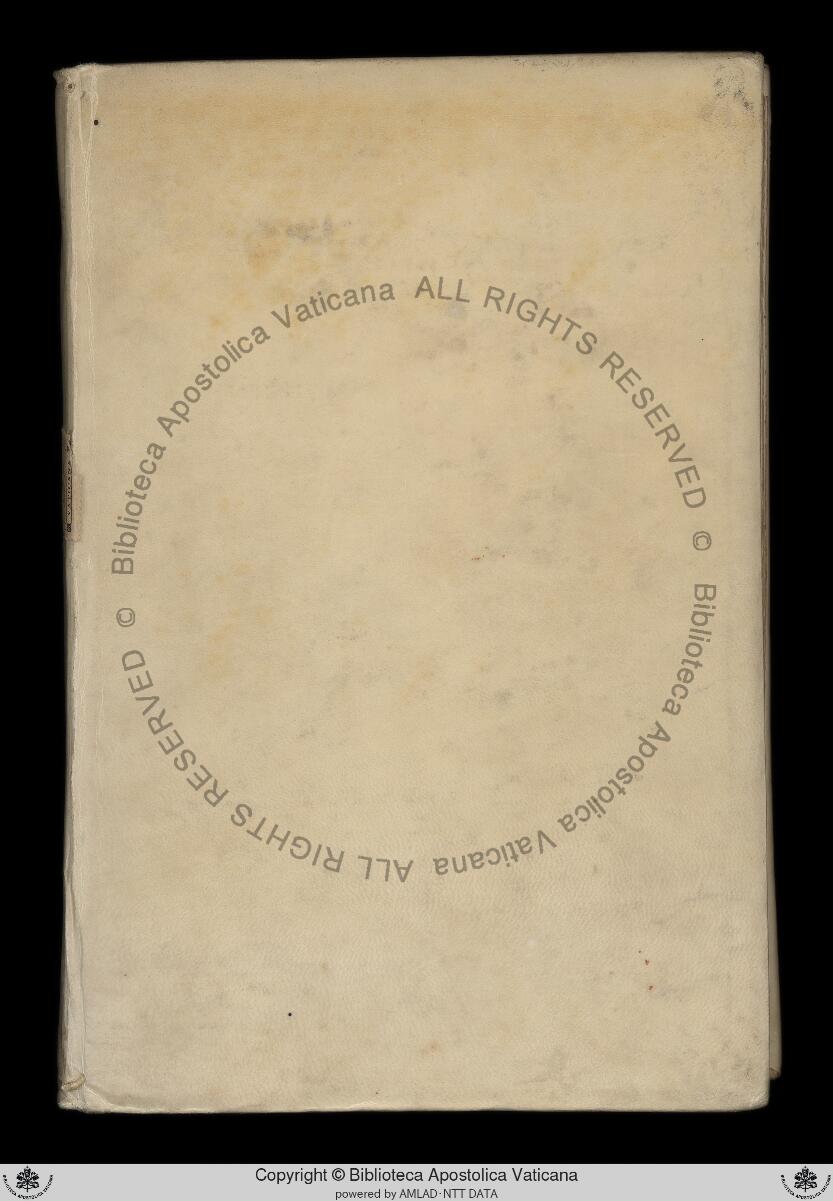
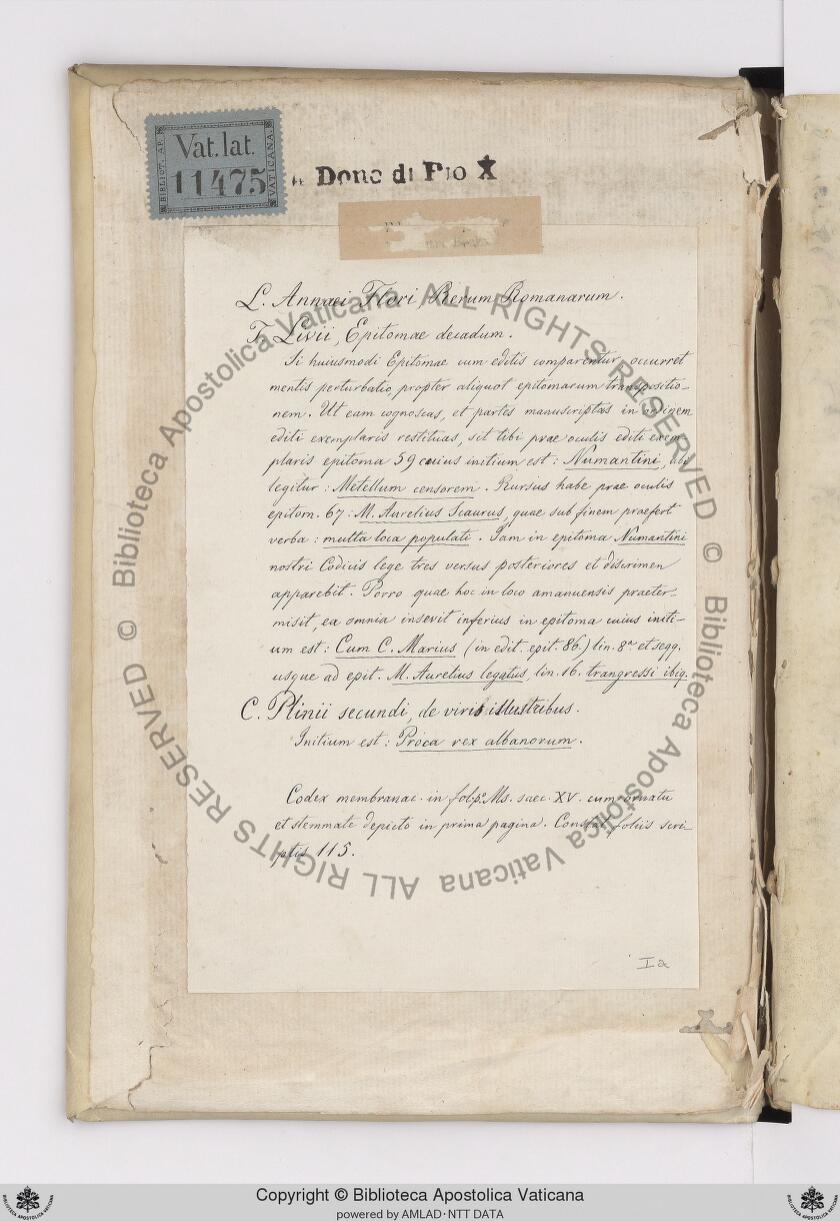
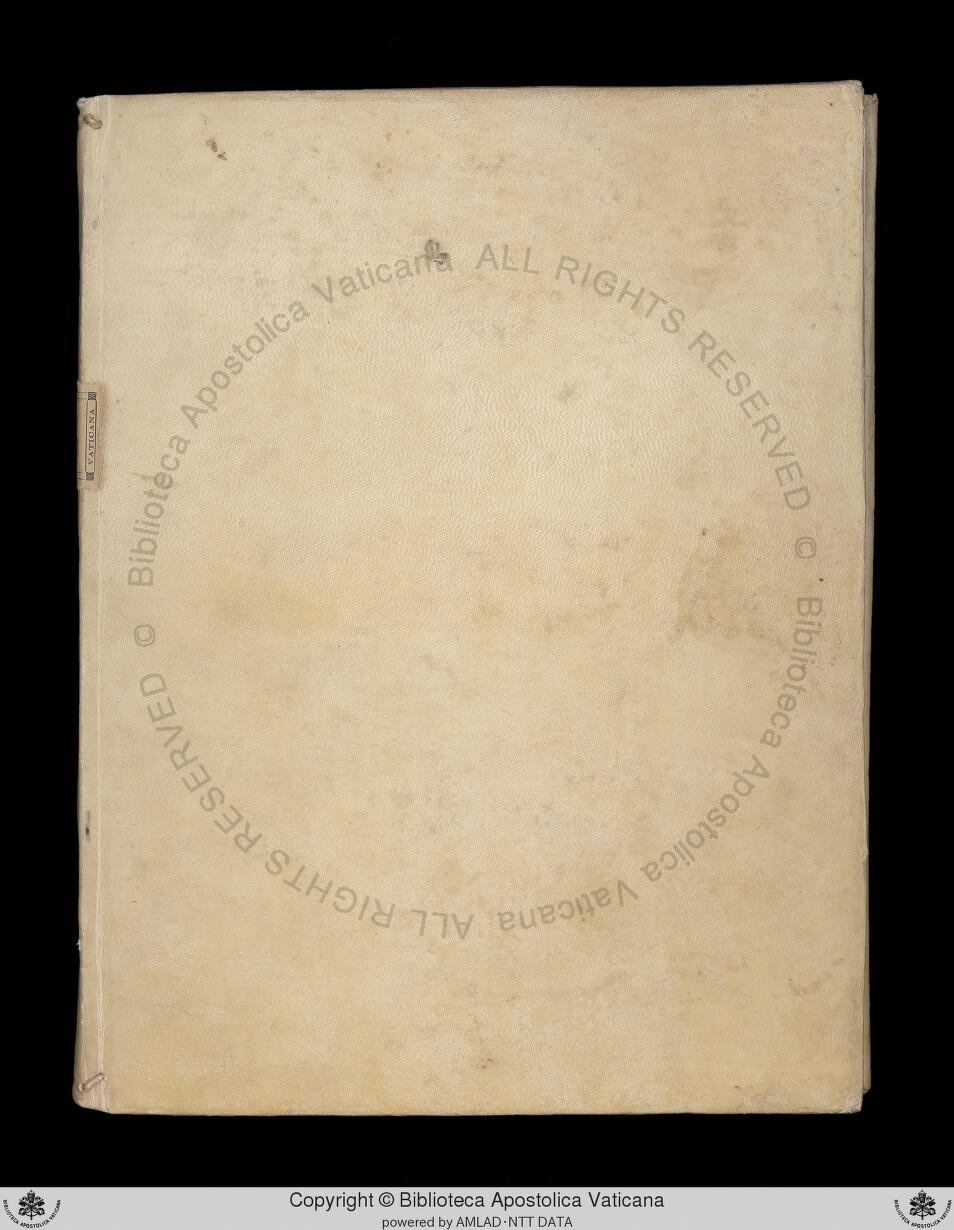
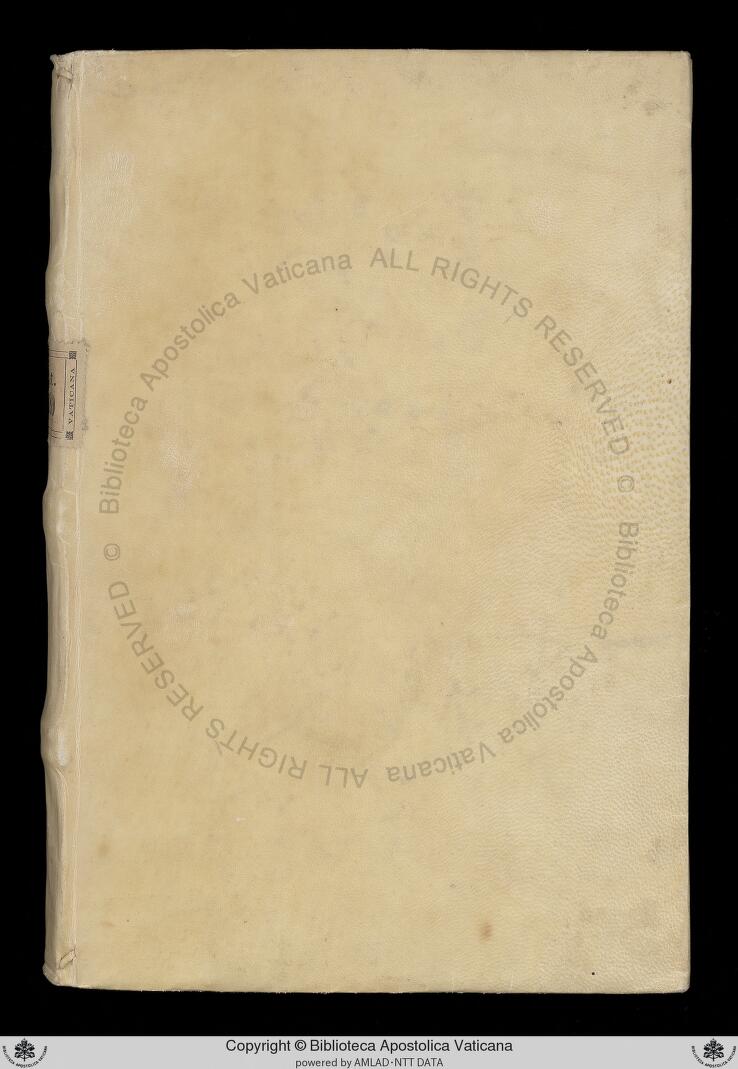
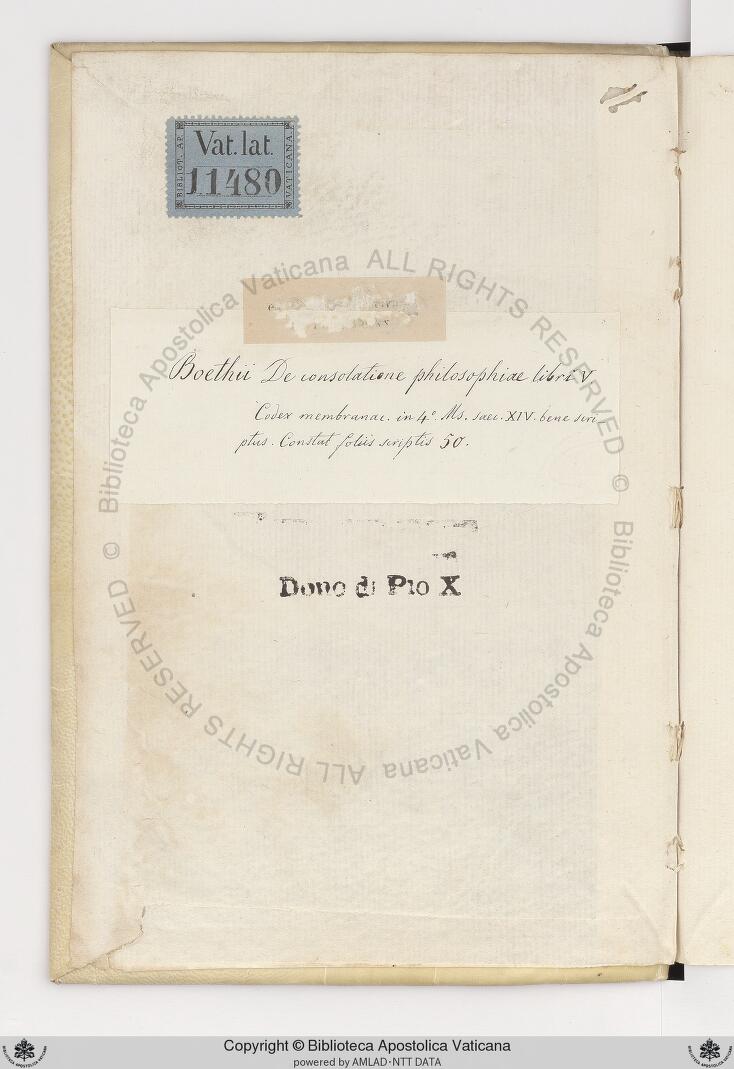
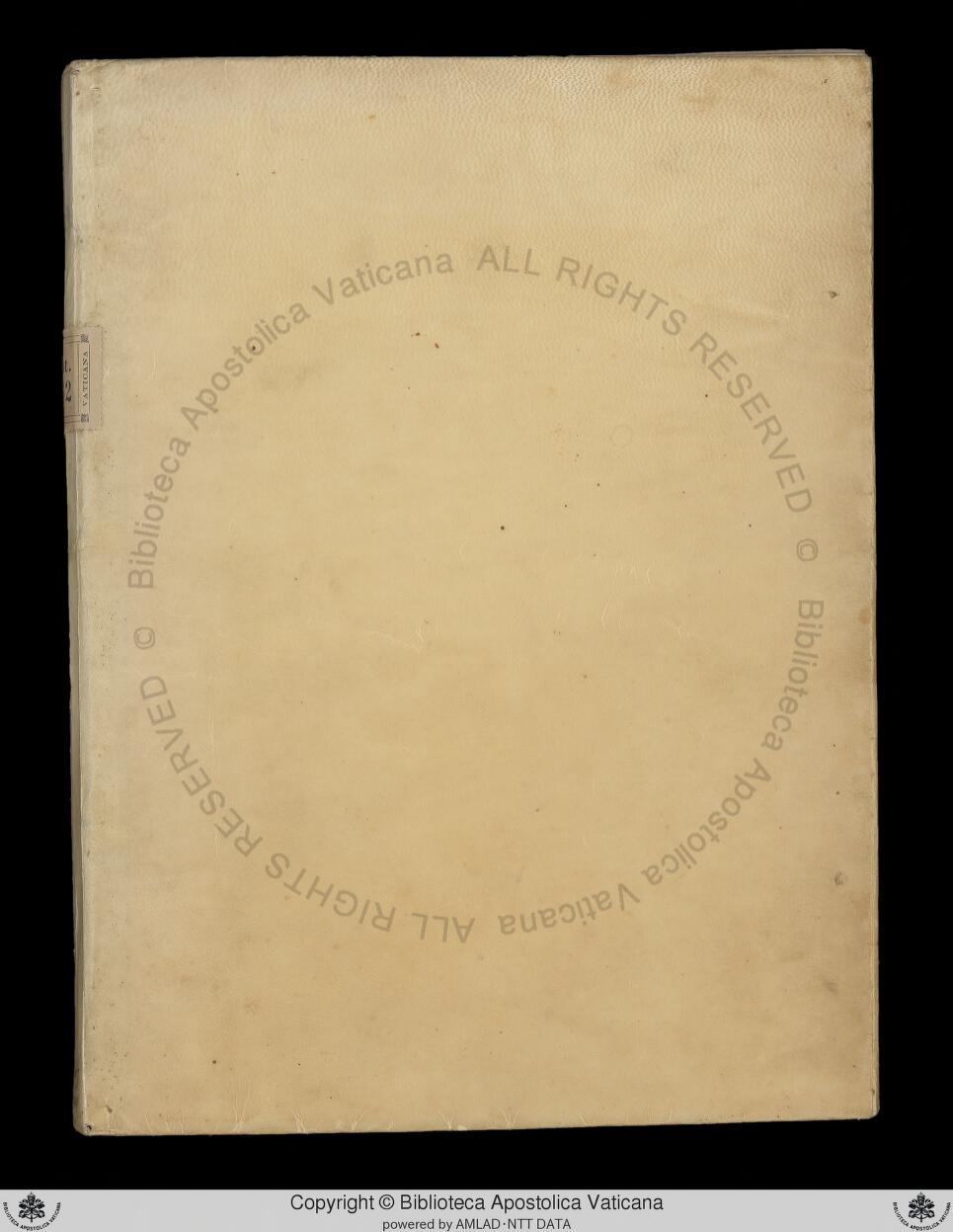
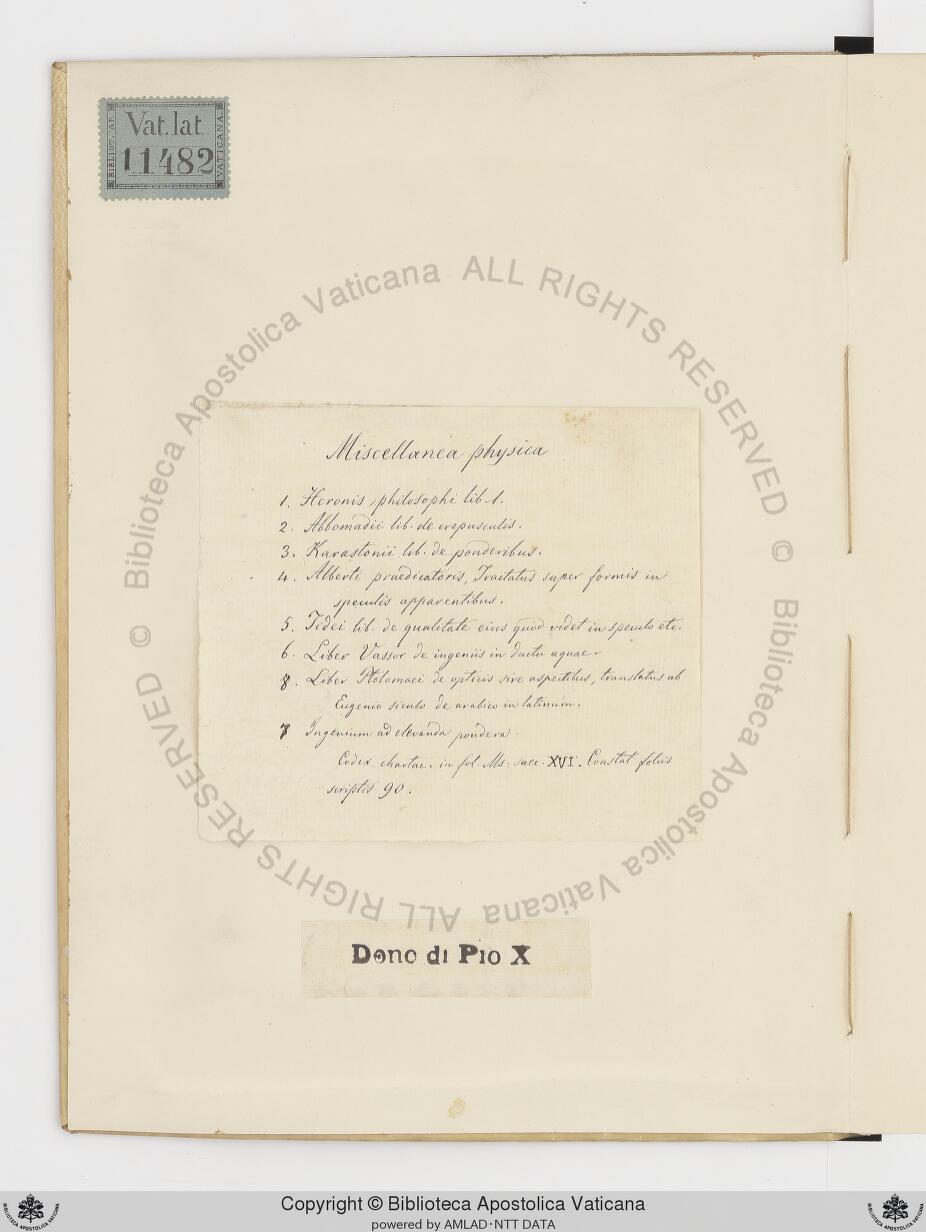
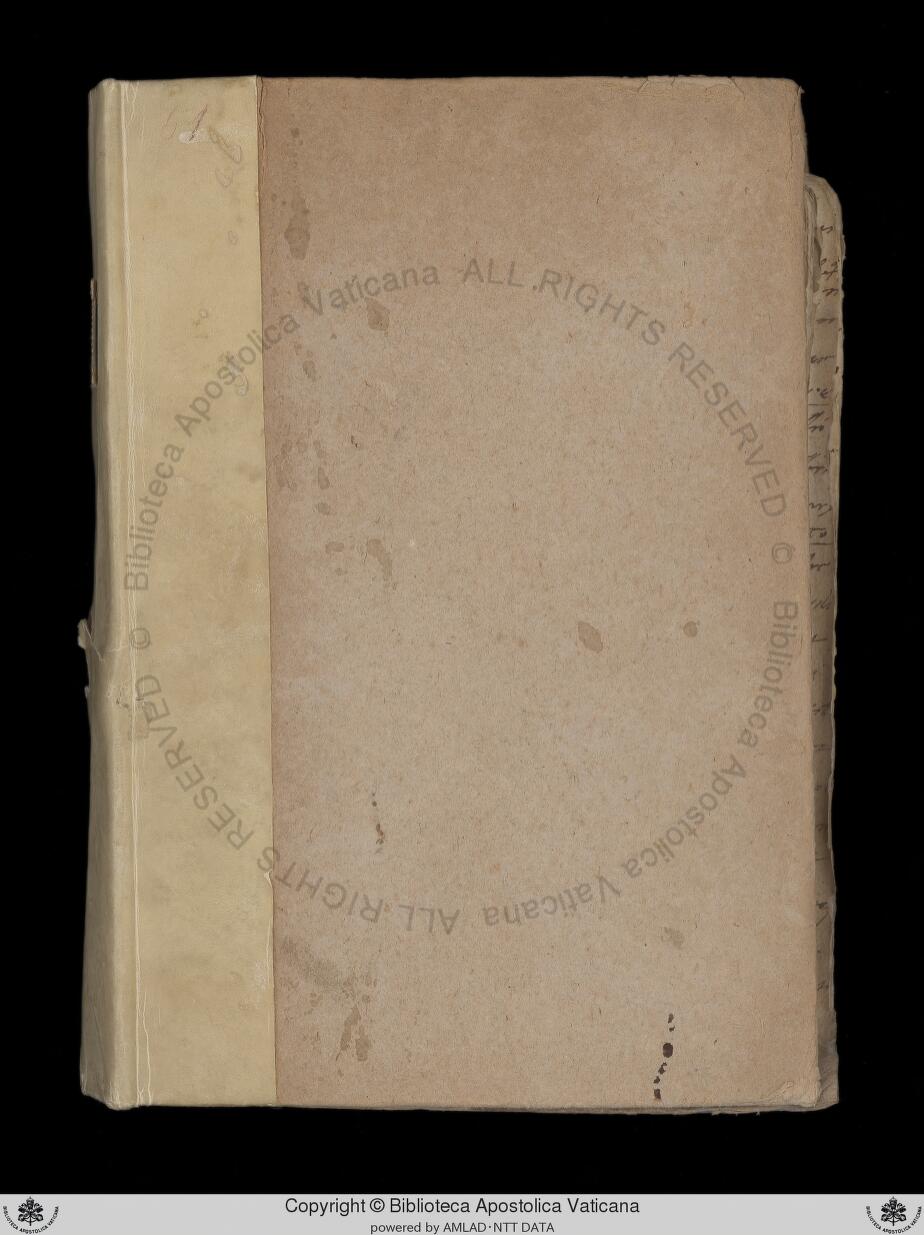
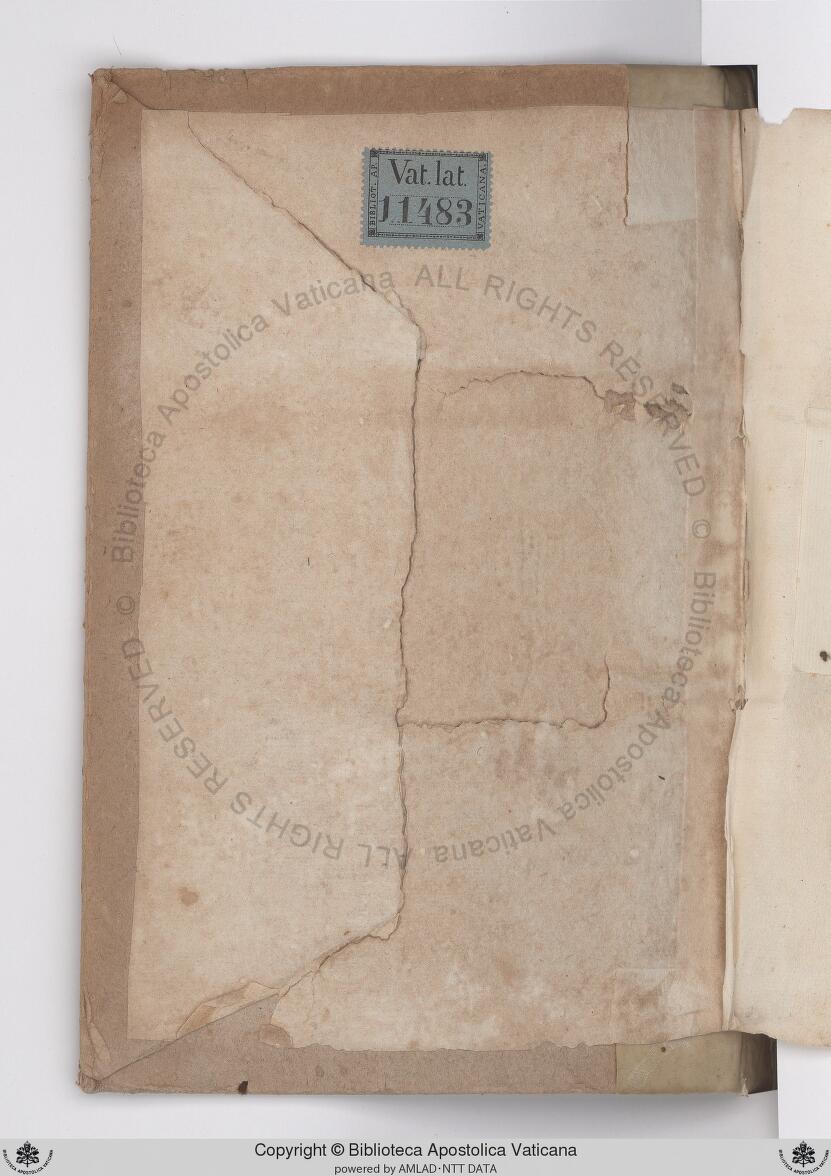
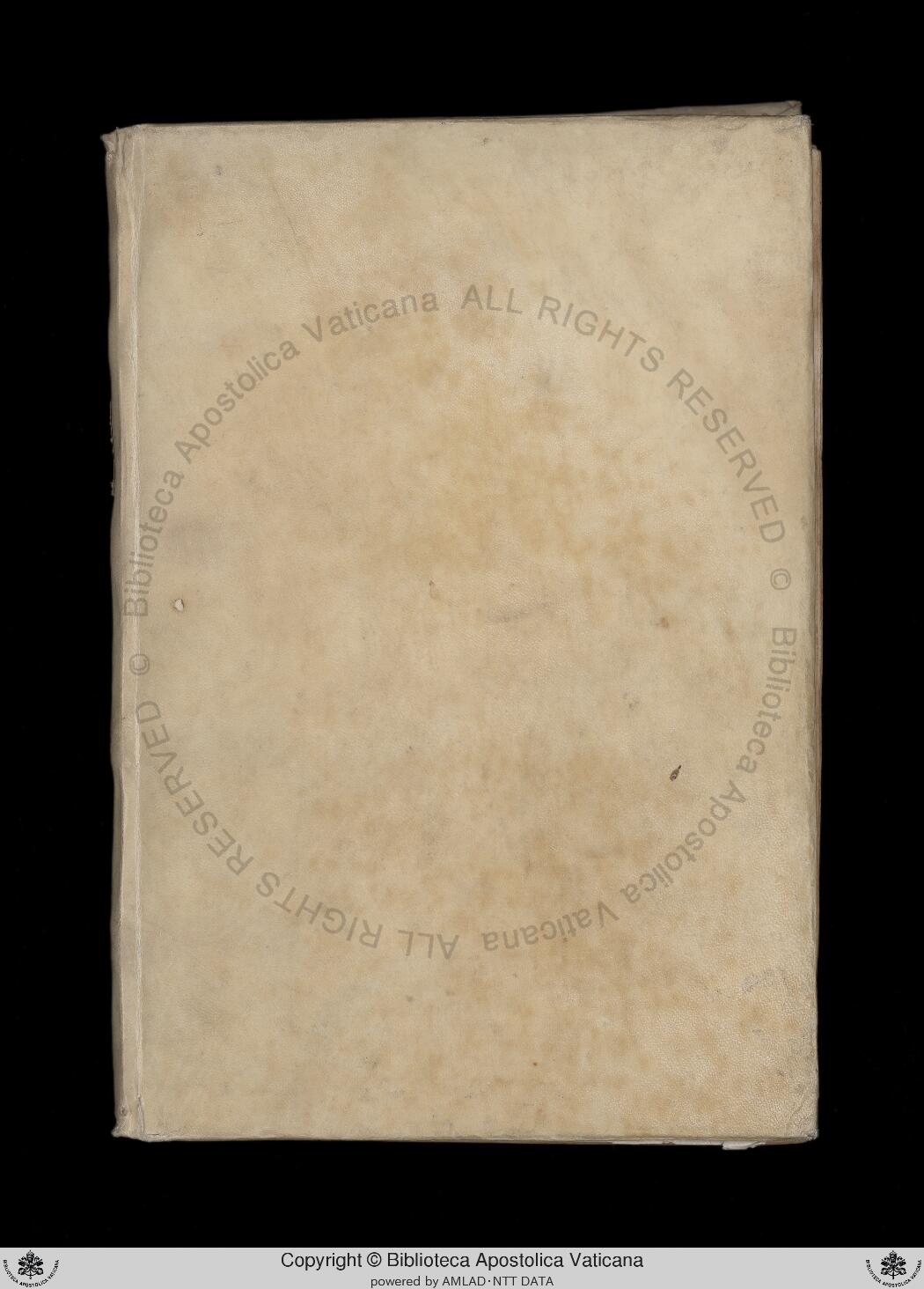
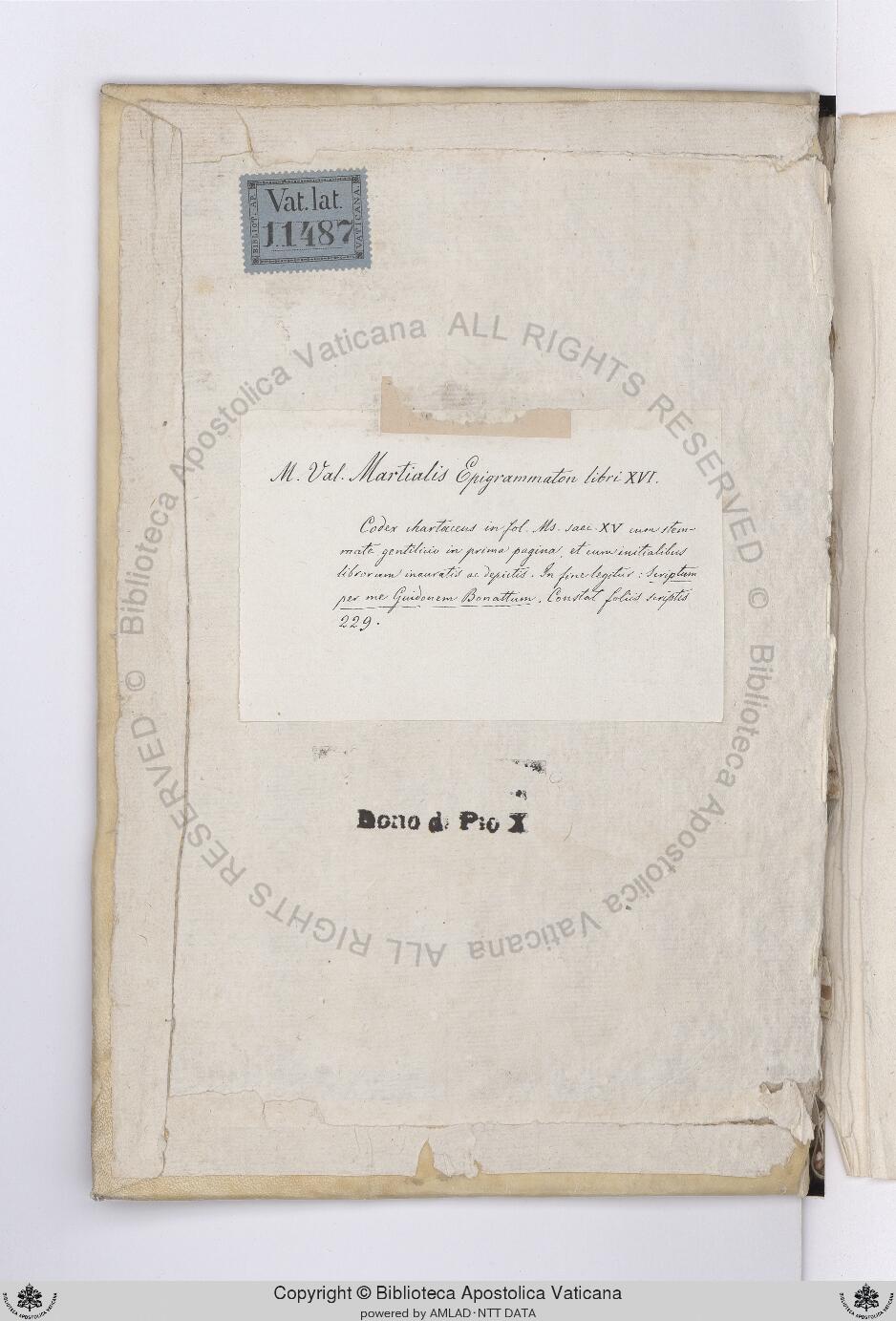
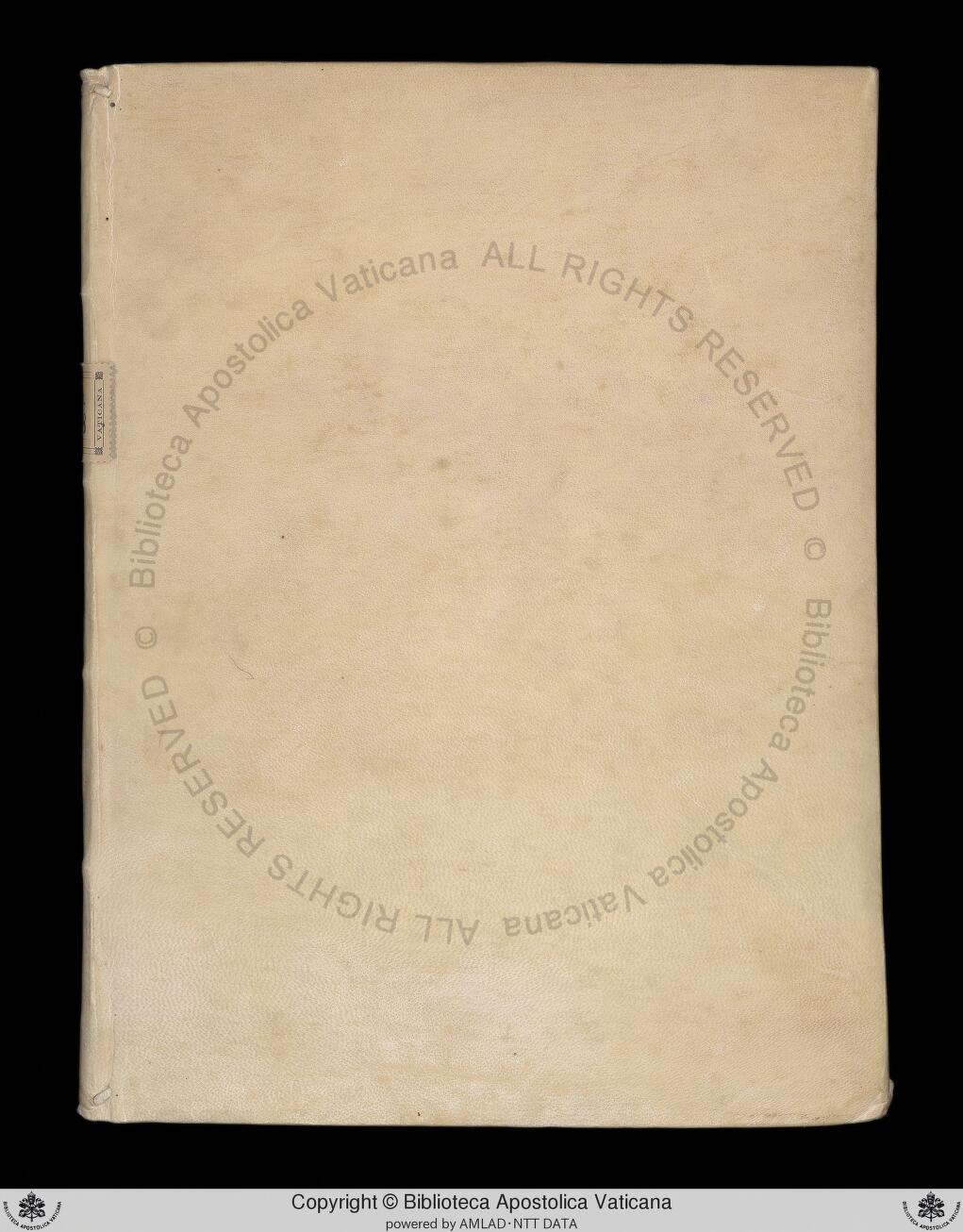
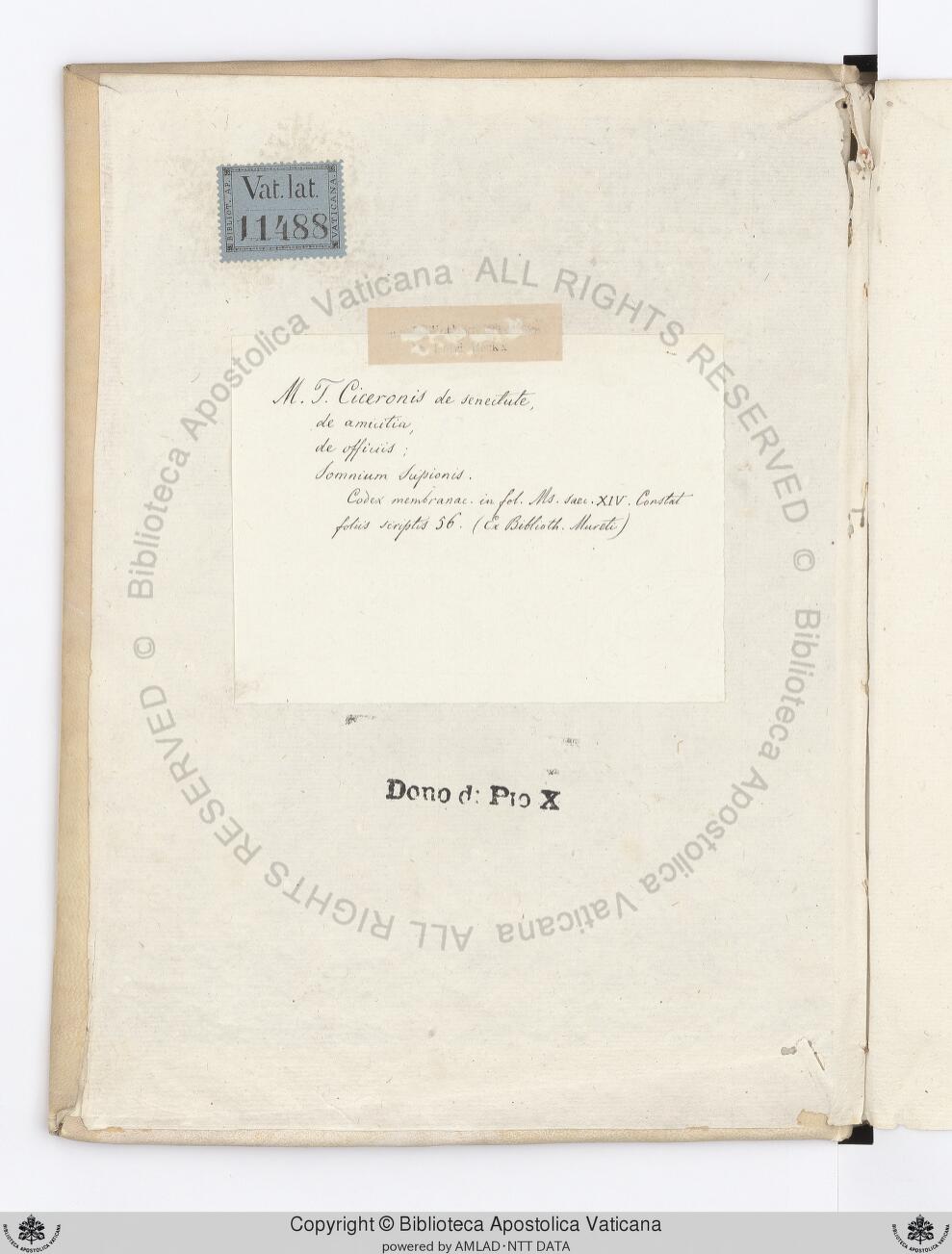
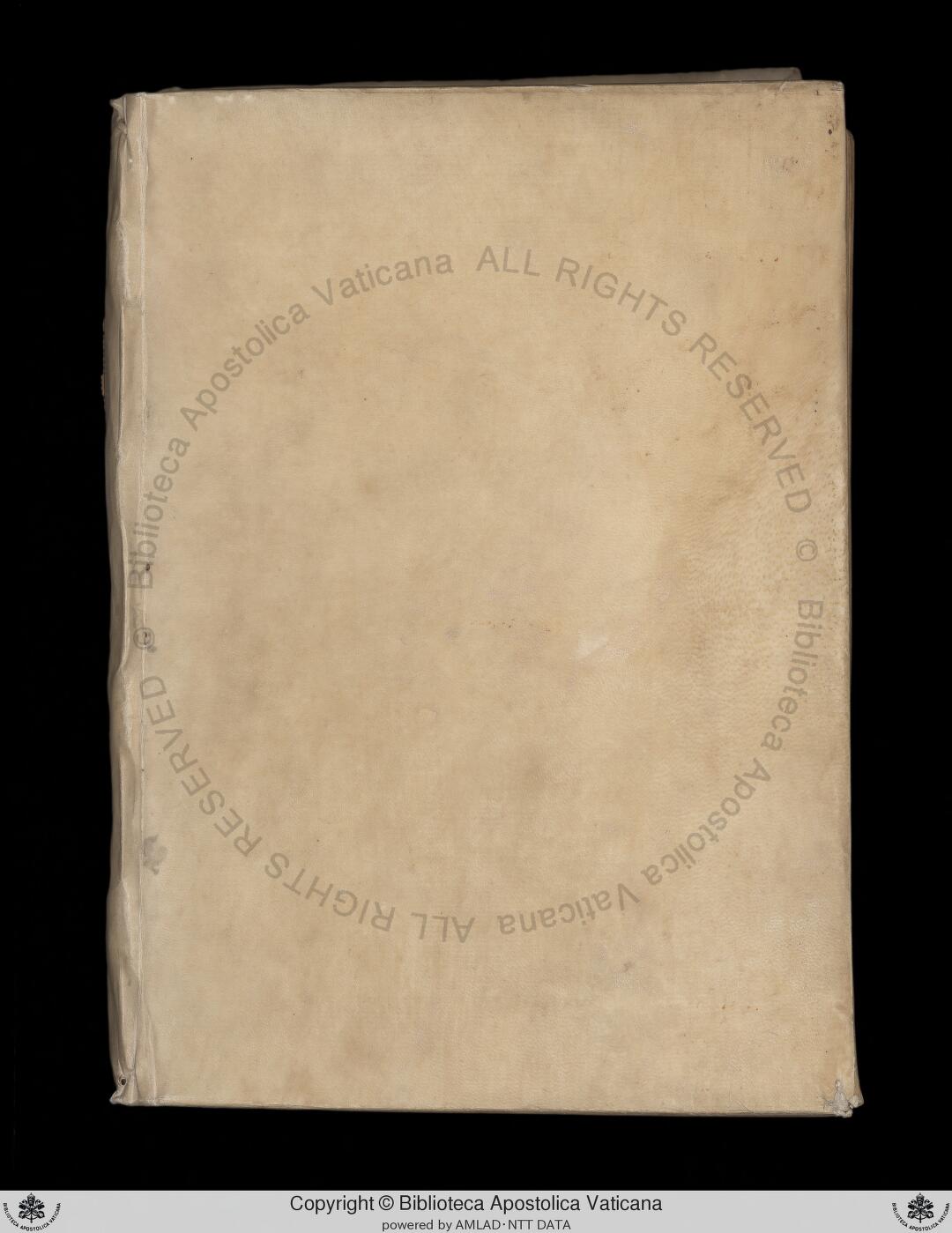
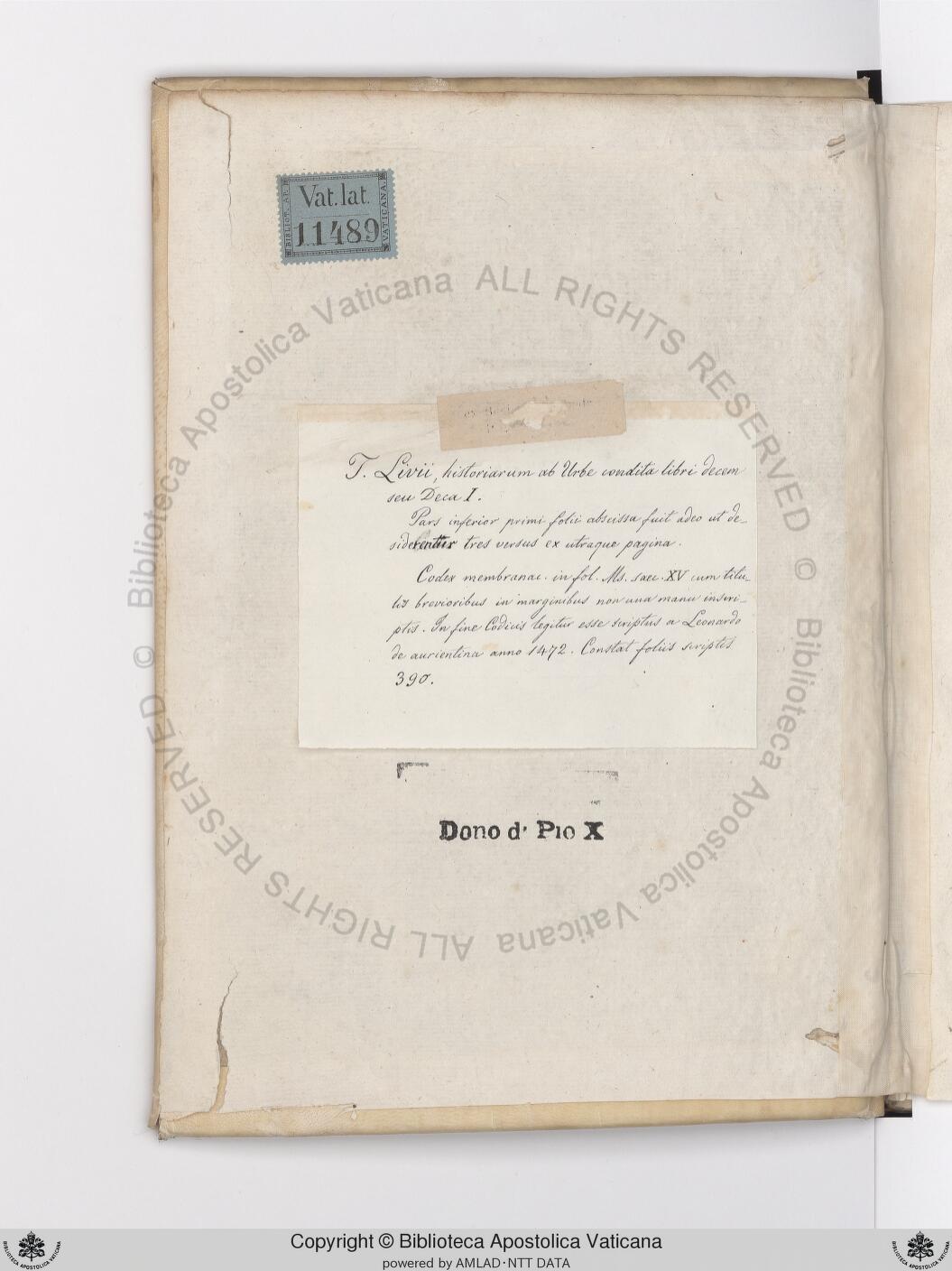
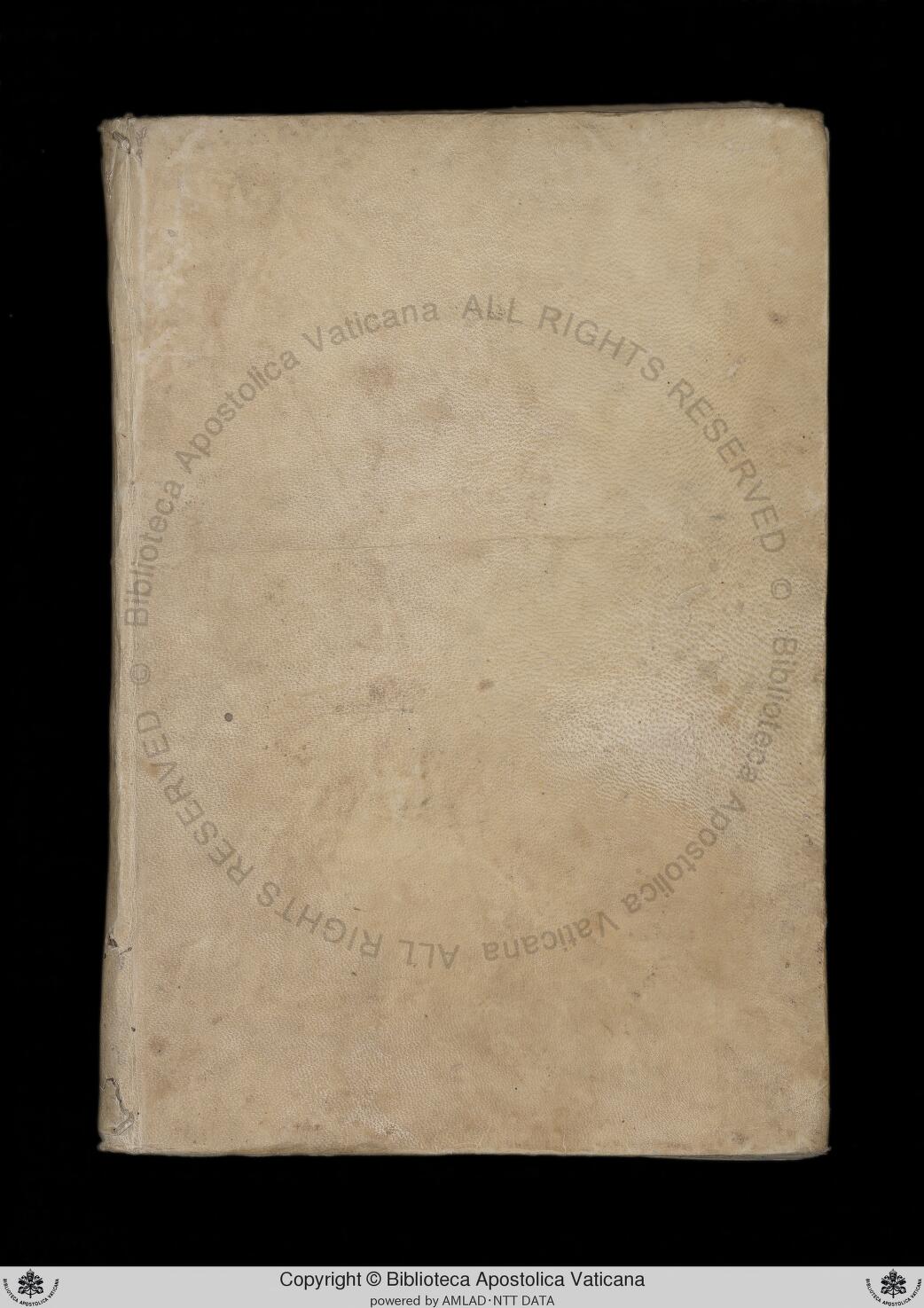
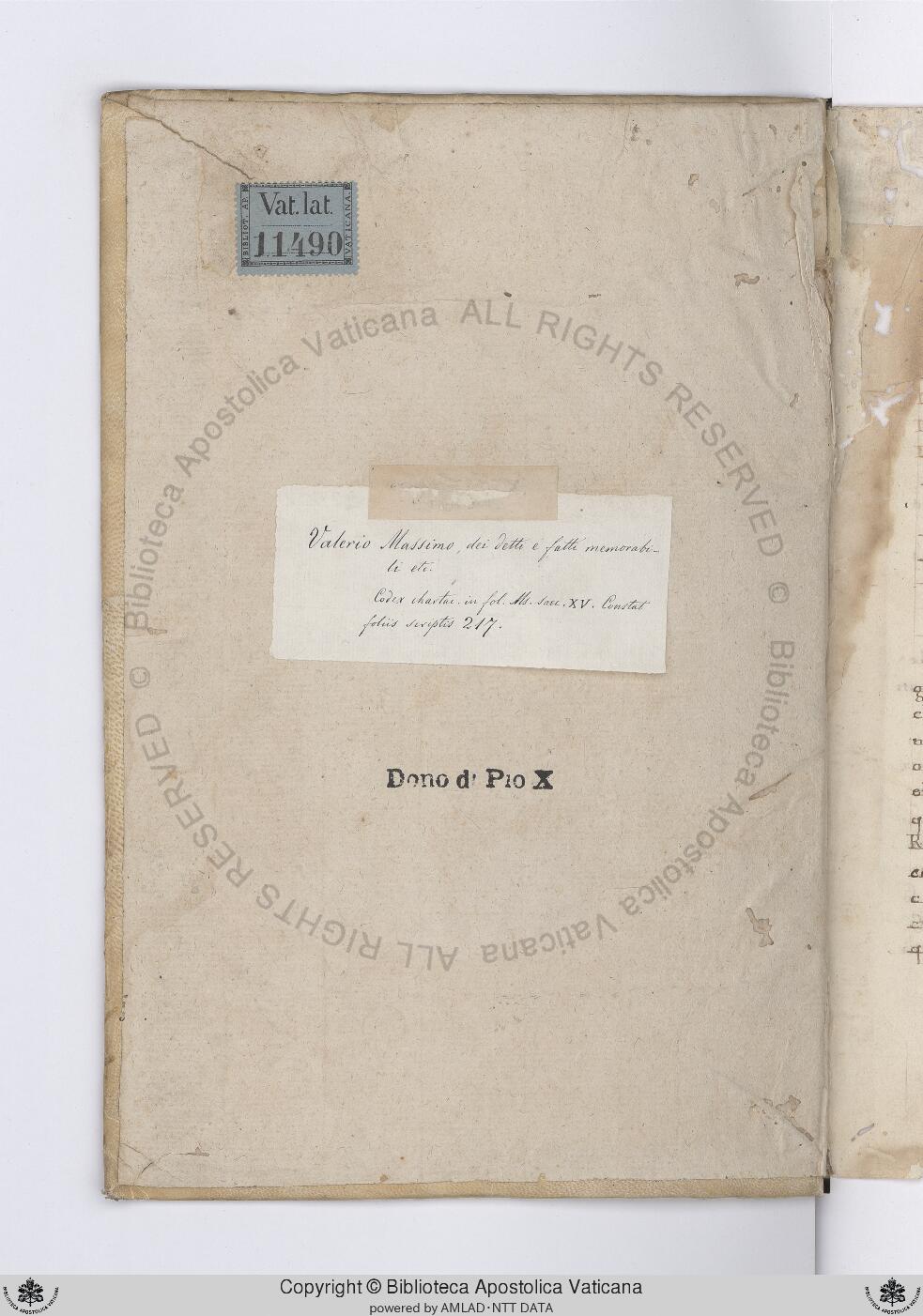
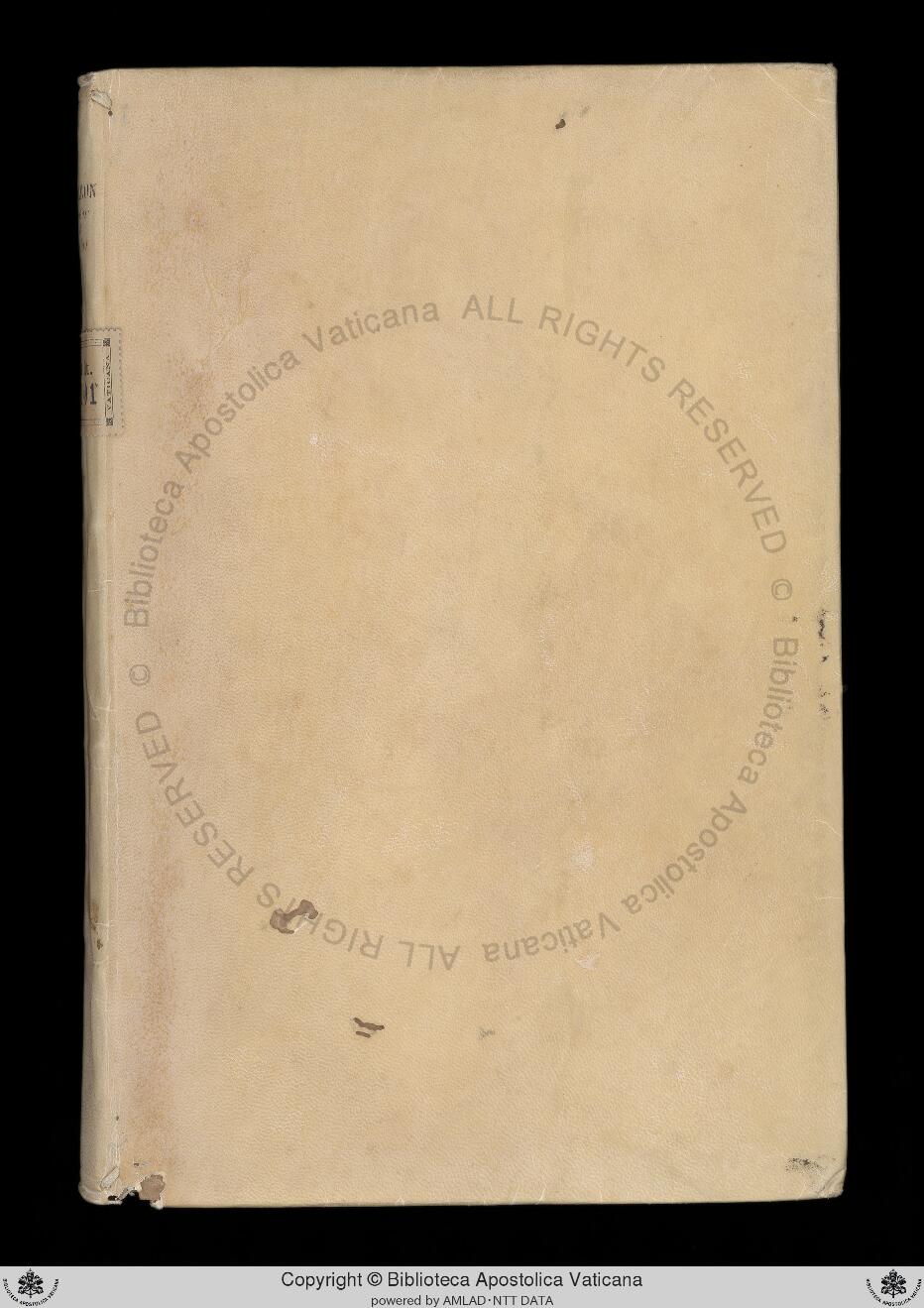
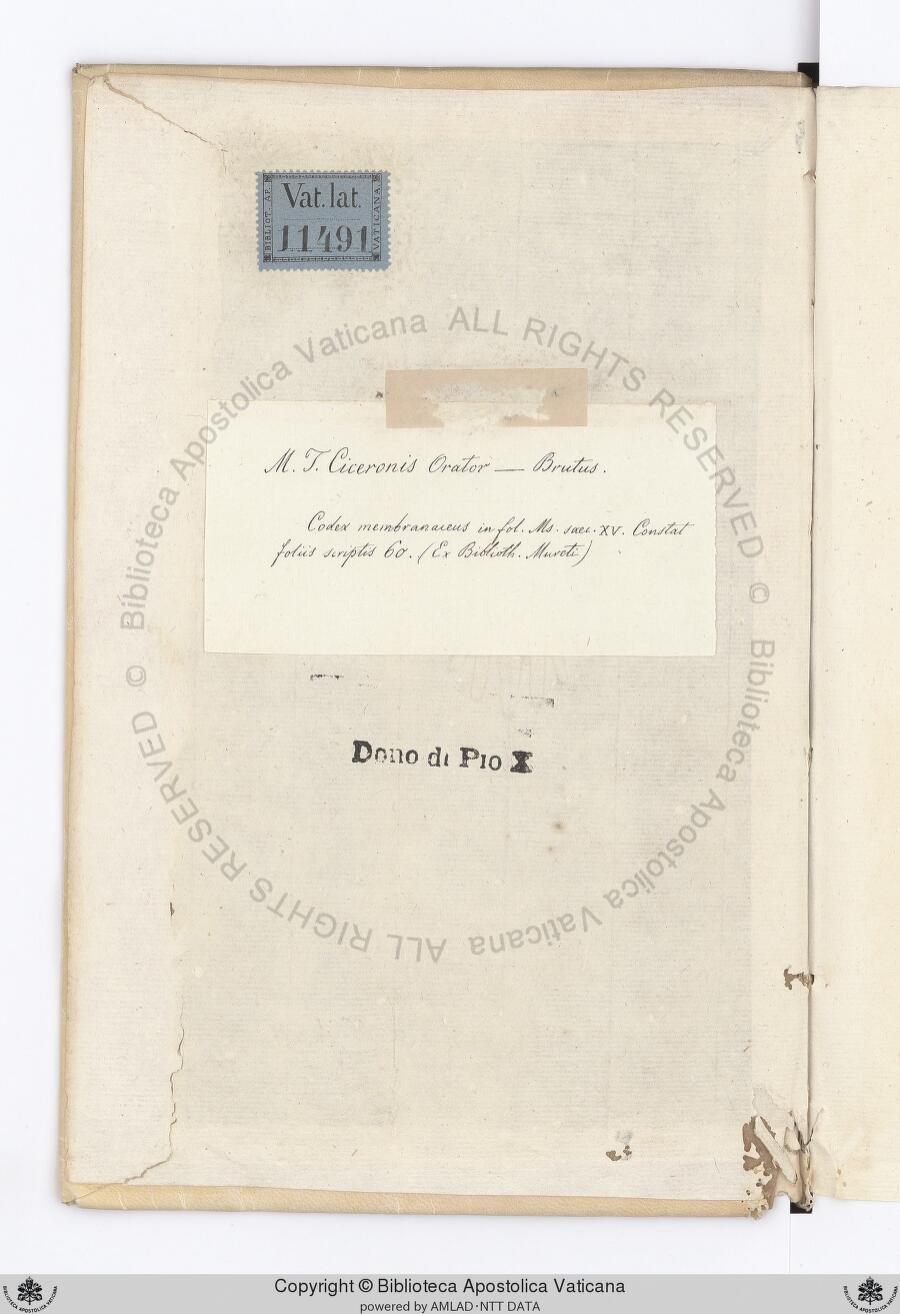
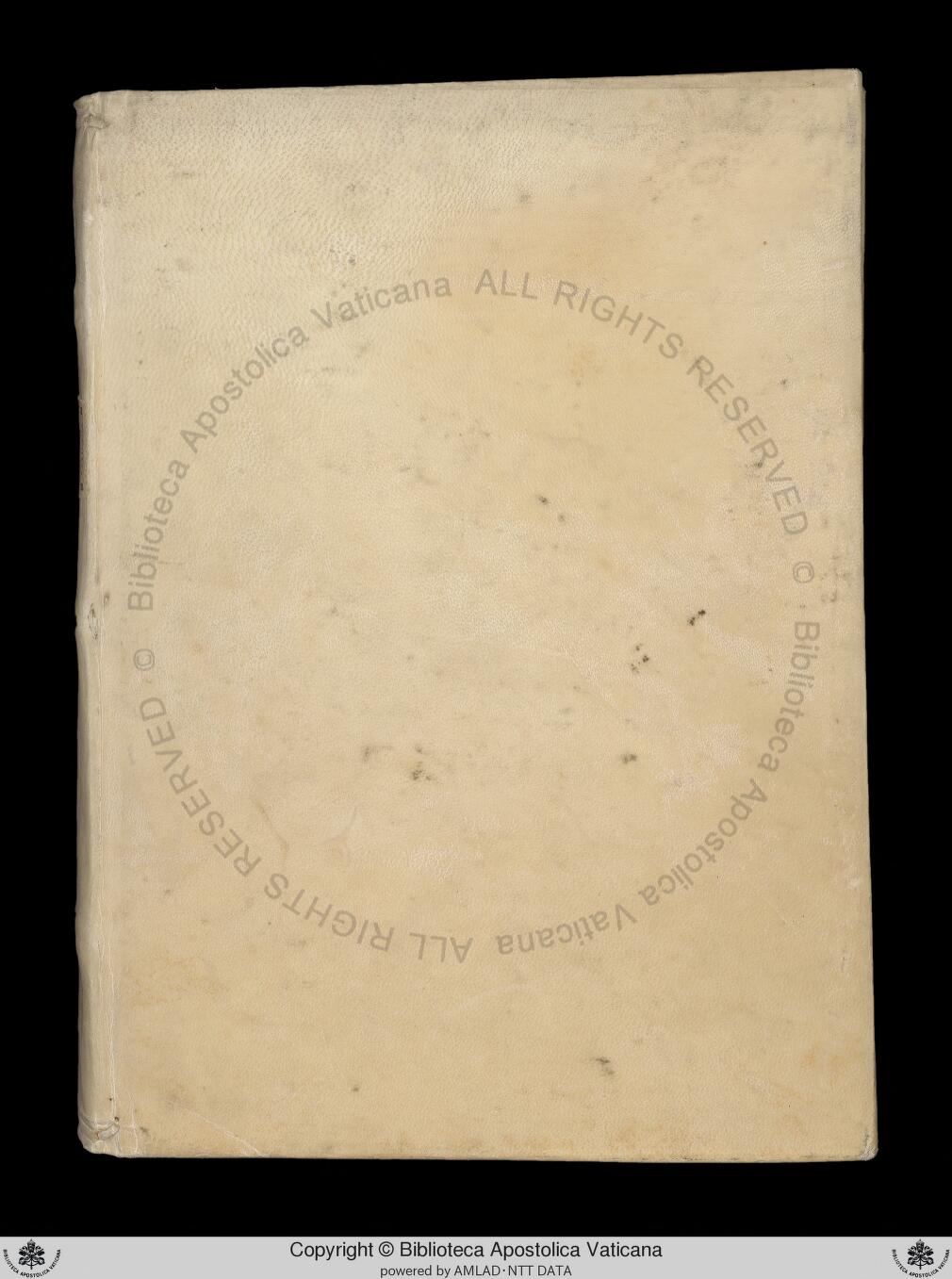
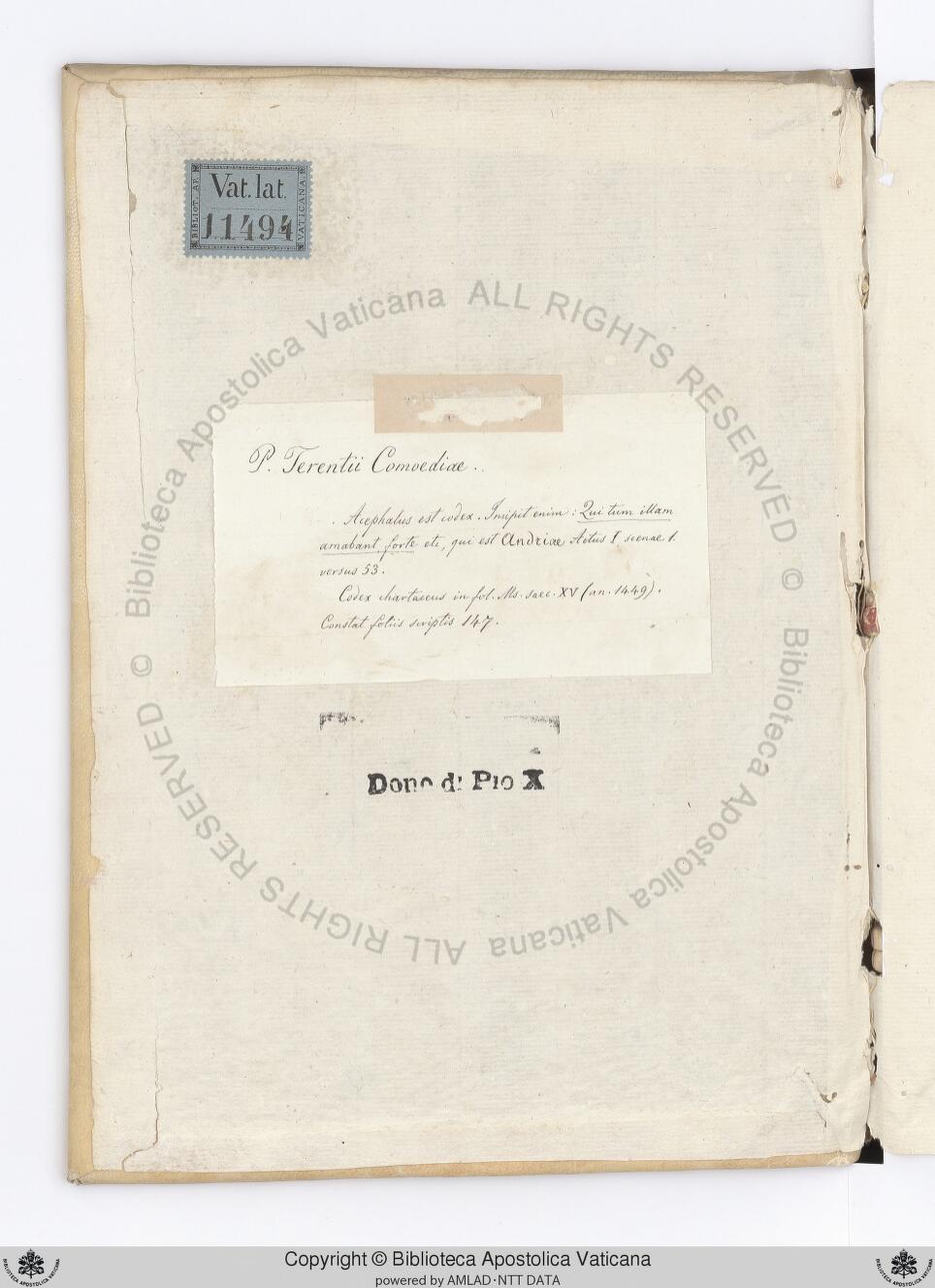
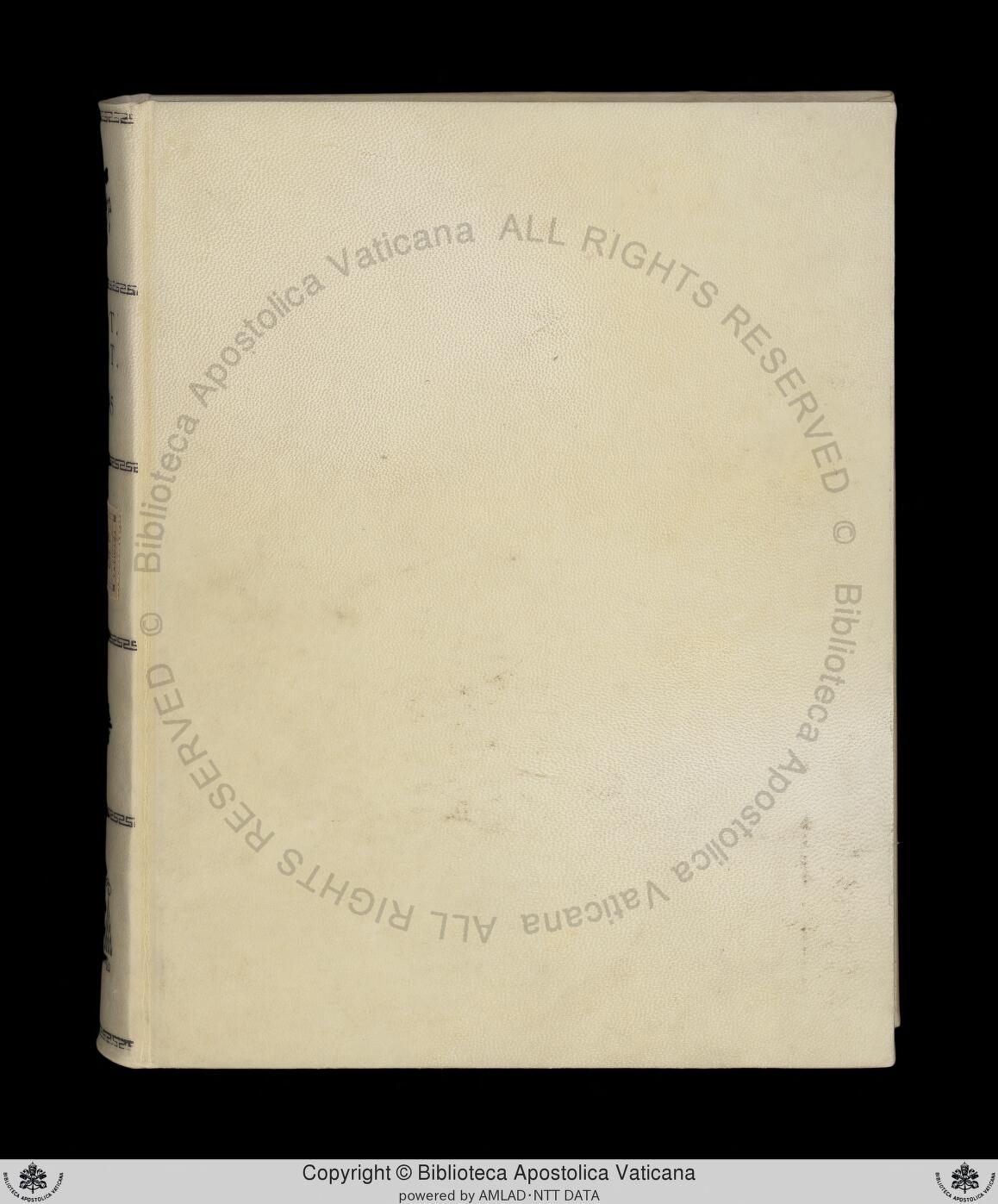
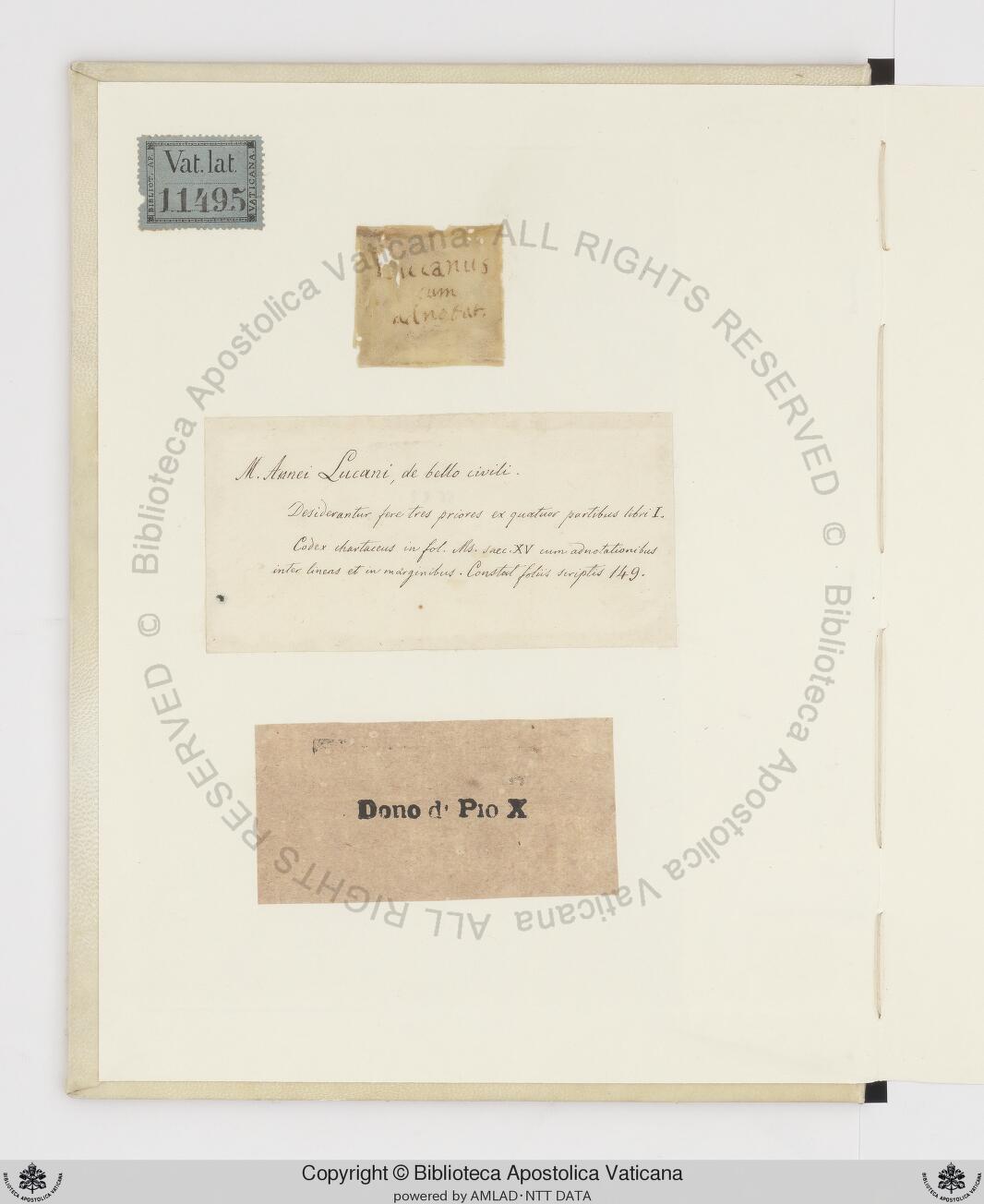
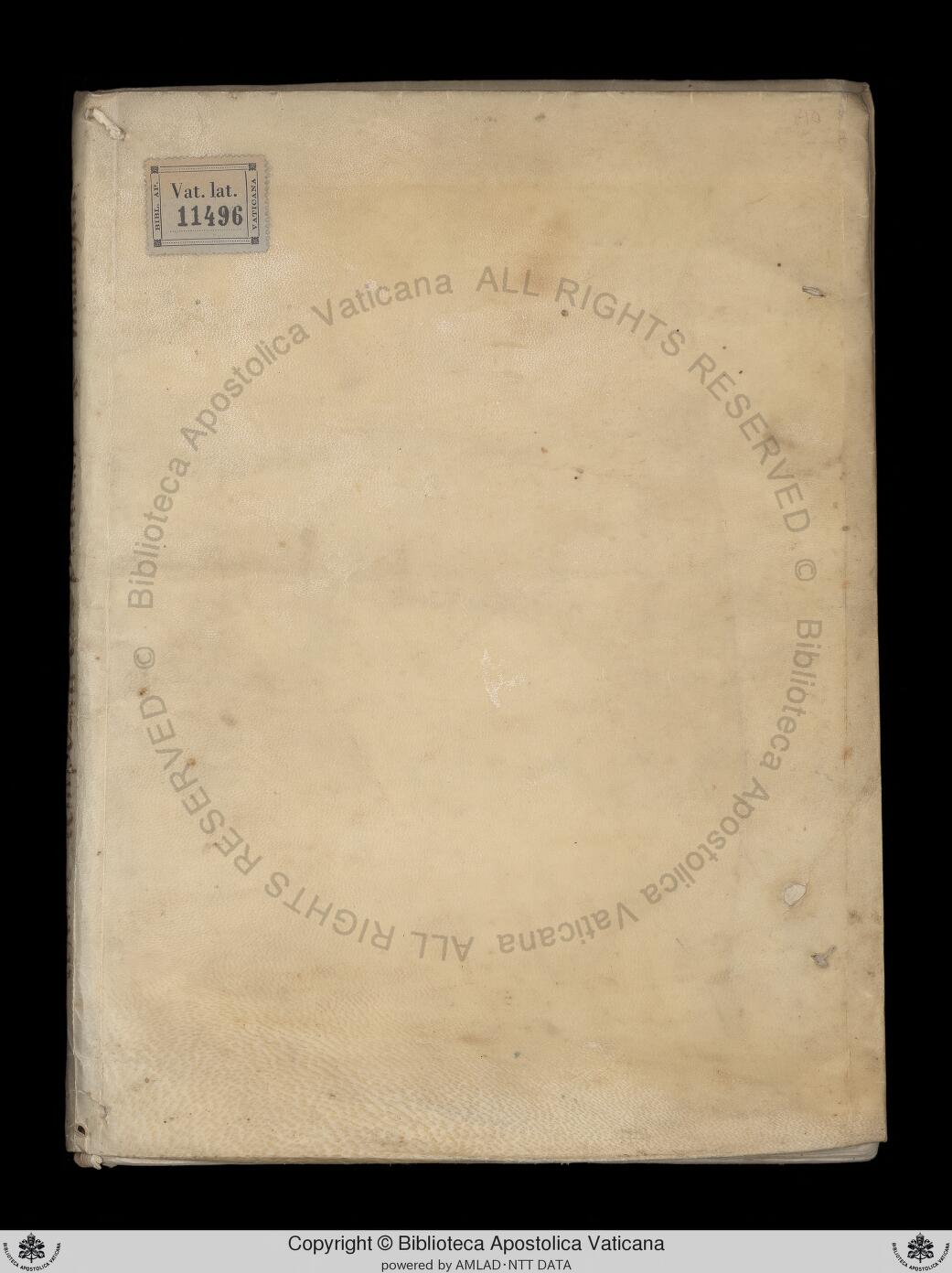
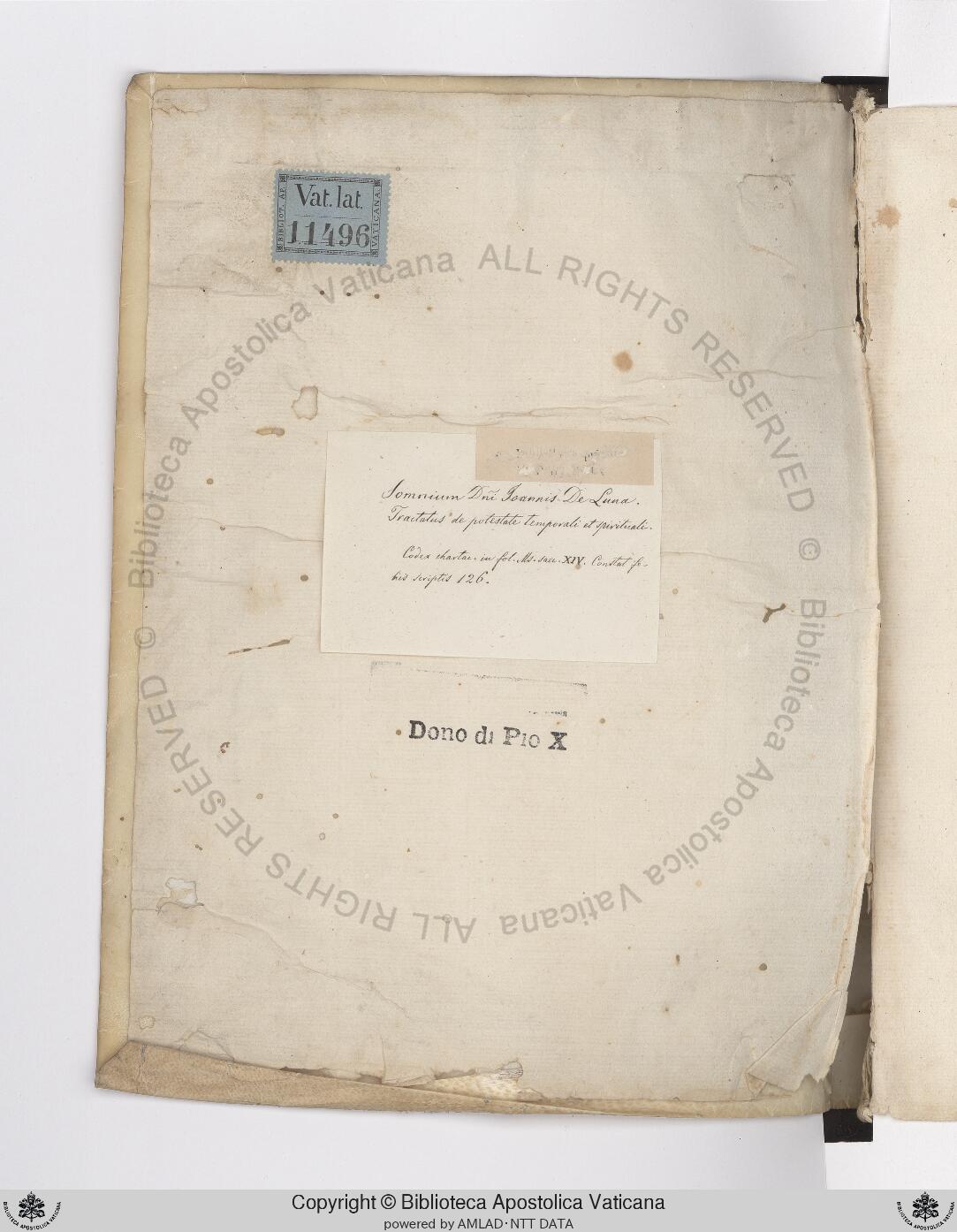
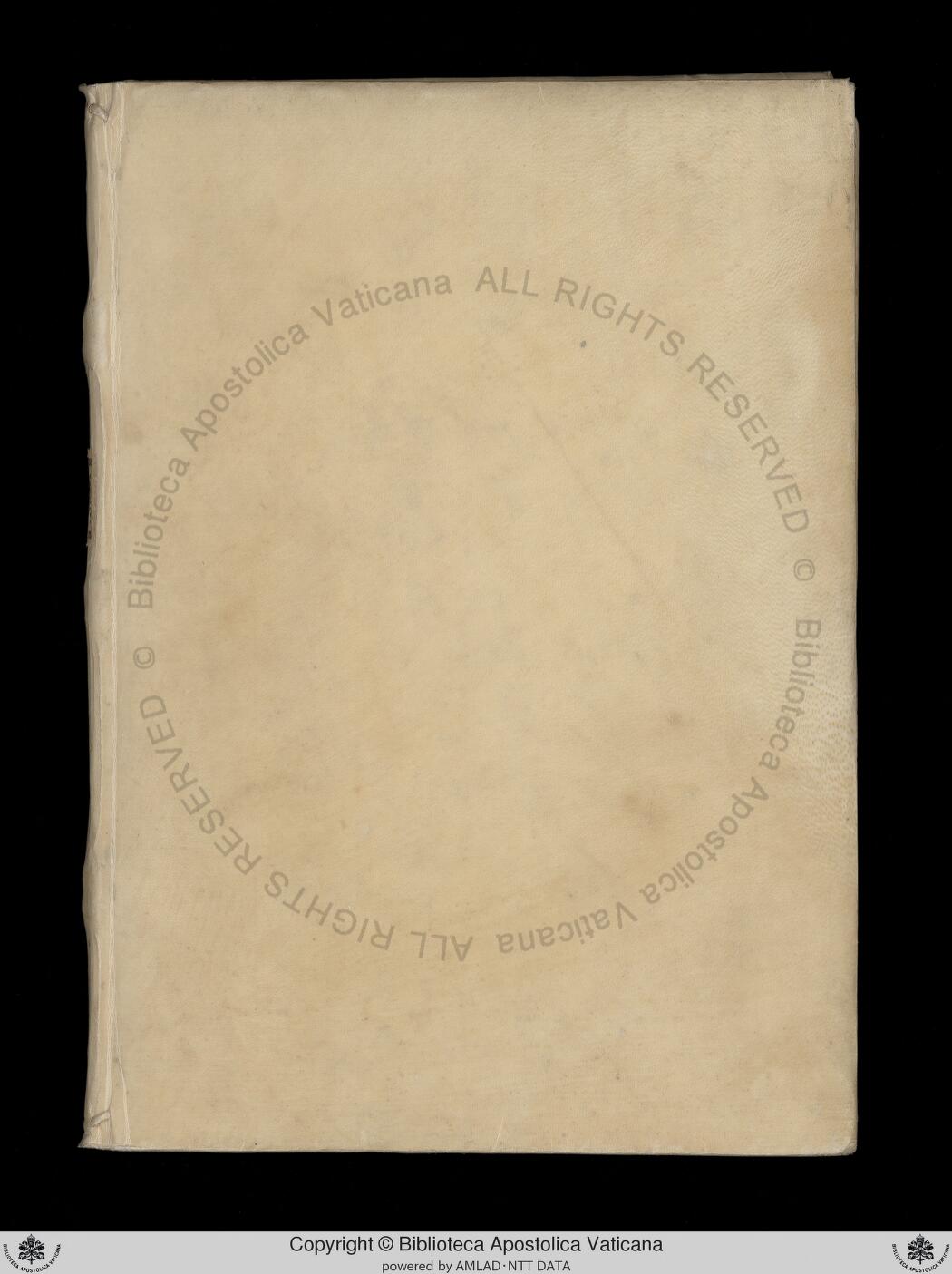
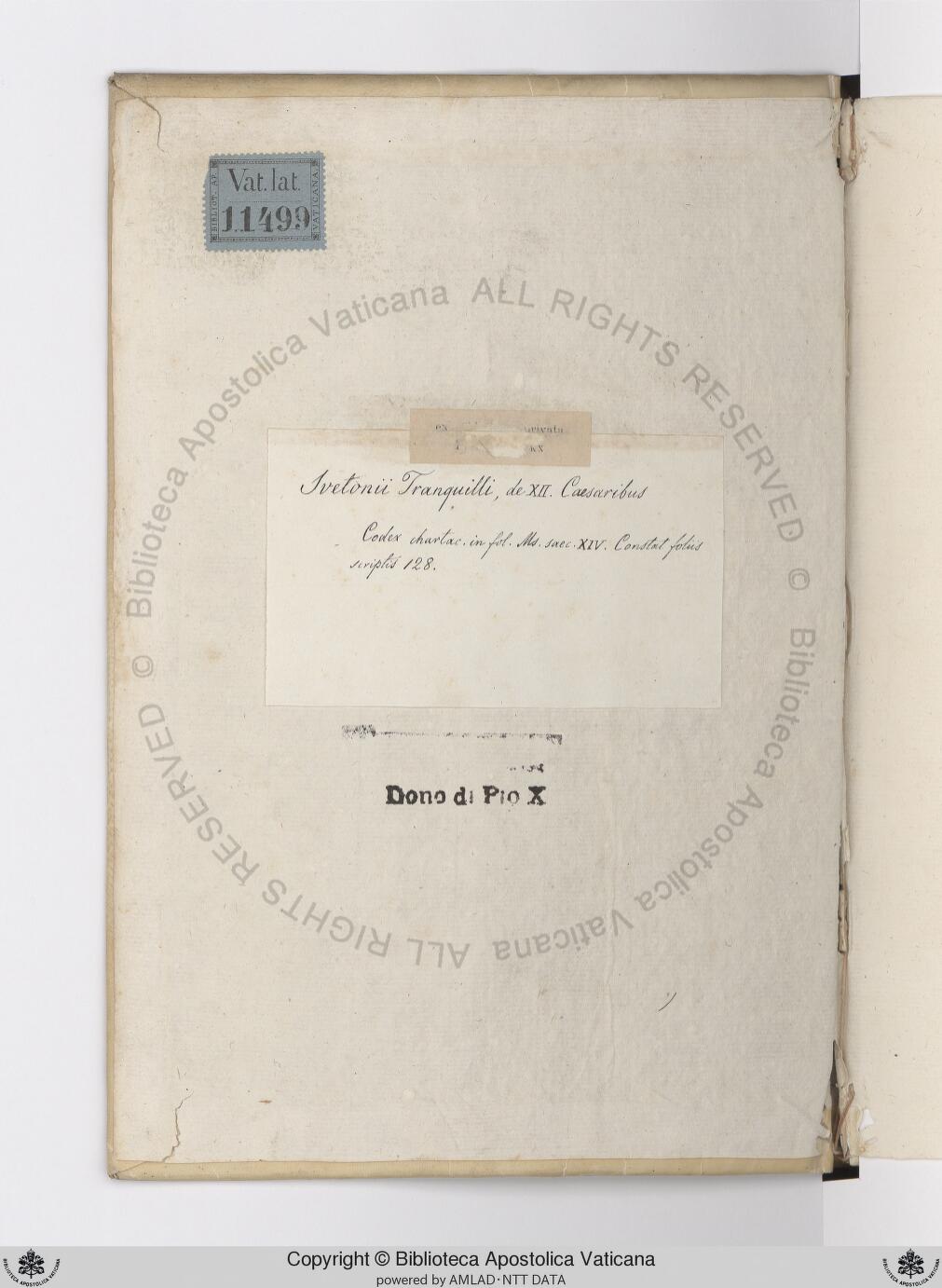
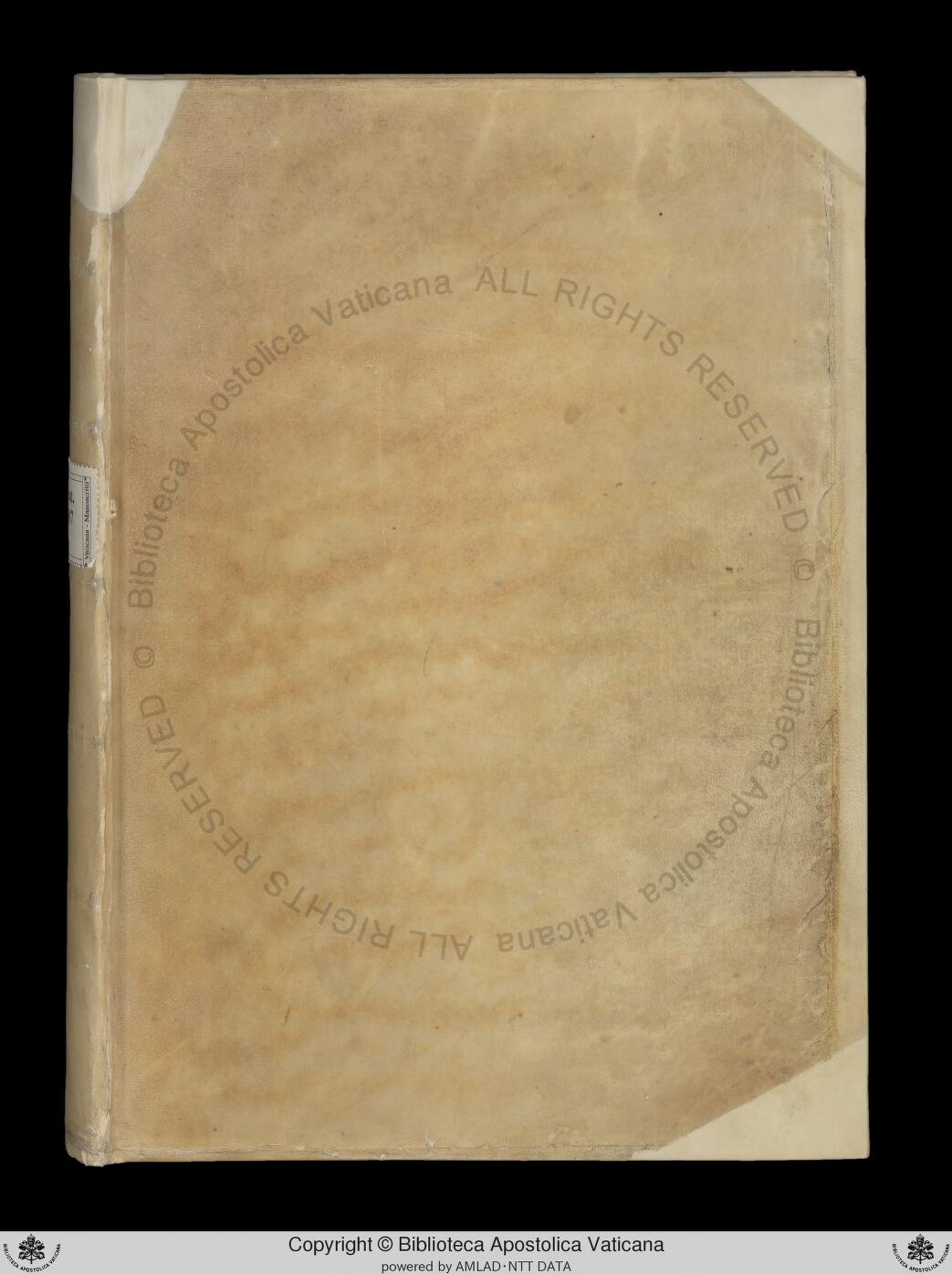
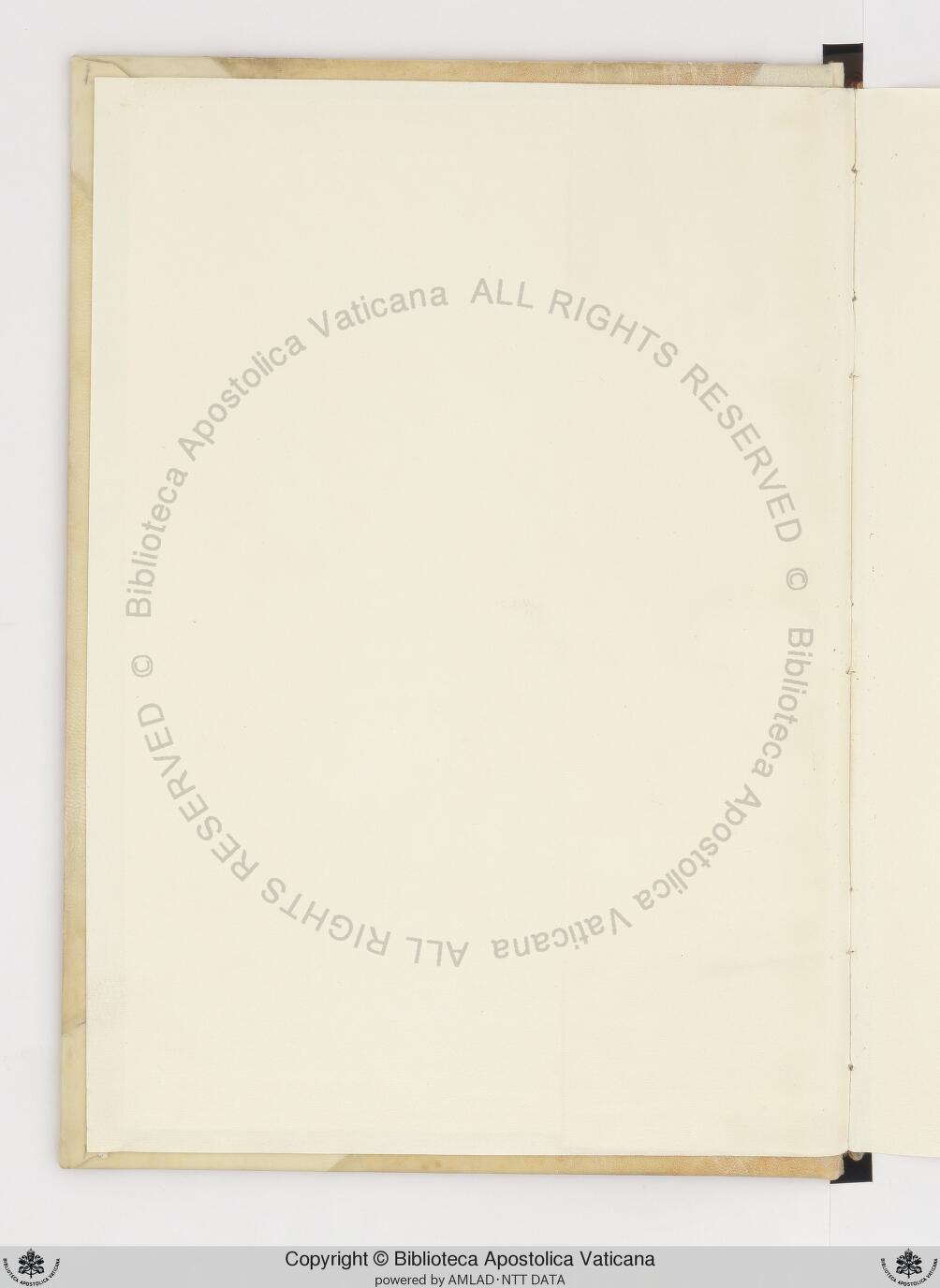
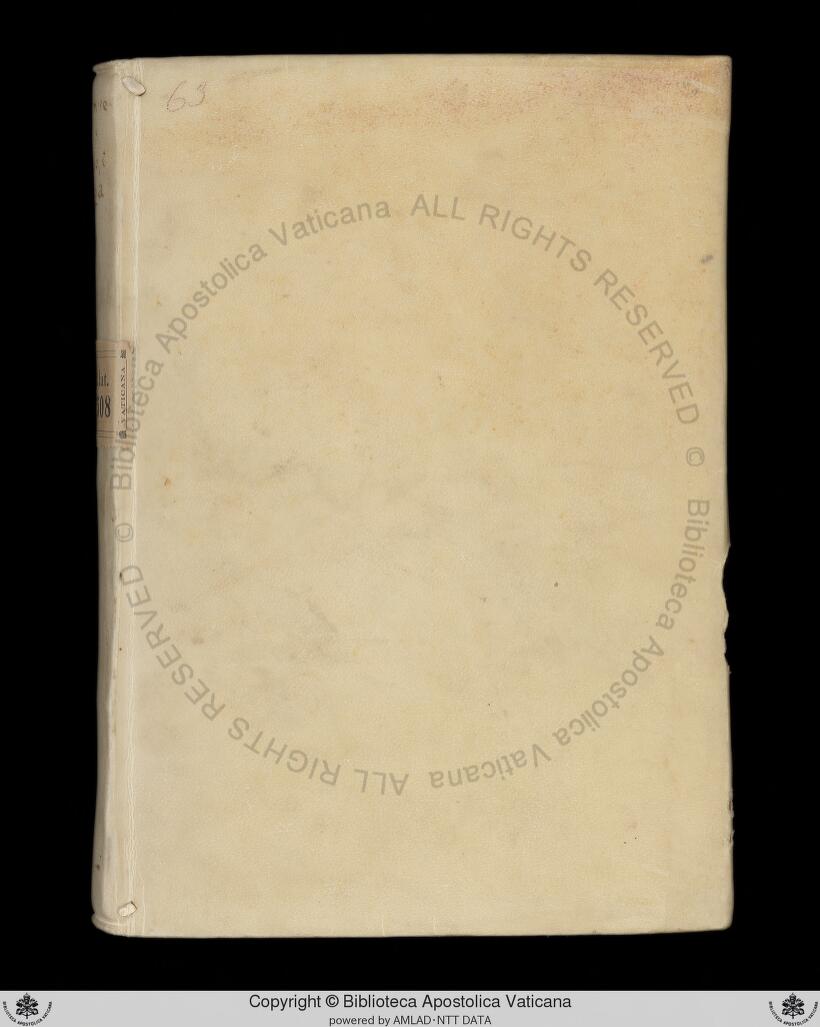
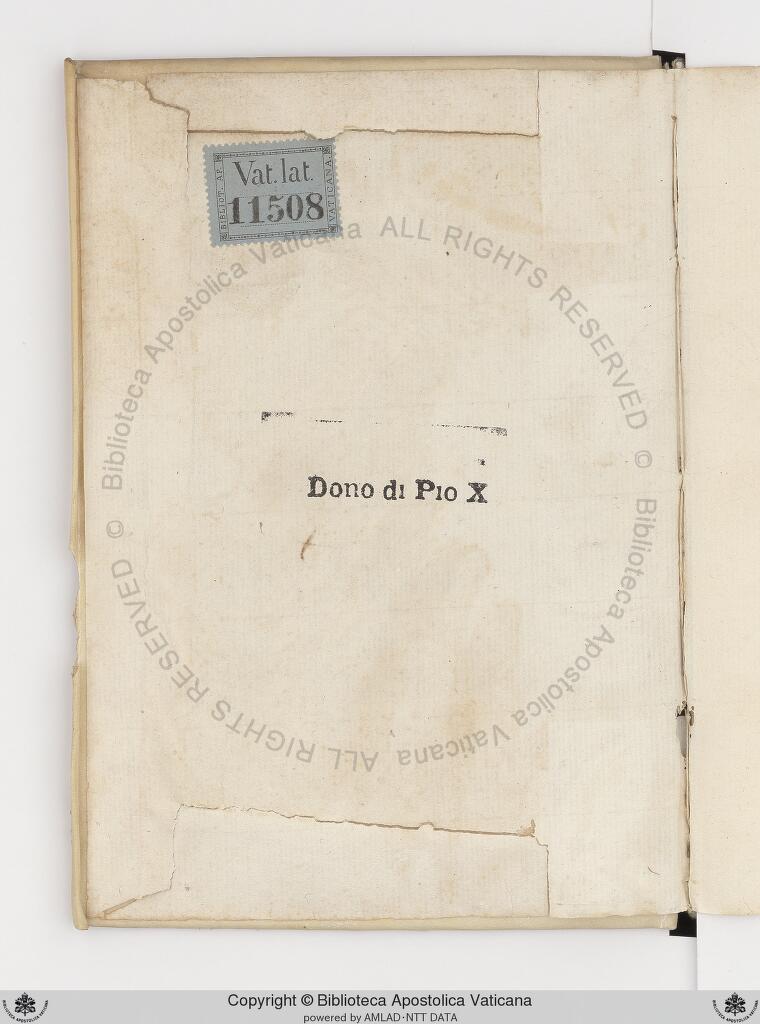
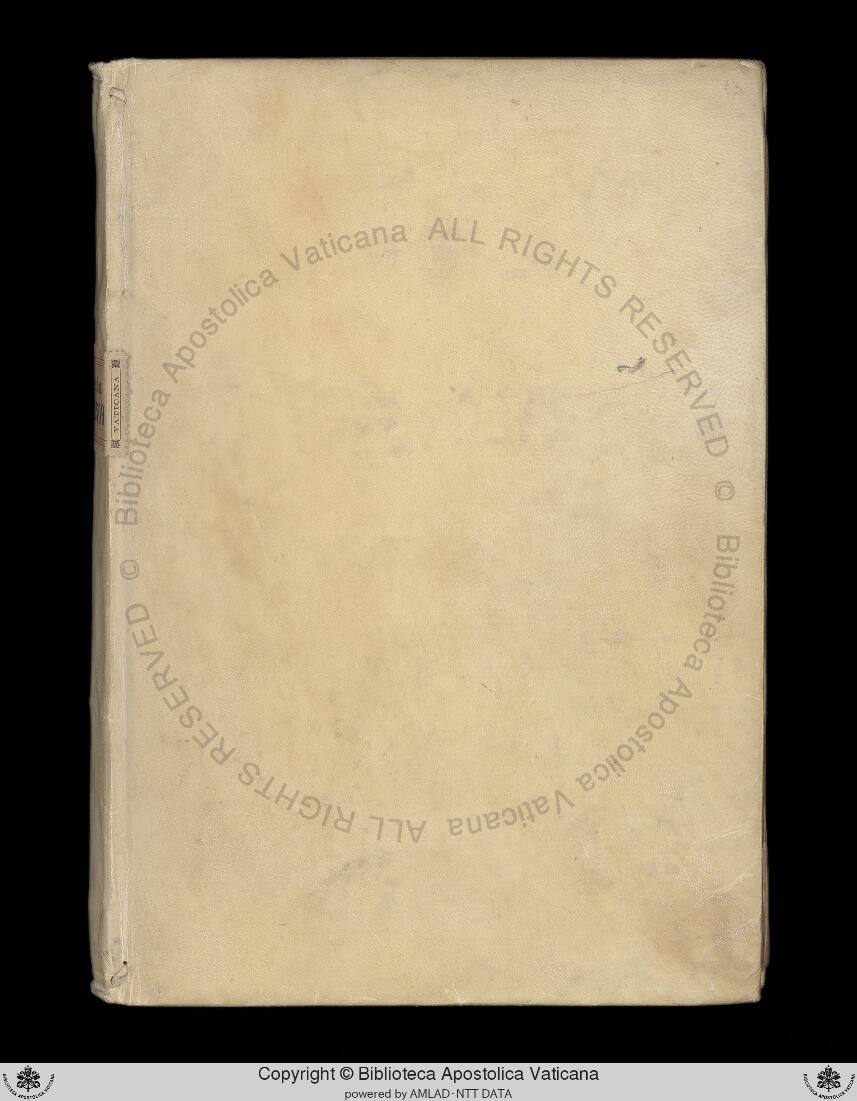
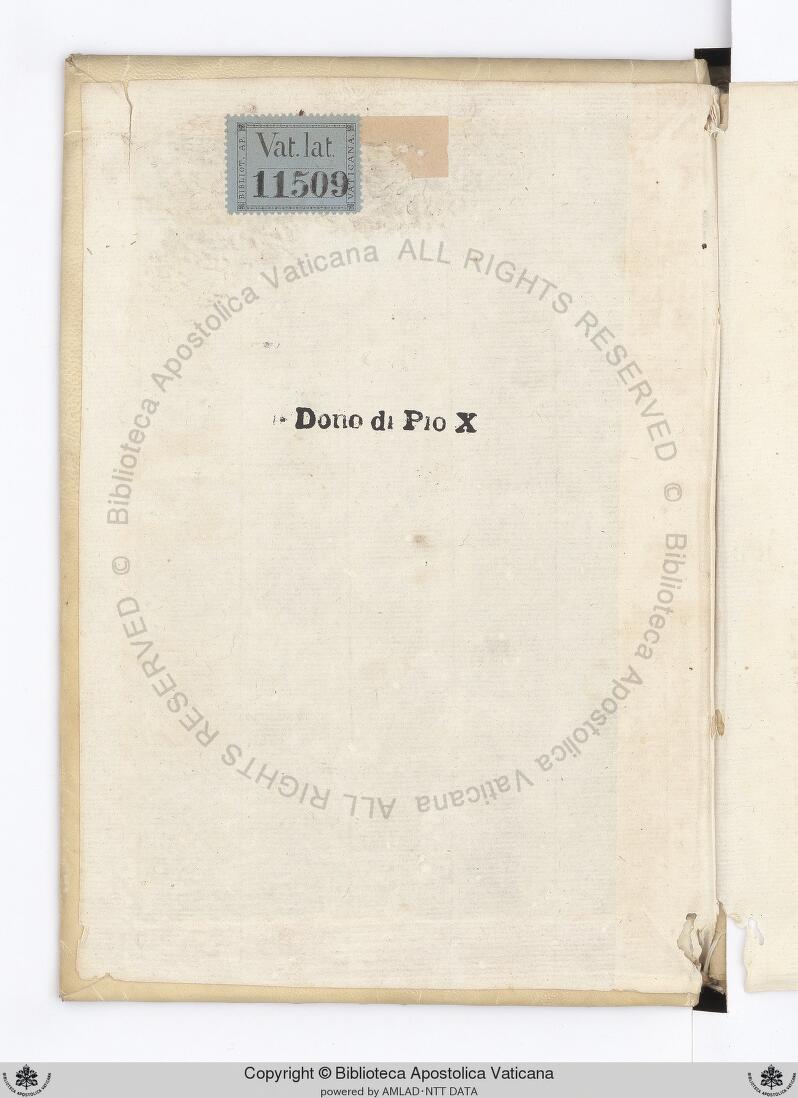
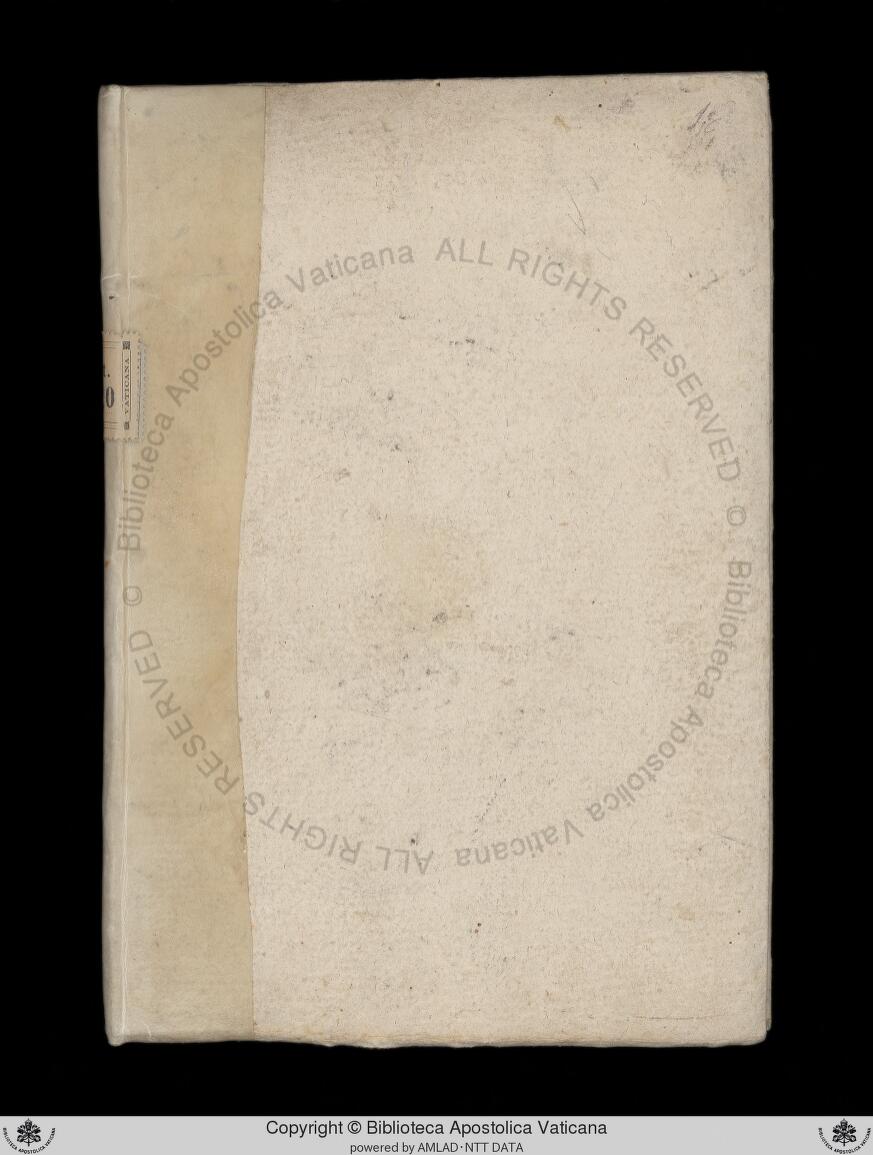
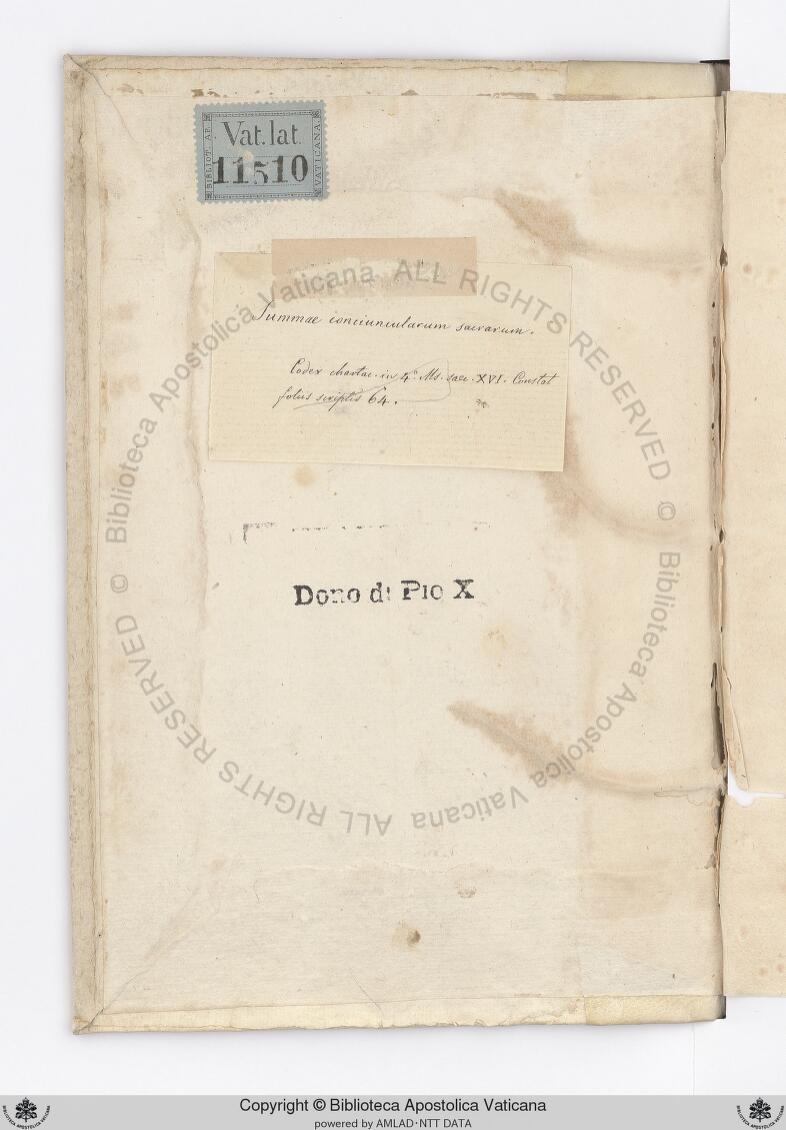


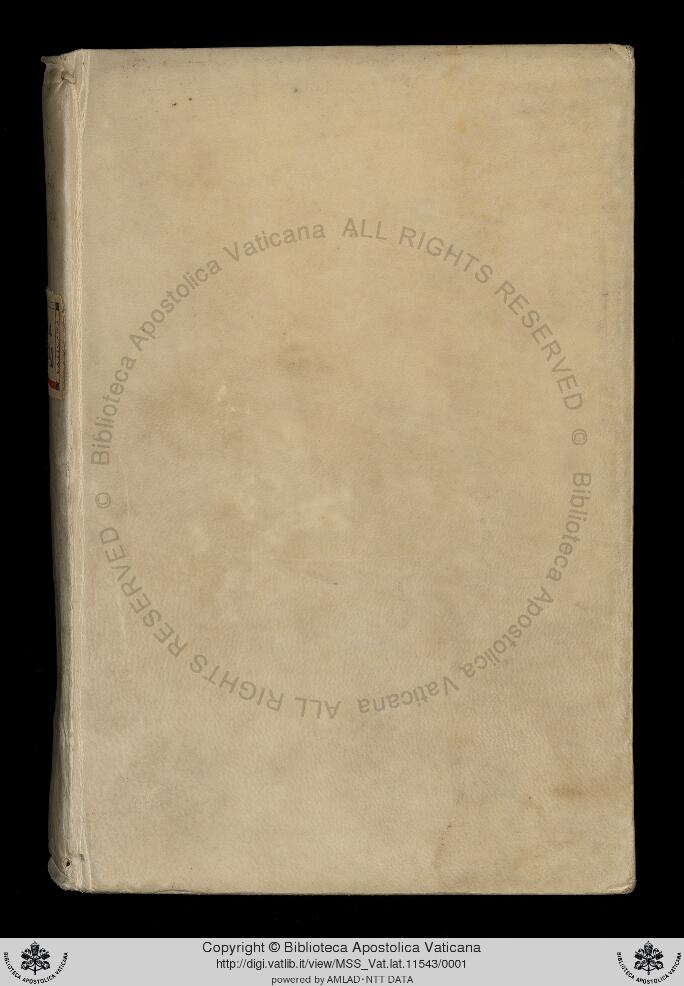
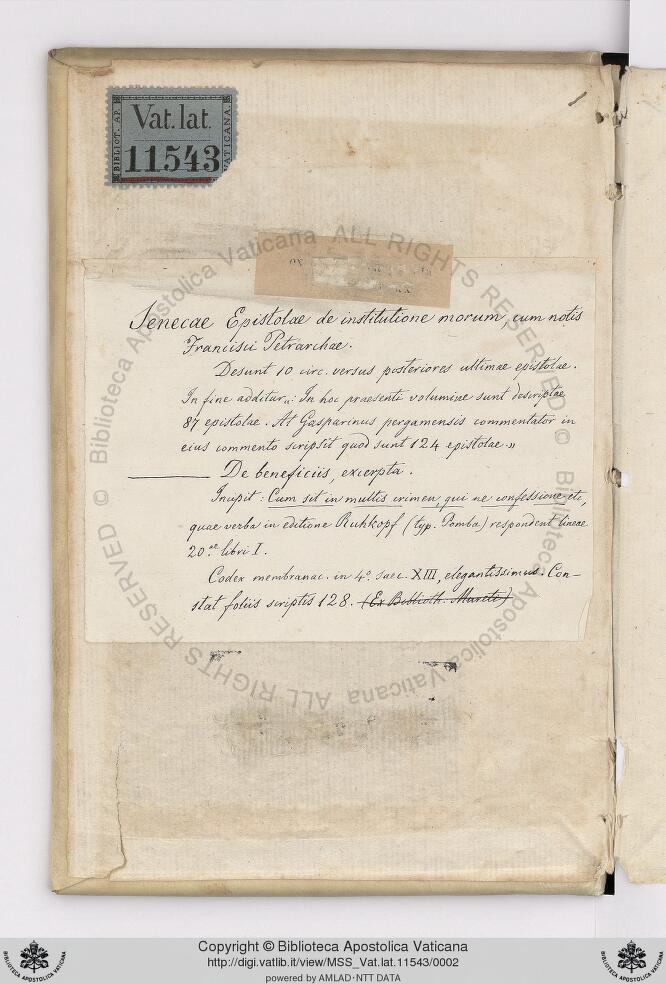
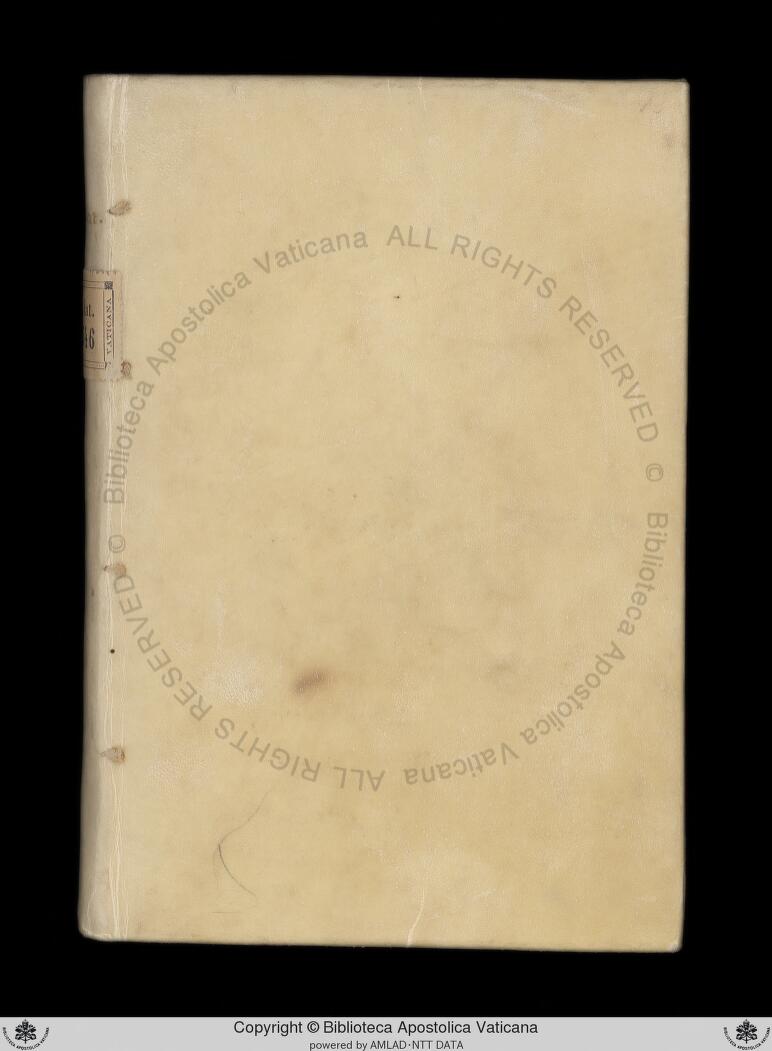
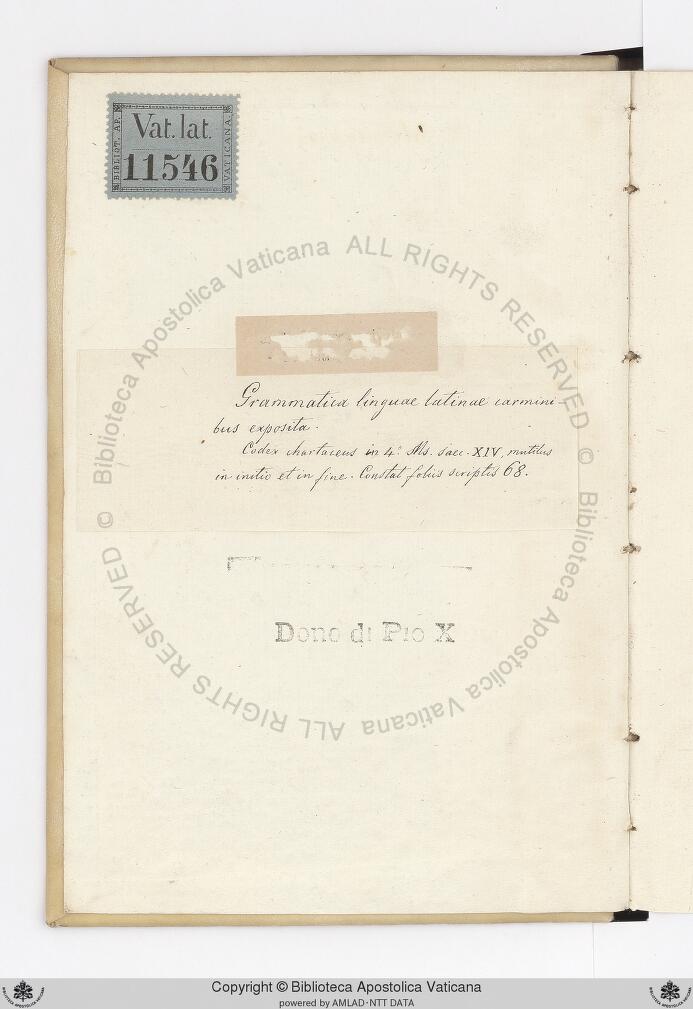


Let's be careful about what all this does and doesn't show. It doesn't prove the Jesuits didn't bind the Voynich. Binders vary, cheap bindings were made in a hurry, and a later repair could in principle have changed how the corner looks. What it does show is this:
- Most classifiable Collegio junctions are diagonal, while MS 408's corner arrangement agrees with that of a small minority of square-ended cases. That contrast matters more for placing MS 408 than the mere existence of exceptions within the comparison pool. Concealed corners remain unresolved.
- Neither arrangement identifies a Jesuit binder. The same square-ended feature recurs in alternative contexts.
- A pale inner panel or surviving lining adds no secure workshop attribution. Photographs don't establish the same paper, stiffener, attachment or alteration history.
- The sample set certainly doesn't support treating the former Collegio Romano covers as a uniform construction type. And MS 408’s square-ended corner differs from the predominant construction in the assessed Collegio sample. The sample does contain a couple of square-ended examples though, so this feature therefore doesn’t exclude the MS 408 cover from the range of constructions found in the Collegio sample. But it surely doesn't favor it either.
- The frequent diagonal finishing is not a Jesuit fingerprint. Diagonal corner cuts are a common binder’s technique. Vat. lat. 11504, the Pier Leoni book that Ruysschaert thought was probably bound before it reached the Collegio, shows a diagonal arrangement too.
- The outside of the cover connects the Voynich with a broad majority of the selected Collegio covers; but its corner turn-ins connect it with a small observed minority; and both features are also found in the external sample. Of course, neither features establishes membership in a particular rebinding campaign.
Actually, the covers aren't the only features worth comparing. As Zandbergen reports, citing a September 2020 private communication from Yale conservator Paula Zyats, the Voynich’s fibre supports and the Vatican examples differ in important details despite their superficial resemblance. That doesn't identify who supplied the later cover, but it is another reason to examine construction rather than rely on appearance.
All of this is also a good illustration of why "it looks similar" just isn't enough. Photographs of the outside of a book can only tell you that two covers are both pale and plain. To claim a common origin, you have to make a broader comparison of how they were made: the corners, the lacing, the sewing, the endbands, the linings, the adhesive. There seems to be no published construction-level comparison of this kind for the Voynich and the Vatican group.
And the first construction detail I looked into didn't check out! It shows notable variations within the comparison sample, rather than a feature that securely identifies or excludes a Jesuit origin. So I guess it's like they say — you can't judge a book by its cover.
Limp vellum was everywhere
There's another, bigger problem with the "looks like a Jesuit binding" argument. Plain parchment bindings, limp or semi-limp, weren't a Jesuit speciality. They were among the most common bindings in early modern Europe.
Limp parchment was the cheap, quick, practical option. It goes back to medieval archival and register bindings, and by the late fifteenth-century the book trade had adopted it on a large scale. Printers and booksellers used it as a standard retail binding. Private owners, monasteries, schools, archives and libraries all used it, across Italy, France, the Low Countries, Germany and beyond, for roughly three centuries. It even crossed the Atlantic; limp parchment bindings remained common in Mexico through the eighteenth-century.
Plenty of scholarly literature makes this point over and over. A few cases of this are shown in Table 3.
Table 3. Specialist binding research on how common, and how hard to place, plain parchment bindings are.
| Study | What it found |
|---|---|
| Rusteikaitė (2023), Vilnius Jesuit Academy library | Nearly half the bindings examined were modest parchment. But many on Italian books showed Italian structural traits, suggesting that the books arrived at the Jesuit library already bound. |
| Romero (2013), limp parchment in Mexico and Europe | European and Mexican covers were often so similar that you couldn't tell where a binding was made from its cover alone. You had to look at the sewing, adhesive, linings and endbands. |
| Albritton & Amato (2015), survey of about 20,000 volumes | Found 242 semi-limp and limp parchment bindings from several countries and centuries. Different internal constructions can look almost identical from the outside. |
| Pickwoad (2019); Pugliese (2019) | Italian economical bindings in parchment and paper were part of a broad commercial and private-library practice, outside any Jesuit setting |
A personal anecdote also illustrates the point rather well. Earlier this year, while I was discussing the Voynich binding with someone, I raised the question of how common its basic style of cover and binding might have been in the seventeenth-century — during the time of Marci and Kircher. He then reached over to his own bookshelf and pulled out an old book he happened to own: Andrés de Pitillas y Ruesga's Tratado de medias annatas de los beneficios, prestamos, y capellanias…, a treatise on church finances printed at Alcalá de Henares in 1698. Its plain parchment cover has, at least at the broad visual level, about as much resemblance to the Voynich cover as many of the former Collegio Romano examples linked in Table 2. That tells us nothing about who bound either book—the binding history of this particular copy is unknown—but the ease with which another similar parchment-bound book, with no identified Jesuit connection, happened to turn up is itself a useful reminder of how widespread this general type of binding was.
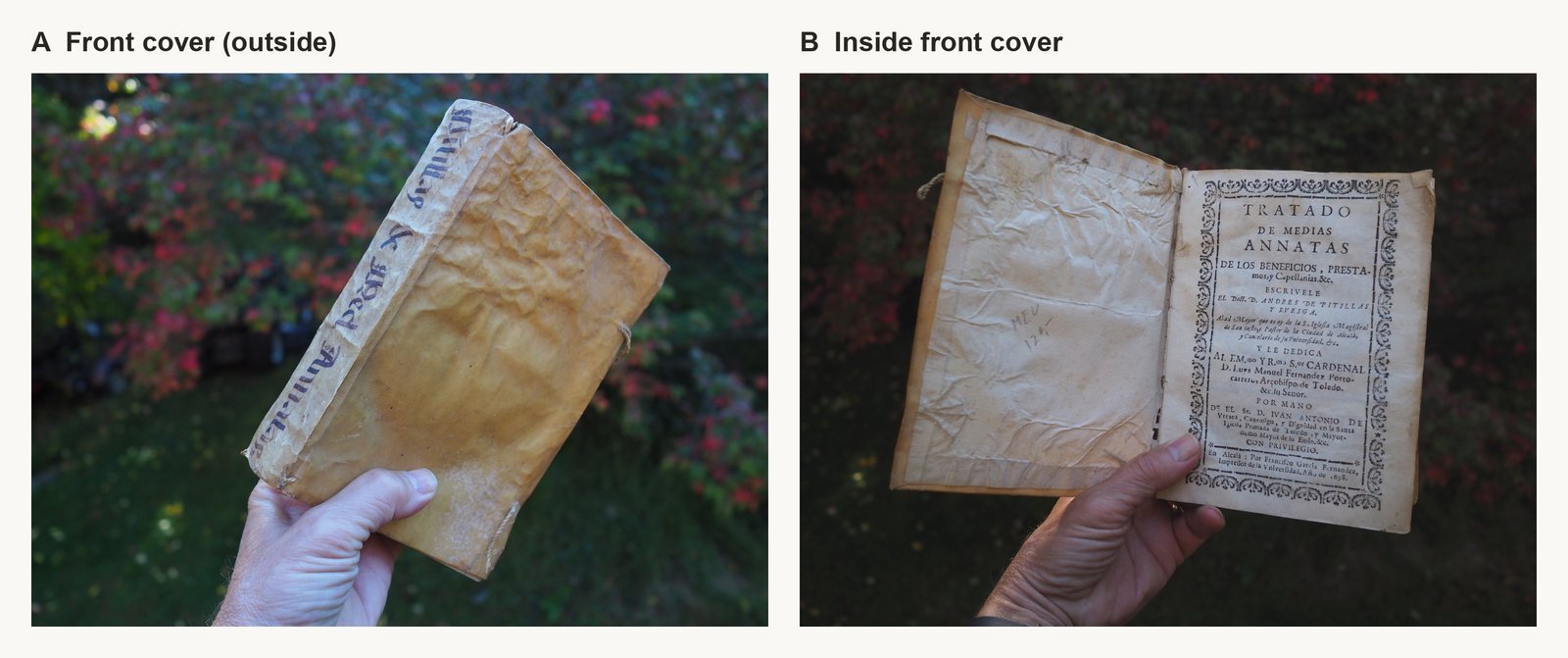
Think about what that means for the claim of a Jesuit binding. If almost everyone used plain parchment bindings, then finding one on the Voynich tells you almost nothing about who put it there. A plain parchment cover is what you'd expect whether the Jesuits did it, a bookseller did it, a private owner did it, or a later custodian did it. Plain parchment covers were more frequent in the selected Collegio sample, but they were also common in the external sample; that resemblance is not a distinctive Jesuit signature and therefore cannot, by itself, support a confident claim that the Jesuits supplied the Voynich’s present cover.”
It's like noticing that a car is a white sedan and concluding that it must belong to a particular rental company because their fleet is mostly white sedans. It's not wrong that their fleet is white sedans. It's just that so is half the parking lot.
So who could have bound the Voynich Manuscript?
Once you drop the assumption that the present cover must be Jesuit work, and since no reliable date has been established for it, nothing in the available evidence rules out its having been applied by any of the following suspects:
- an unidentified earlier owner or custodian, before any person presently known to have possessed the manuscript
- Georg Baresch, or a binder acting on his behalf, while the manuscript was in his possession in Prague
- Johannes Marcus Marci, or a binder acting on his behalf, before he sent the manuscript to Athanasius Kircher
- Athanasius Kircher, or someone acting on his behalf, after the manuscript arrived in Rome
- the Jesuits at the Collegio Romano during the period of Jesuit custody, whether through their own binding activity or through a commissioned binder
- a later custodian following the suppression of the Society of Jesus in 1773, during the period when former Jesuit institutions and collections passed through other administrative hands
- someone from the restored Jesuit administration after 1824, whether at the Collegio Romano itself or later while the collection was held at the Villa Torlonia at Castel Gandolfo.
Some of those are later Jesuit scenarios and some aren't. The evidence we have just doesn't distinguish conclusively between them. The manuscript's apparent connection with Kircher, together with its plausible later association with the Collegio Romano, leaves a Jesuit rebinding as one reasonable possibility, but hardly the only one.
Another assessment of the binding’s date, which I've not seen reported previously, deserves consideration because it was recorded by a well-known expert on historical bindings, and suggests that the present cover could predate the manuscript’s apparent entry into Jesuit hands. In his 1937 Census, De Ricci describes the binding as a “Limp vellum wrapper, apparently of the XVIth century,” adding that the paper end-leaves were possibly contemporary with it. His information about the manuscript and other holdings of the Voynich Estate came primarily from Anne Nill during the research to compile his book. In a letter to Professor Richard Salomon in 1936, Nill mentioned that she expected to meet De Ricci soon, show him the manuscript, and seek his opinion on its date. So De Ricci may well have examined the manuscript personally, and the sixteenth-century dating may represent his own assessment. We can't say whether the anticipated meeting meeting took place. Nevertheless, the published assessment places the cover well before the manuscript’s apparent arrival into Kircher’s hands and is consistent with the first 0f the candidate binders listed above.
My separate codicological study, The Marci Letter Reconsidered: A Codicological Reinterpretation of its Relationship to the Voynich Manuscript, provides the rationale for a different possibility as well. It argues from demonstrable physical evidence that the Marci Letter was probably integrated directly into the manuscript's current binding and that the documentary evidence is consistent with it having been there, attached to the present cover, since soon after Marci sent it to Kircher.
Sorting the claims
The evidence supports some claims more firmly than others. Table 4 brings them together, distinguishing what is documented from what remains plausible, uncertain or unsupported. As for who is actually responsible for the present cover and when? That remains an open question. Table 4. What the evidence supports, claim by claim.
| Claim | Status |
|---|---|
| Some of the present attachment is twentieth-century repair | Established; based on documentary evidence |
| The present cover replaced an earlier binding, probably in wooden boards | Strongly supported; based on physical evidence |
| The present cover is later than the manuscript | Strongly supported; however, no narrower date has been established |
| The “Miscellanea, c.m.s. XV” refers to the Voynich Manuscript | Plausible: the description is consistent with the Voynich but does not distinguish it from other manuscripts. The basis for its fifteenth-century dating and the later marginal identification remains unexplained |
| The manuscript was associated with the former Collegio Romano collection | Plausible; but the documentary chain is not fully independent |
| The cover could have been applied during Jesuit custody | Plausible |
| The present cover dates to the eighteenth- or nineteenth-century | Unsupported; Beinecke’s catalog dates it to this range, but they cannot provide any basis for that assessment |
| The present cover belongs to a standard, uniform Jesuit binding type | Unsupported; the plain exterior is more frequent in the Collegio group, but the square-ended corner is not; the combined evidence does not establish a preferential resemblance to Collegio bindings. |
| The present cover shares a distinctive binding type found on the vast majority of the cited Vatican manuscripts and therefore attributable to the Jesuits | Unsupported; broad exterior similarity has some supported, but the existence of a distinctive Jesuit binding type remains unsubstantiated, and MS 408’s corner arrangement matches only a small observed Collegio minority |
| The present cover was applied during the documented eighteenth-century Collegio Romano binding campaign | Unsupported; the campaign itself is documented, but no evidence connects MS 408 to it, and its recorded half-parchment bindings differ from the Voynich’s full-parchment cover |
| The present cover was part of an 1824–1870 rebinding campaign | Unsupported; based on a misreading of the blog post source of the information |
| The present cover was made or commissioned by Jesuits | Unsupported |
| The present cover was made at the Collegio Romano | Unsupported | "We know" the Roman Jesuits added the present cover | We don't |
What it would take
None of this is a reason to give up on the question. It's a reason to answer it properly. A real attribution would need something like:
- a binder's bill, repair register or catalog note that can be tied to the Voynich Manuscript
- a recovered Collegio shelfmark or spine title that fits a securely dated system
- a full conservation report separating the old sewing, the cover's manufacture, any removed stiffeners and the modern repairs
- a controlled comparison of construction details (corners, lacing paths, sewing, endbands, linings, adhesive) against Collegio bindings whose origin is independently known, and against ordinary Roman commercial bindings of the same period
But wait! There's something even more obvious that could give us valuable information on the whole issue. The current cover was identified in 2014 as being (likely) made of goatskin. Radiocarbon dating of the material could well help point to a more precise date — at least for the cover parchment itself. If nothing else, it would provide an earliest date (or "terminus post quem") for the present binding.
Until such a test is performed, or one of the other items listed above turns up, the honest description is not "the Jesuits rebound it". It's this:
That's less exciting than "we know". But it's what the evidence actually supports. The important lesson is to beware of overly confident claims built on thin evidence; they tend to get repeated until the mere questioning of them becomes taboo.
Comments, questions, and suggestions are welcome. (You can post them in the form at the bottom of this page.) If something here needs correcting, I’ll be glad to revise it; if a point needs clarification, I’ll do my best to explain it.
Sources and further reading
-
Beinecke Rare Book & Manuscript Library, Pre-1600 MS 408 catalog record
The principal Yale catalog description of MS 408, including its present binding, surviving pastedown material, and the Marci Letter. -
Paula Zyats et al., "Physical Findings", in The Voynich Manuscript, ed. Raymond Clemens (New Haven: Yale University Press, 2016), 23–37.
An important published account of the manuscript's physical structure, materials, sewing, repairs, and evidence of earlier binding states. -
Archivio Storico della Pontificia Università Gregoriana, APUG 3289, Catalogo di codici e stampe acquistate dalla Biblioteca vaticana nel 1903 Archivio Storico della Pontificia Università Gregoriana, APUG 3289
The key surviving Collegio catalog used to connect manuscripts dispersed from the Collegio Romano with later collections. -
Seymour de Ricci, Census of Medieval and Renaissance Manuscripts in the United States and Canada, vol. 2 (New York: H. W. Wilson, 1937), 1845–1846, “The Estate of Wilfrid M. Voynich,” especially MS 8.
Contains de Ricci's 1937 description of the Voynich estate manuscript recording information supplied in part by the administrators of Voynich's estate, but may also be based on his personal inspection of the actual manuscript. -
José Ruysschaert, Codices Vaticani Latini: Codices 11414–11709 (Vatican City, 1959).
Catalogs the Vatican Latin manuscripts transferred from the former Collegio Romano collection. Its preface, p. vii, note 3, includes the Voynich Manuscript among related books dispersed to other collecitons, identifying it through de Ricci's Census. -
José Ruysschaert, "Nouvelles recherches au sujet de la Bibliothèque de Pier Leoni", Bulletin de la Classe des lettres 46 (1960): 37–65.
Particularly relevant to the Pier Leoni manuscripts and to the question of whether bindings now found on former Collegio Romano books were necessarily supplied by the Jesuits. -
Francesca Potenza, "Un acquisto da farsi prudenter et sine strepitu", Nea Rhome 19 (2022): 317–368.
Reconstructs the Vatican Library's 1912 acquisition of Collegio Romano manuscripts and printed books from archival documents and also records manuscripts acquired by Voynich. -
René Zandbergen, "Manuscripts Voynich acquired in 1911–1912", voynich.nu; see also Wilfrid Voynich’s acquisition of the Voynich MS, not in Villa Mondragone, 12 September 2023.
Discusses the Collegio catalog APUG 3289, its photographic copy cited by Ruysschaert in 1959, and Potenza’s explanation of the misleading “1903” date in its heading. -
D. N. O'Donovan, "Specialist Opinions – Richard Salomon", Voynich Revisionist, 18 February 2019.
Includes transcriptions of Anne Nill's correspondence, including her November 7, 1936 statement that she expected to soon have an opportunity to show the Voynich Manuscript to Seymour de Ricci. -
René Zandbergen, "The Cover of the Voynich Manuscript", guest post on Stephen Bax's website, 18 August 2015.
An important source for the modern argument that the present Voynich cover was supplied by the Roman Jesuits and for tracing the evidence used to support that conclusion. -
René Zandbergen, "The Cover and Binding of the Voynich MS" and "History of the Voynich MS", voynich.nu.
These pages provide an influential modern synthesis of the manuscript's binding history and Collegio Romano provenance and are useful for tracing how the Jesuit-binding attribution has been presented. -
René Zandbergen, “The Voynich Manuscript Through the Ages,” in Siloé Publishing's volume of essays on the Voynich Manuscript \(2025–2026\)
This book of essays accompanies Siloé Publishing's excellent facsimile of the Voynich Manuscript and the Marci Letter. This particular essay is a well researched and informative treatment of the manuscript’s history, presenting the evidence and interpretations that have shaped the prevailing historical account. Several other essays in this book are well worth readings as well. -
De Ricci, Seymour. French Signed Bindings in the Mortimer L. Schiff Collection. 3 vols. New York, 1935.
An illustrated catalog of signed French bindings, included as background on de Ricci's work as a historian of bookbinding. -
De Ricci, Seymour. British and Miscellaneous Signed Bindings in the Mortimer L. Schiff Collection. New York, 1935.
The companion catalog of British and other signed bindings in the Schiff collection, included as background on de Ricci's binding scholarship. -
Martín María Morales, "Corpi di libri antichi da mandare al legatore", Archivio Storico della Pontificia Università Gregoriana, 3 June 2015.
The Gregorian University archives blog article that reports 356 identified half-parchment bindings with mold-made board covers associated with an eighteenth-century campaign to organize and preserve loose papers, gatherings, and volumes that had only been sewn. -
Ieva Rusteikaitė, "Elegant and Practical: Bindings … in the Library of Vilnius Jesuit Academy", Knygotyra 80 (2023): 228–262.
A useful comparative study of bindings in a Jesuit library, showing both the prevalence of practical parchment bindings and the difficulty of assuming that books found in Jesuit collections were necessarily bound there. -
Martha E. Romero, "Limp, laced-case binding in parchment on sixteenth-century Mexican printed books", PhD diss., University of the Arts London, 2013., 2 vols.
A detailed technical study demonstrating the structural variety that can exist beneath superficially similar limp- and semi-limp-parchment bindings. -
Erin Albritton and Christina Amato, "What Lies Beneath: Semi-Limp Parchment Bindings", New York Academy of Medicine, 2015.
Illustrates how bindings that look similar externally may differ substantially in their internal construction, an important caution when attributing bindings from visual resemblance alone. -
Nicholas Pickwoad, "Italian Laced-Case Paper Bindings", Journal of Paper Conservation 20 (2019): 122–151.
Provides broader historical context for economical Italian binding structures and helps show that simple case-binding techniques were not unique to Jesuit institutions. -
Marina Pugliese, "When Cover Paper Meets Parchment", Journal of Paper Conservation 20 (2019): 152–157.
Provides comparative evidence on mixed paper-and-parchment binding structures and the range of economical construction practices found in Italian books.
Comments
2 responses to “The Case of the Voynich Manuscript: A Questionable Cover Story”
yep. the more absolute the claim, the more likely something important is being left out
It is some time since I demonstrated that while it is probable the ms was addressed to Kircher at the Collegio Romano (Mondragone), there is no evidence it remained there for any length of time and that Zandbergen's assumption it was there right up until the time Beckx left Rome, or subsequently in the Vatican collection is without justification - even from what little Voynich said about his 'find' before his death. The evidence only allows us to have it brought by Beckx from Fiesole to one or other of the places to which he went before his own death. I wrote this up a couple of years before an Italian scholar published a closely-similar conclusion from their own research. We differ only on which house in Rome. Naturally ( or more exactly, predictably) Zandbergen refused the normal obligation to acknowledge sources for new contributions in due order. :D